



Set of Four French Chairs
A set of four french chairs brings symmetry and proportion to a room, offering matching seating options shaped by traditional craftsmanship and period design.
Set of Four French Chairs
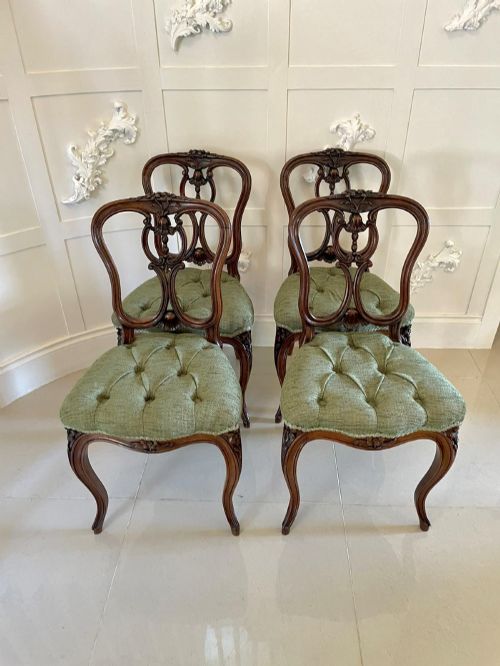
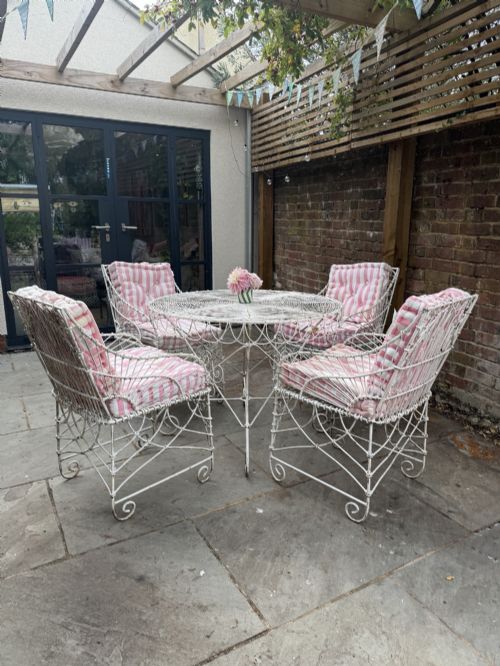
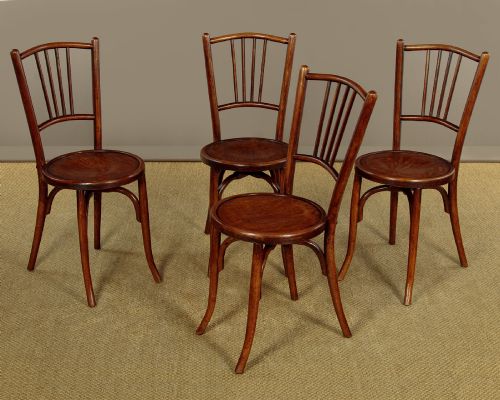
A set of four french chairs encompasses diverse seating forms designed for parlours, dining rooms, and gardens, appearing across periods from the nineteenth century to the early twentieth century.
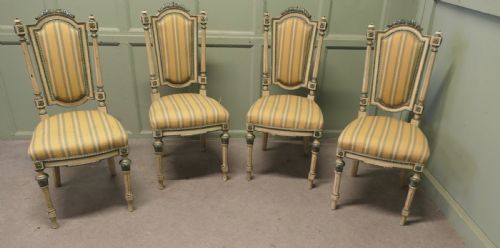
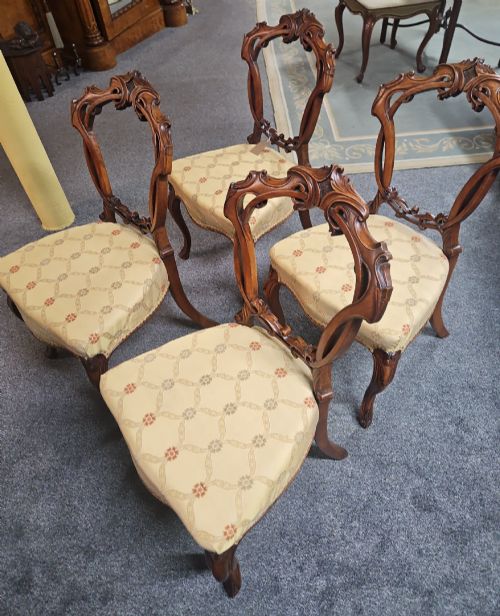
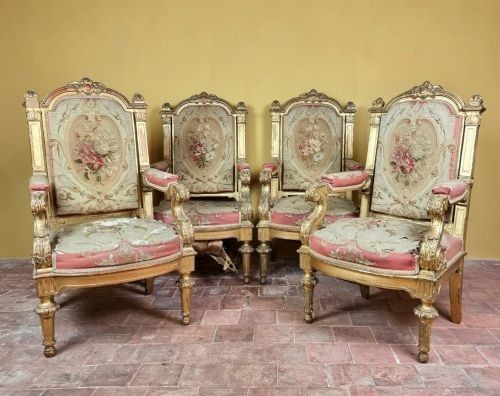
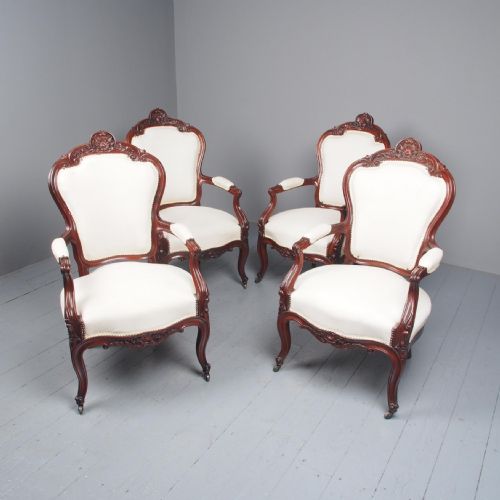
Buyers encounter distinct styles reflecting historical revivals, including Louis XVI, Louis XV, and Rococo forms alongside provincial ladder backs and garden sets.
The configurations range from giltwood salon armchairs and carved walnut side chairs to kitchen dining chairs in beech or oak.
Materials and construction methods
Makers shaped these chairs using timbers such as walnut, mahogany, beech, and oak, often applying giltwood, paint, or parcel gilt finishes to the wooden frames.
Upholstery utilised fabrics including tapestry, velvet, and plain materials, while provincial versions incorporated rush seats within ladder back frames.
Metal garden sets employed wrought iron, cast iron, and wirework, combining durability with decorative scrollwork.
Some garden sets have survived a century outdoors, carrying traces of old green paint beneath the weathering.
Distinctions in craftsmanship and preservation
The standard of carving on wooden frames determines the refinement of the piece, separating deep, crisp relief work from simplified ornamentation.
Original surface treatments, whether historic gilding, paint layers, or polished timber grains, heavily influence the integrity of the ensemble.
The structural stability of joints and the retention of matching upholstery or rush seating across all four items define the uniformity of the set.
Codina
The Set of Four French Chairs Glossary
- Bergère
- A closed upholstered armchair with wooden framing around the sides and back. This form often includes a loose seat cushion.
- Fauteuil
- An open-armed upholstered armchair with exposed wooden arms and legs. It typically dates to French revival periods.
- Giltwood
- Timber treated with gold leaf or gilding powder over a prepared base. This finish appears frequently on formal salon seating.
- Rush seat
- Seating woven from marsh plants dried and twisted into cord. It is commonly found on provincial ladder back kitchen chairs.
- Side chair
- A chair without arms intended for dining or occasional use around a room. These pieces match larger armchairs within a suite.
Set of Four French Chairs: Frequently Asked Questions
How were these chairs originally used?
These chairs served formal and informal domestic spaces, providing coordinated seating for dining rooms, drawing rooms, and salons. Garden sets were manufactured for outdoor dining and terrace use.
Armchairs accommodated heads of tables or reading corners, while side chairs and salon chairs lined rooms for gatherings and everyday family life.
How do I care for antique wooden frames?
Maintain wooden frames by keeping them away from direct heat sources and strong sunlight, which can dry out timber and degrade finishes. Dust gently with a dry cloth.
Avoid liquid polishes on antique giltwood or painted surfaces, as moisture can lift delicate gold leaf or historic paint layers.
How do I distinguish Louis XV from Louis XVI style?
Louis XV style pieces, often linked to Rococo revival periods, feature flowing asymmetrical curves, cabriole legs, and organic shell or floral carvings. The overall aesthetic prioritises fluid movement.
Louis XVI style chairs display straight tapered legs, geometric symmetry, and neoclassical motifs like fluting, ribbons, and oval medallions.
Can I mix these chairs with modern tables?
Pairing antique seating with contemporary tables creates a contrasting interior scheme that highlights the historical texture of the wood or metal. Ensure the seat height aligns comfortably with the table clearance.
Matching a set of four provides visual balance around the table without overwhelming smaller dining spaces.