



Serpentine Mahogany Vanity
These serpentine mahogany vanity pieces are graceful dressing mirrors and small tables crafted to sit upon a chest or stand alone.
Serpentine Mahogany Vanity
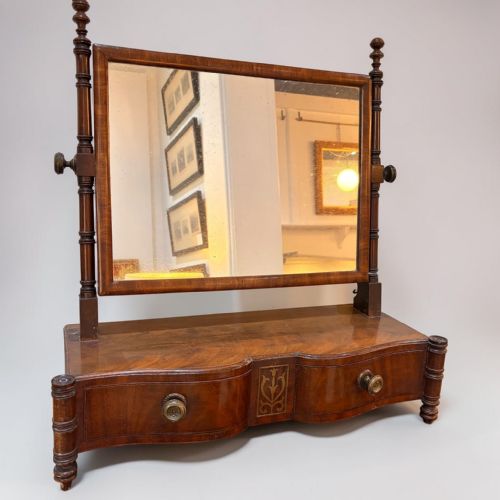
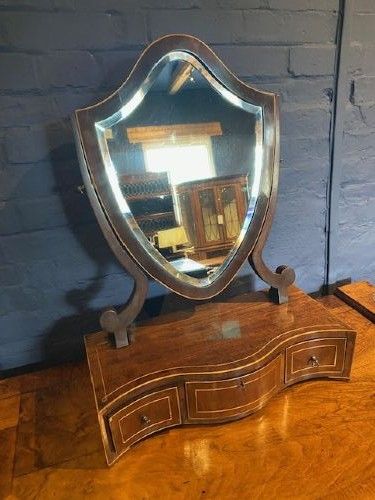
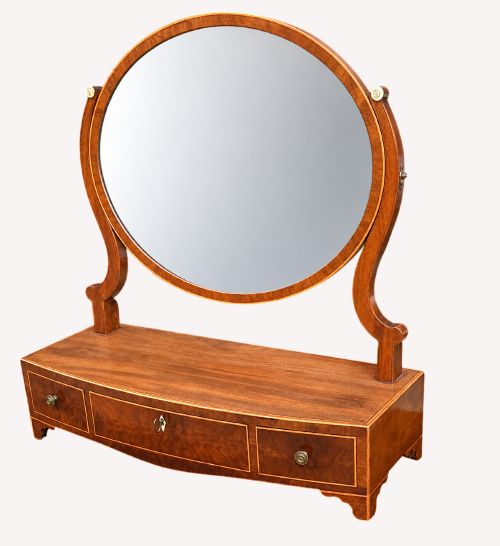
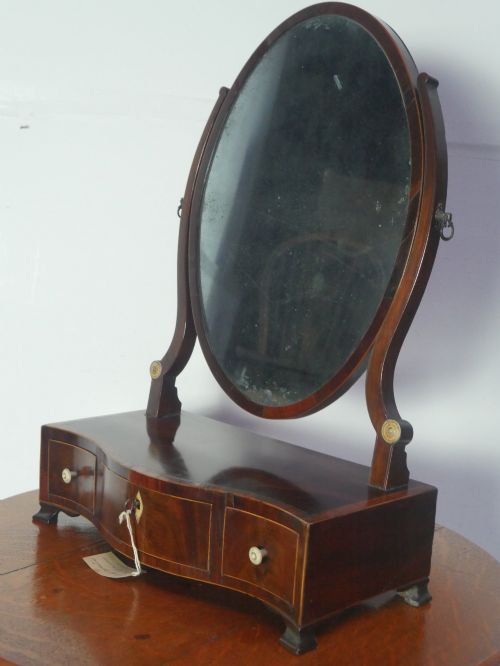
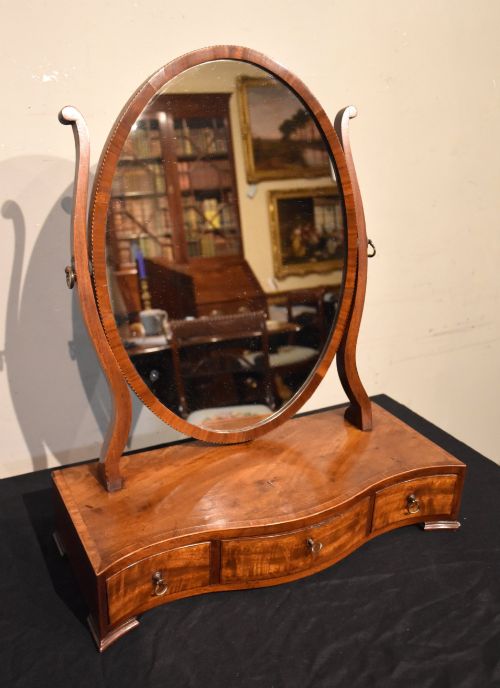
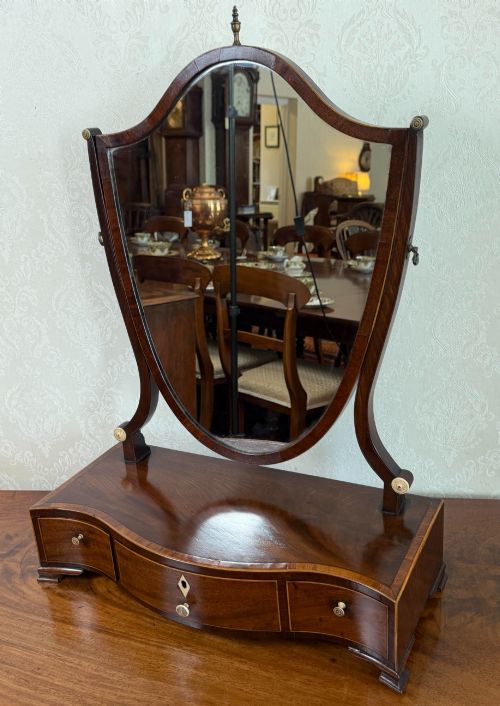
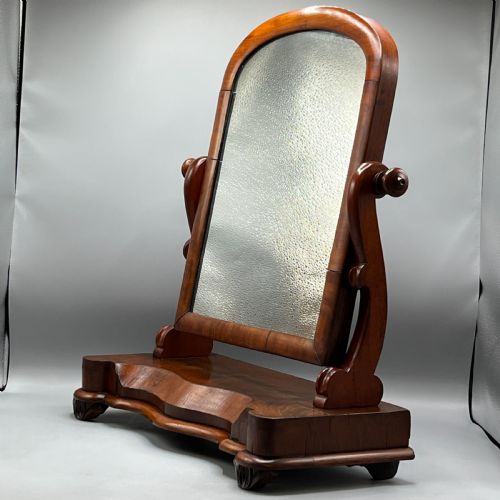
A serpentine mahogany vanity most frequently appears on this page as a Georgian or Victorian dressing mirror, toilet mirror, or swing mirror. These pieces combine a pivoting glass frame with a serpentine-fronted base containing small drawers.
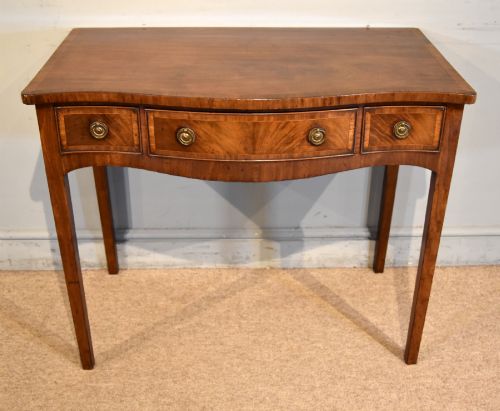
The form developed during the eighteenth century, encompassing George II, George III, and Regency periods alongside later nineteenth-century Victorian interpretations. While table mirrors predominate, related serpentine forms such as writing tables, desks, and dressing chests also surface.
Makers designed these items for bedrooms and dressing rooms, allowing individuals to adjust their reflection while storing small personal items in the fitted base drawers. The undulating front line defines the characteristic aesthetic shared across these pieces.
Materials and construction
Cabinet makers built these frames primarily from solid and veneered mahogany, often selecting timber with rich grain patterns. Secondary woods provided structural stability inside the drawer boxes and backing boards.
Craftsmen utilised brass for pivoting hardware, side screw knobs, and small drawer pulls, while decorative touches frequently included boxwood inlay or satinwood stringing. Original mirror glass, sometimes showing slight foxing, reflects the period silvering methods.
Serpentine Mahogany Vanity Retail Price Guide 2026
Typical asking prices for serpentine mahogany vanity among the pieces listed under this phrase on Sellingantiques today, from the lower quarter to the upper quarter. They describe what is for sale here now, not the wider market.
Some dressing mirrors feature secret compartments hidden behind the smallest drawers for storing tiny keepsakes.
Judging quality and craftsmanship
The fluidity and precision of the serpentine curve define the superior examples, requiring high skill to shape both the wooden base and the matching drawers. Finer pieces display crisp boxwood inlay and well-proportioned mirror uprights rather than heavy, clumsy turnings.
Original brasses, sound drawer construction with hand-cut dovetails, and intact mirror glass elevate an object above standard production. The retention of the original surface finish and rich colour indicates careful preservation over centuries.
The Serpentine Mahogany Vanity Glossary
- Serpentine
- A shape featuring a curved front line that undulates outward in the centre and recesses inward at the sides. This contour demands meticulous woodworking skills.
- Toilet mirror
- A smaller tabletop mirror designed for grooming, typically fitted with a set of small drawers in the base. These stood upon larger chests of drawers or dedicated tables.
- Swing mirror
- A glass plate mounted on vertical pivots between two upright posts, allowing the user to tilt the angle of reflection. It forms the upper portion of a dressing table mirror.
- Boxwood inlay
- Narrow strips or geometric patterns of pale boxwood embedded into the darker mahogany surface for decoration. It provides a sharp visual contrast.
- Dovetail
- A traditional interlocking joint used to join the sides of drawers securely without metal fasteners. Hand-cut variations indicate earlier craftsmanship.
Serpentine Mahogany Vanity: Frequently Asked Questions
What is a serpentine mahogany vanity?
A serpentine mahogany vanity refers to historical dressing mirrors and small tables featuring a distinctive undulating front curve and rich mahogany construction.
These pieces typically date from the Georgian and Victorian eras, functioning as functional bedroom furnishings with integrated drawer storage.
How do I date a mahogany dressing mirror?
Dating relies upon examining construction methods, timber choice, hardware styles, and the contour of the mirror frame. Georgian examples display hand-cut dovetails and lighter proportions, whereas Victorian pieces often appear heavier and incorporate flame mahogany veneer.
Secondary woods and the type of mirror glass also offer clues regarding the period of manufacture.
Were these mirrors fixed or adjustable?
The glass plates are mounted on pivot screws held by vertical upright arms. This mechanism allows the user to tilt the mirror forward or backward to achieve the desired angle.
Original brass side knobs secure the glass firmly at the chosen position.
How do I care for antique mahogany furniture?
Keep mahogany pieces away from direct sunlight and strong heat sources to prevent the wood from drying out or warping. Dust gently with a dry or slightly damp soft cloth, avoiding modern chemical polishes.
Maintaining a stable room humidity preserves both the timber and the original polish.