
Serpentine Commode Chest
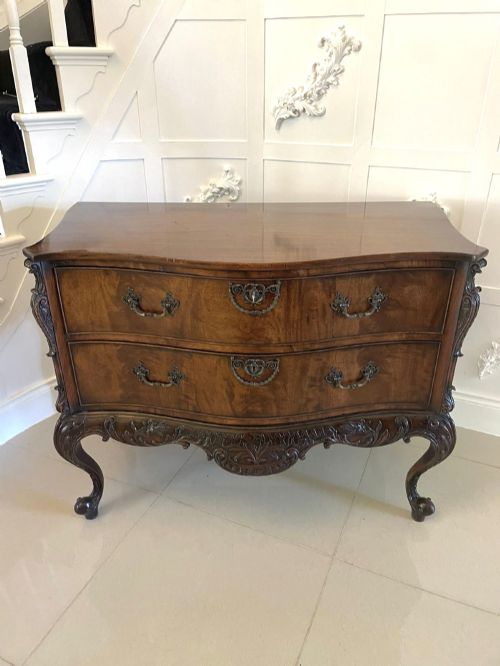
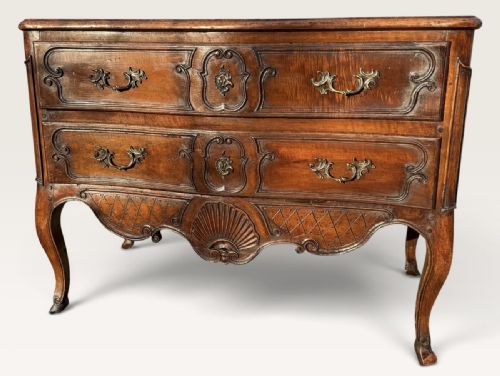
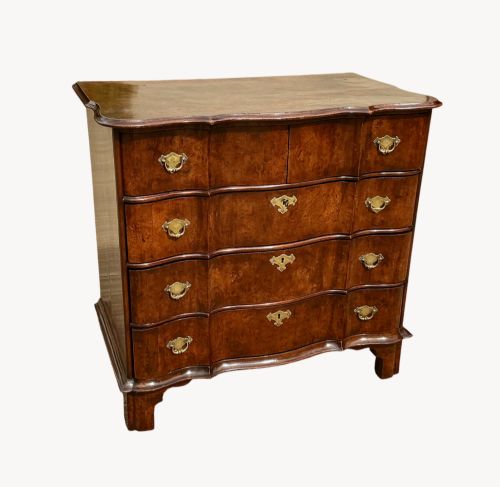
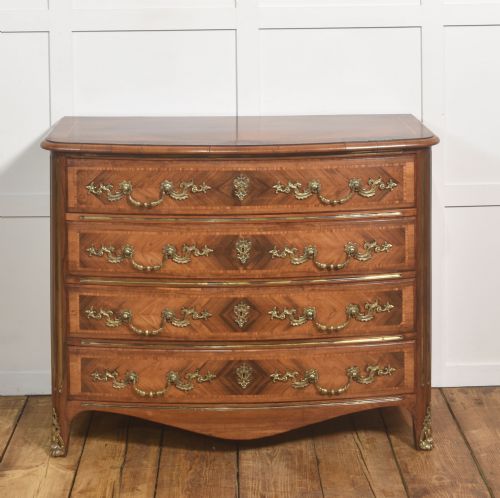
A serpentine commode chest brings undulating movement and refined storage to a room through its curving drawer fronts.
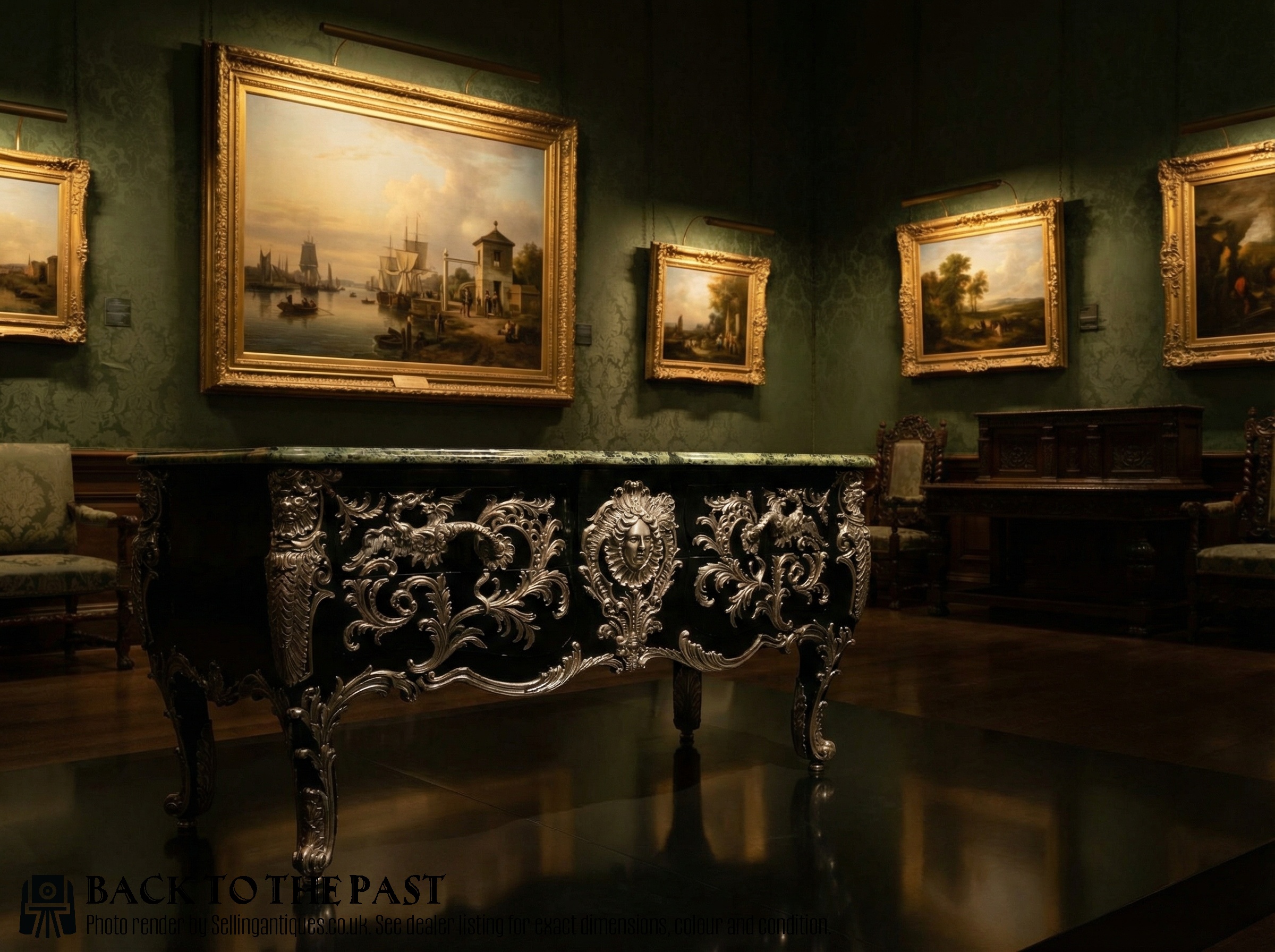
Serpentine Commode Chest
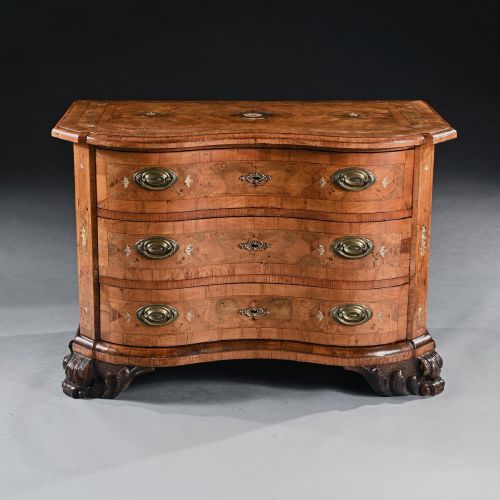
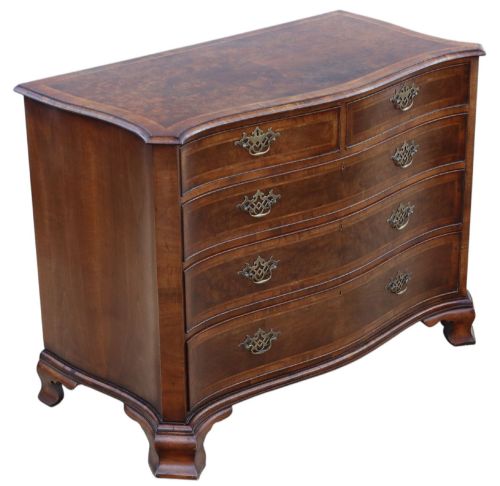
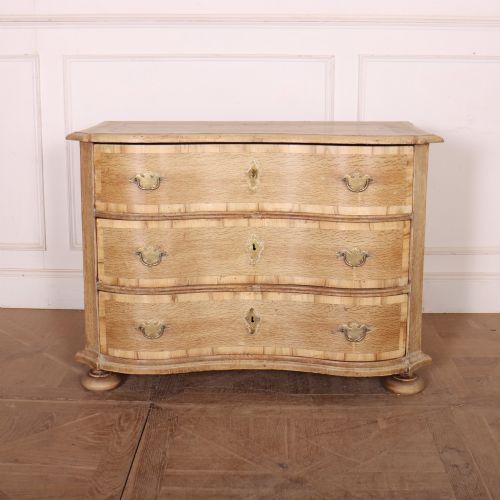
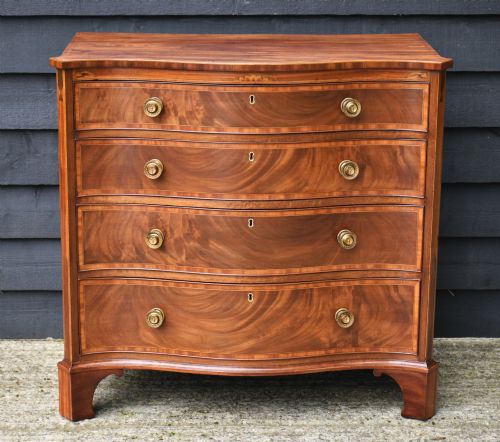
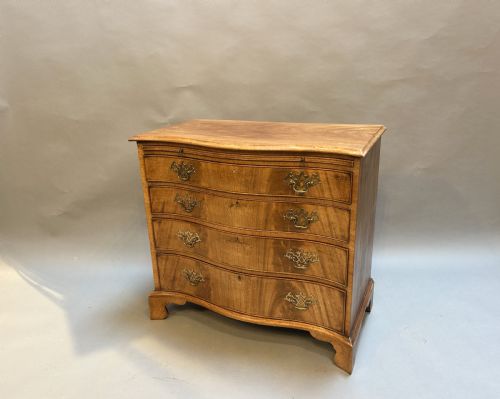
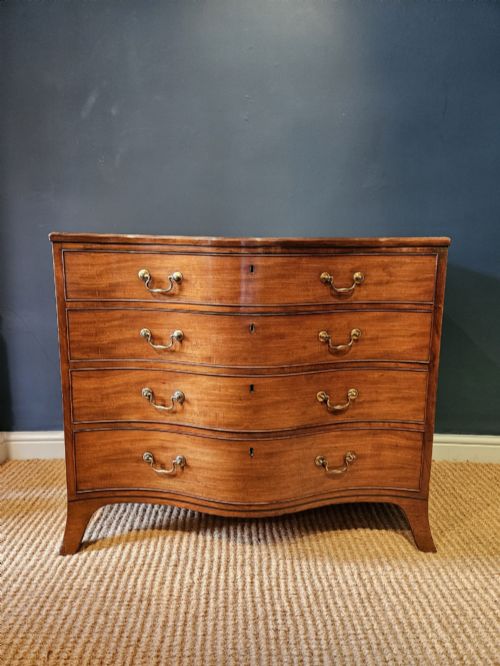
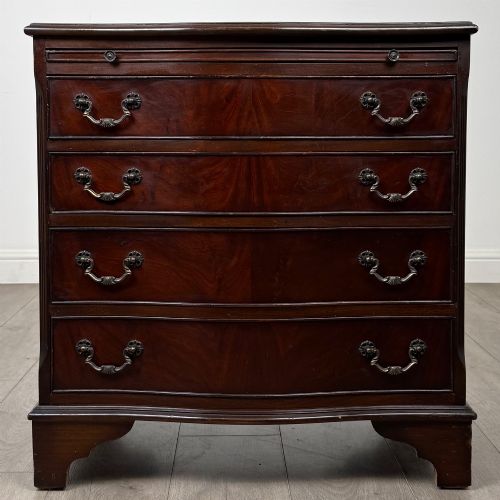
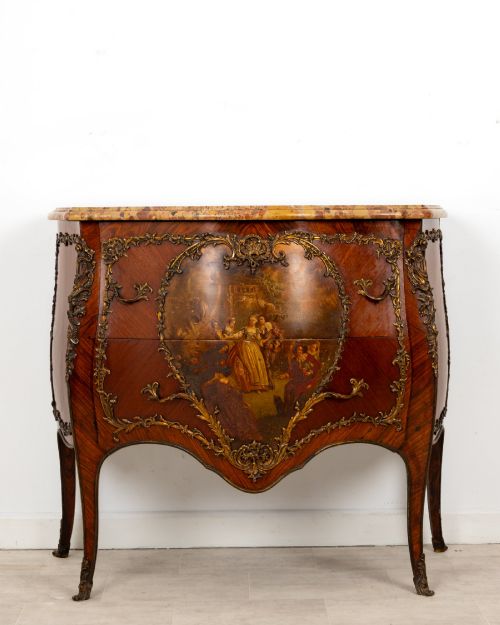
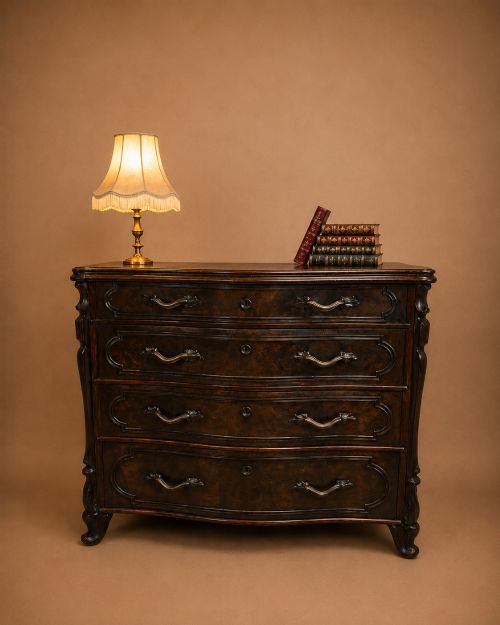
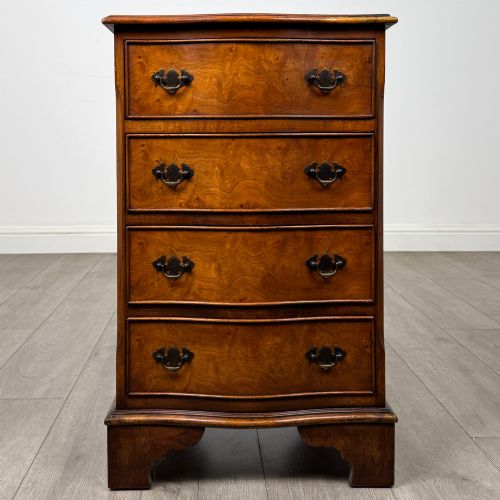
A serpentine commode chest displays a distinctive undulating front that curves outward at the centre and inward at the sides, creating a dynamic silhouette. These pieces appear primarily as drawer chests and commodes originating from Georgian England, 18th-century continental Europe, and later revival periods.
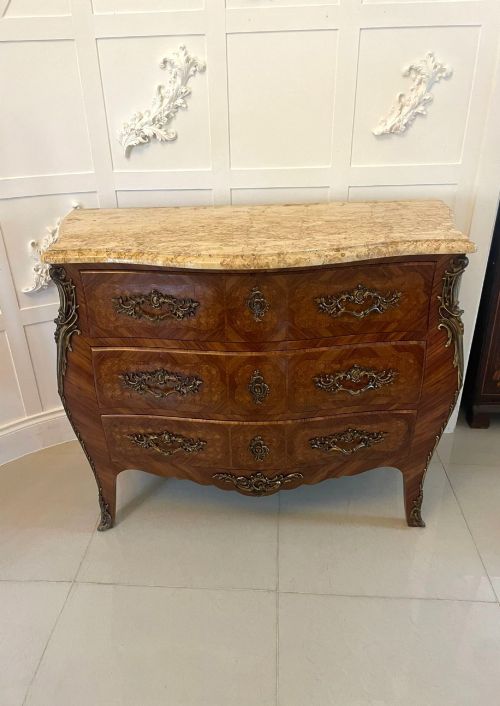
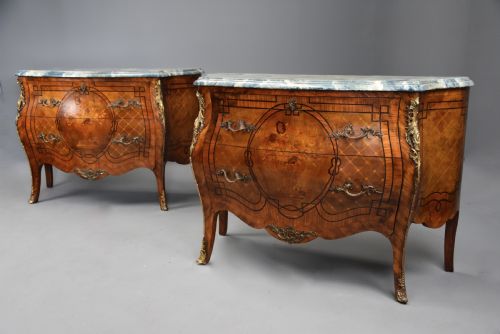
The materials span native timbers like mahogany, oak and walnut alongside exotic veneers such as kingwood and burr walnut. Marble tops frequently appear on continental examples, particularly those influenced by French design.
Buyers encounter variations ranging from restrained George III mahogany drawer chests to highly decorative marquetry commodes and bombe forms. Smaller bedside versions and larger proportions both feature across the selection.
Materials and Technique
Cabinetmakers shaped solid timbers and applied veneers over supportive carcases to achieve the signature curving outline. Mahogany and walnut provide structural integrity, while burr walnut, kingwood and satinwood supply decorative surface patterns.
Marquetry and parquetry introduce geometric or pictorial wood inlay, often paired with brass handles, ormolu mounts and marble slabs. Specialised joinery accommodated the complex geometry of the serpentine swell without compromising drawer movement.
Some continental commodes hide secret compartments behind their sweeping curves, keeping midnight letters safe from prying eyes.
Distinctions in Execution
Execution rests upon the precision of the curved drawer fronts and the alignment of the grain across the entire facade. Superior examples exhibit continuous grain matching and meticulous hand-cut dovetailing within the drawer construction.
The choice of secondary woods, the depth of carving, and the integration of marquetry or cast ormolu mounts separate standard production from exceptional cabinet work.
The Serpentine Commode Chest Glossary
- Serpentine
- A curved shape featuring a convex centre flanked by concave ends, mimicking the undulating movement of a snake. This profile defines the primary aesthetic of the chest.
- Commode
- A low chest of drawers or cabinet originating from French furniture traditions. The term frequently applies to continental European drawer units.
- Marquetry
- Decorative veneer work arranged in intricate patterns or pictorial designs using various coloured woods. Artisans assemble these pieces like puzzles before applying them to the carcase.
- Bombe
- A swelling, bulging contour found on continental furniture, notably Dutch and French commodes. This pronounced curve extends outward on both the front and the sides.
- Crossbanding
- A border of veneer laid with the grain running perpendicular to the surrounding surface. This technique frames drawer fronts and tabletops on finer pieces.
Serpentine Commode Chest: Frequently Asked Questions
Where did serpentine chests originate?
The form developed during the 18th century across major European cabinetmaking centres, including England, France, the Netherlands, and Germany. Different regions imparted distinct characteristics, from Georgian mahogany restraint to French marquetry elaboration.
English makers favoured solid or veneered mahogany, while continental workshops frequently utilised walnut, kingwood, and painted finishes topped with marble.
How do I care for a wood commode?
Maintain the timber by keeping the piece away from direct sunlight and steady humidity sources to prevent veneer lifting. Dust regularly with a soft, dry cloth rather than applying silicone-based polishes.
Wax applied sparingly every few years preserves the finish and nourishes older veneers without building up heavy residue.
What is a bombe chest?
A bombe chest is a specific variant where the sides and front bulge outward in a pronounced, rounded swell. This style is heavily associated with 18th-century Dutch and French furniture design.
The exaggerated curvature requires advanced woodworking skill to ensure the drawers still operate smoothly within the bulging carcase.
How are periods told apart?
Distinguishing periods relies on observing timber choices, hardware styles, and construction methods. 18th-century pieces generally feature hand-cut dovetails and native or imported timbers specific to their origin.
Revival pieces from the 19th and early 20th centuries often replicate earlier Georgian or Louis XV styles but reveal machine assistance or later secondary woods upon closer inspection.