



Seed Pearl Starburst Jewellery
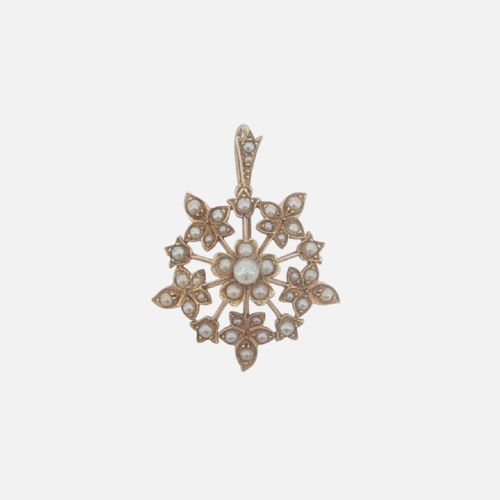
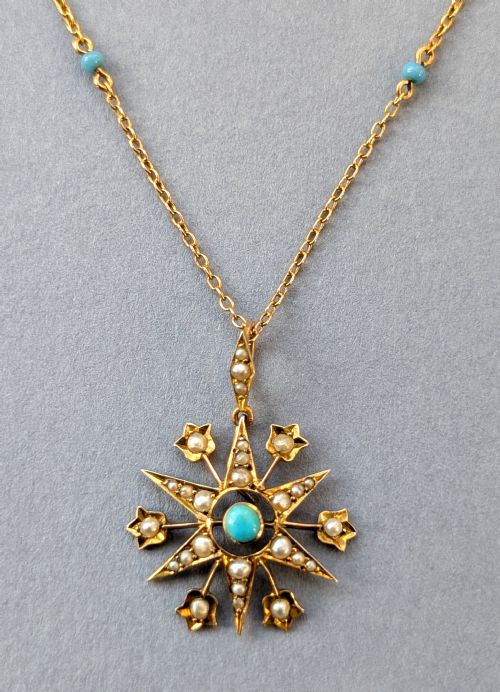
Seed pearl starburst jewellery brings together delicate celestial forms and enduring materials from the Victorian and Edwardian eras.
Seed Pearl Starburst Jewellery
The surviving examples span the nineteenth and twentieth centuries, including pieces from the late Victorian period and the Art Deco era. Formats range from small, intricate pins to substantial pendants set with central stones. Many pieces bridge multiple categories, serving as both neckwear and fastened ornaments.
How they were made
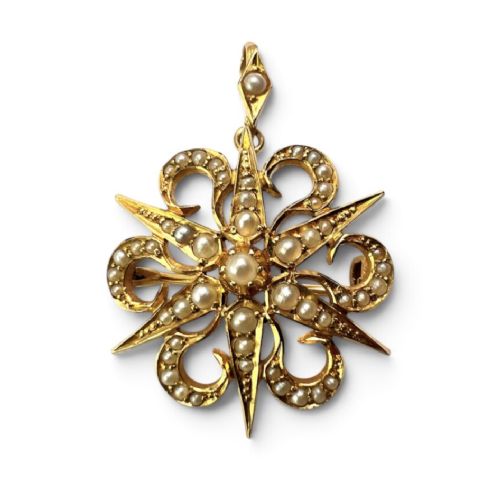
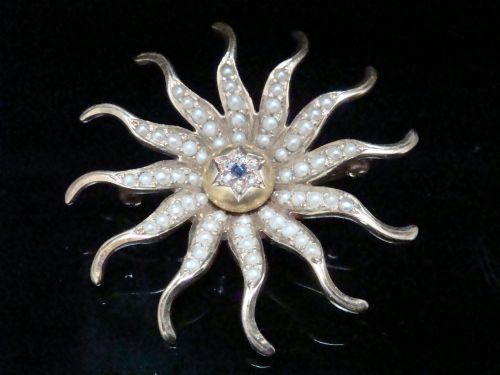
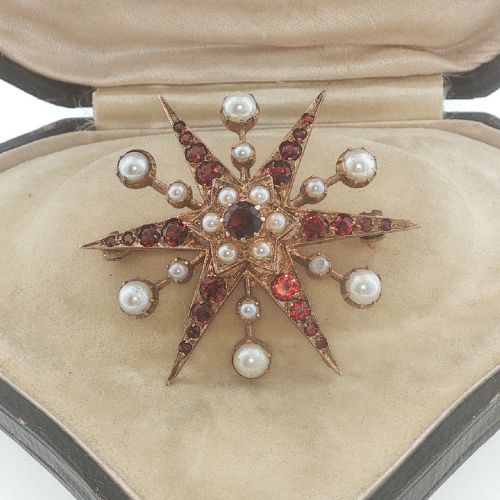
Goldsmiths constructed these celestial motifs using varying purities of gold, including 9ct, 15ct, and 18ct alloys. Tiny seed pearls were meticulously wired or pegged onto gold frameworks to build up the luminous rays of the starburst. Secondary gemstones such as turquoise, garnets, diamonds, peridots, and amethysts were often introduced as focal points.
Techniques relied on hand-fabrication and delicate setting methods appropriate for minute pearls and small stones. Jewelers balanced structural metalwork with intricate arrangements of organic pearls, ensuring each ray of the star remained secure.
Seed Pearl Starburst Jewellery Retail Price Guide 2026
Typical asking prices for seed pearl starburst jewellery among the pieces listed under this phrase on Sellingantiques today, from the lower quarter to the upper quarter. They describe what is for sale here now, not the wider market.
Listings feature gold purities ranging from 9ct to 18ct, alongside periods spanning the Victorian era through the 1960s.
What varies in quality
The quality of seed pearl starburst jewellery depends on the weight and purity of the gold mount, with higher carat thresholds offering richer colour. The uniformity, lustre, and secure seating of the tiny pearls also distinguish finer specimens from simpler variants. Furthermore, the integration of supplementary stones like old-cut diamonds or natural turquoise elevates the overall standard.
Design complexity plays a significant role, as multi-layered swirling starburst motifs demand greater skill than basic geometric configurations. The inclusion of original convertible fittings, allowing a pendant to function securely as a brooch, demonstrates higher craftsmanship.
The Seed Pearl Starburst Jewellery Glossary
- Seed pearl
- Very small, naturally occurring or cultured pearls often used in tight clusters or rows in antique jewellery. Their diminutive size requires careful handling and specialised setting techniques.
- Starburst
- A decorative motif radiating outward from a central point to resemble the rays of a star or the sun. This design was particularly popular during the Victorian and Edwardian periods.
- Convertible piece
- An item of jewellery designed to serve multiple functions, such as operating as both a pendant and a brooch. These pieces often feature hidden bails or detachable pin stems.
- Old-cut diamond
- A diamond cut with hand-fashioned facets typical of the nineteenth and early twentieth centuries. These stones display smaller tables and deeper pavilions than modern brilliant cuts.
- Mourning brooch
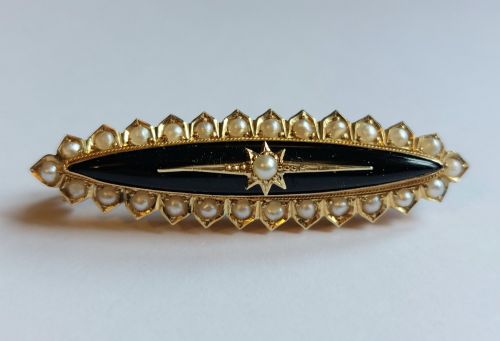
- A commemorative piece of jewellery, often incorporating hair, jet, onyx, or pearls, worn to remember a deceased person. Victorian examples frequently employed dark materials contrasted with white pearls.
Seed Pearl Starburst Jewellery: Frequently Asked Questions
What is seed pearl starburst jewellery?
Seed pearl starburst jewellery consists of brooches, pendants, and necklaces shaped like stars or sunbursts using tiny pearls. These items date primarily from the Victorian and Edwardian periods.
They combine intricate goldwork with organic pearls, frequently incorporating secondary coloured gemstones in the centre.
How do I date these pieces?
Dating relies on stylistic clues, gold carat marks, and accompanying gemstones typical of specific eras. Victorian examples often feature deeper gold carats or mourning elements, while Edwardian pieces lean towards lighter gold and airy openwork.
Assay marks and hallmarks, when present, provide more precise chronological markers.
Can these pendants be worn as brooches?
Many surviving examples were manufactured with dual-purpose fittings, incorporating both a suspension loop and a pin mechanism on the reverse. This allowed the wearer to pin the star to garments or suspend it from a chain.
Examination of the reverse side reveals these integrated mounting options.
What stones accompany the pearls?
Makers frequently centred these starburst designs around turquoise, garnets, amethysts, peridots, and diamonds. Onyx and sappheres also appear in specific Victorian and Edwardian contexts.
These coloured gems provided contrast against the white lustre of the seed pearls.