




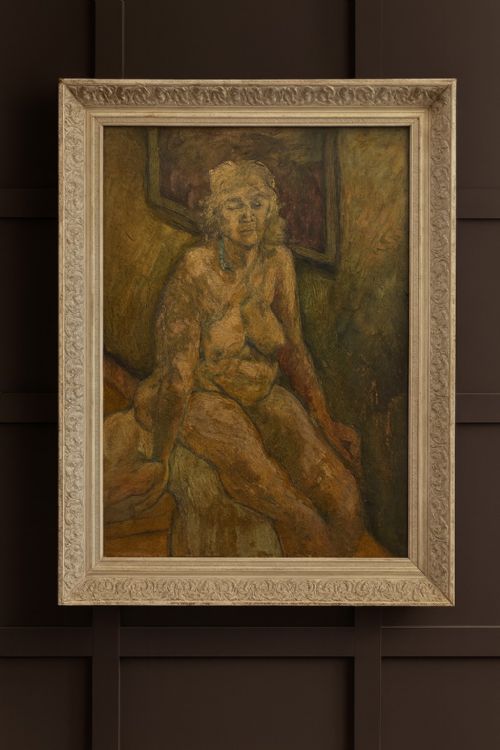


Seated Female Nude
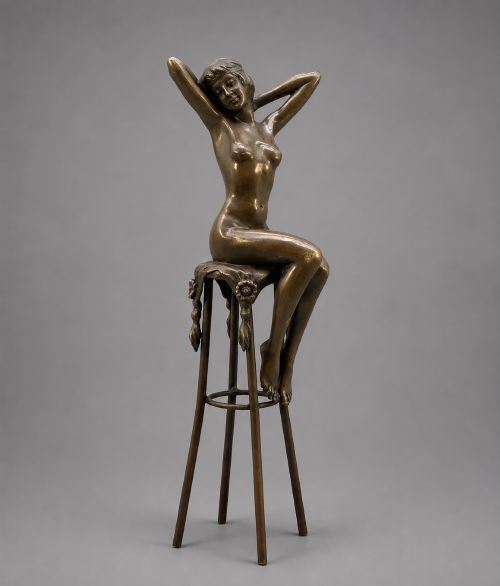
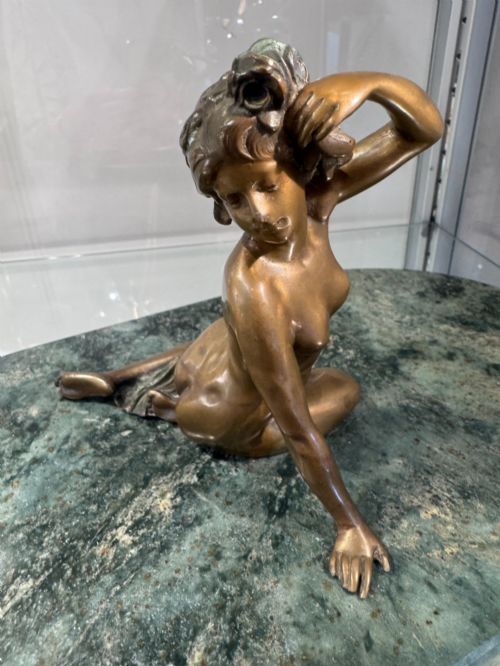
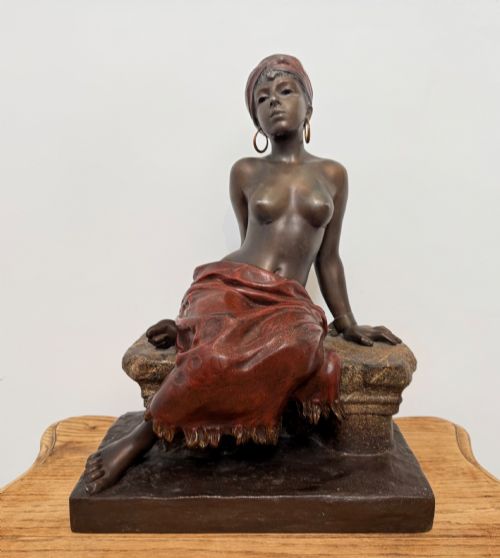
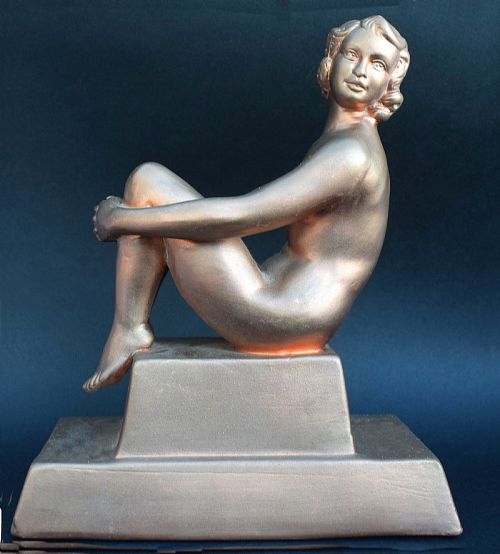
These seated female nude works capture the human form through oil, bronze, marble, and wood across diverse twentieth-century aesthetic movements.
Seated Female Nude
A seated female nude captures the human form at rest, emerging across multiple periods from the nineteenth century through the mid twentieth century. These pieces encompass oil paintings, pastel portraits, drawings, and sculptural figures in bronze, marble, limewood, and biscuit porcelain.
The selection ranges from academic realism and Edwardian studies to Art Nouveau, Art Deco, and mid-century expressionism. Buyers encounter diverse interpretations of the subject, spanning French sculpture, British portraiture, and continental painting.
Sculptural examples integrate materials such as bronze figures mounted on marble bases, alongside hand-carved limewood and delicate porcelain statues. Two-dimensional works utilise oil on canvas, oil on board, and paper mediums to render the seated model.
Materials and techniques
Sculptural representations utilise metal casting in bronze, direct carving in limewood and marble, and ceramic moulding for biscuit porcelain figures. Bronze casts often receive patination and sit upon integrated or separate marble plinths.
Two-dimensional works employ oil paint applied to canvas and board, alongside pastel and drawing materials on paper supports. Artists built up these compositions through layered brushwork and tonal drawing techniques to define posture and form.
Seated Female Nude Retail Price Guide 2026
Typical asking prices for seated female nude among the pieces listed under this phrase on Sellingantiques today, from the lower quarter to the upper quarter. They describe what is for sale here now, not the wider market.
One listed figure sits quietly upon marble, proving that even heavy metals appreciate a comfortable stone seat.
Distinctions in quality
Quality rests upon the artist's command of anatomy and the sensitivity of line or modelling. Superior examples demonstrate confident handling of posture, weight, and proportion, whether rendered through painterly brushstrokes or precise sculptural carving.
The integrity of the material and the preservation of the surface finish dictate the standing of each piece. Original patinas on bronzes, well-preserved canvas grounds, and crisp details in wood and marble separate accomplished works from routine examples.
E Villanis·Augustus John·Allan Douglas Davidson·Hector Lemaire·Hans Müller·Peter Jackson·Pinchus Krémègne·Raymond Arthur Roadnight
The Seated Female Nude Glossary
- Patina
- The surface coloration and sheen developed on bronze or wood over time, or applied deliberately by the artist. A rich patina enhances the perceived depth of sculptural modelling.
- Biscuit
- Unglazed porcelain that has been fired once, producing a matte, stone-like texture favoured for nineteenth-century statues. This finish highlights subtle contours without surface gloss.
- Impressionism
- A nineteenth and early twentieth-century painting style prioritising light, unblended brushstrokes, and everyday subjects. Works in this manner capture transient atmospheric effects.
- Academic Realism
- A style governed by the rigorous standards of European art academies, emphasising precise anatomical accuracy and polished finish. Such pieces reflect traditional training in the human figure.
- Art Deco
- A design style dominant in the 1920s and 1930s characterised by streamlined geometric forms and stylised depictions of the human body. Figures from this period often display crisp, modern contours.
Seated Female Nude: Frequently Asked Questions
What defines a seated female nude?
A seated female nude is an artwork depicting an unclothed woman in a seated or resting posture. The subject has served as a central exercise in figure study and artistic expression across centuries.
Artists approach the theme to explore anatomy, light, and posture across various mediums including paint, bronze, and stone.
How should I display a bronze figure?
Bronze figures require a stable surface away from direct heat sources and excessive moisture. Placing them on a sturdy wooden or stone table ensures proper support.
Regular dusting with a soft, dry cloth helps maintain the surface finish without disturbing the underlying patina.
How do I care for oil paintings on canvas?
Oil paintings on canvas need stable indoor humidity and protection from direct sunlight to prevent paint cracking and fading. Professional framing safeguards the edges and rear of the canvas.
Cleaning should be limited to gentle surface dust removal using a soft brush, avoiding any liquid or chemical cleaners.
How can I tell Art Nouveau from Art Deco pieces?
Art Nouveau works, created roughly between the late nineteenth century and 1910, feature flowing, organic lines inspired by natural plant forms. Figures from this era display soft, undulating drapery and sinuous contours.
Art Deco pieces from the 1920s and 1930s adopt sharper geometric angles, streamlined silhouettes, and a more modern, structured elegance.