
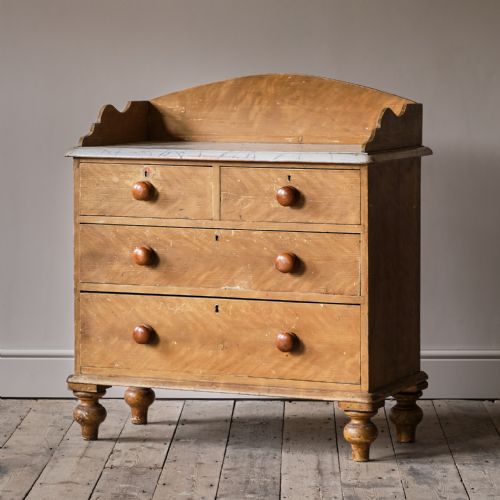
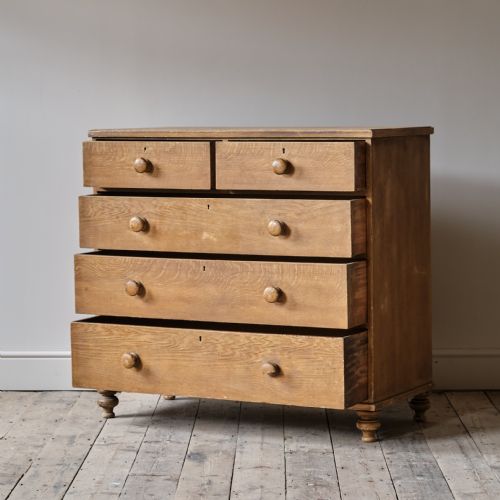
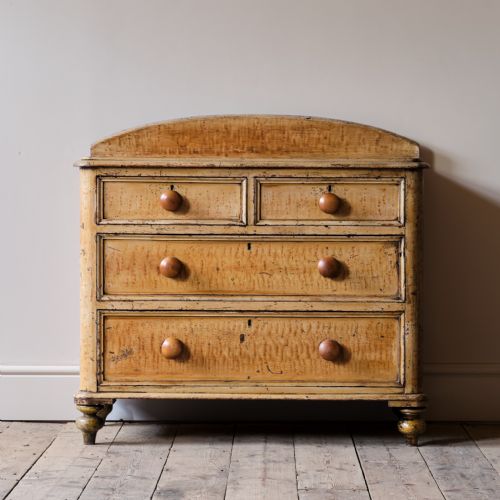
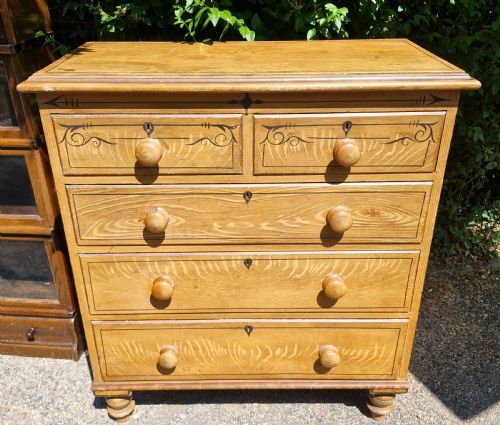


Scumble Painted Chest
A scumble painted chest brings warmth and authentic texture to a room, offering practical storage disguised as folk art.
Scumble Painted Chest
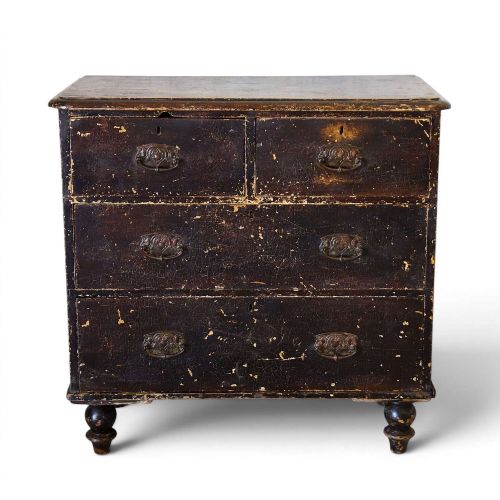
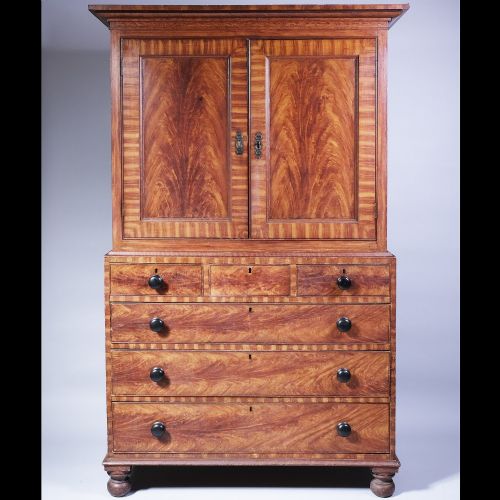
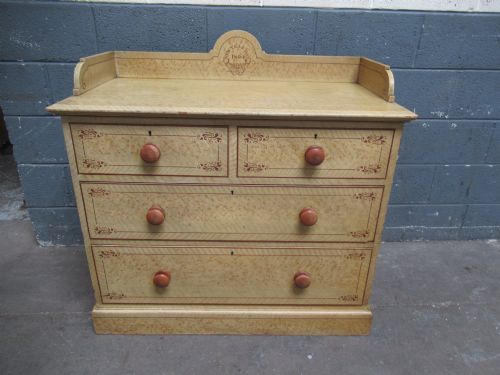
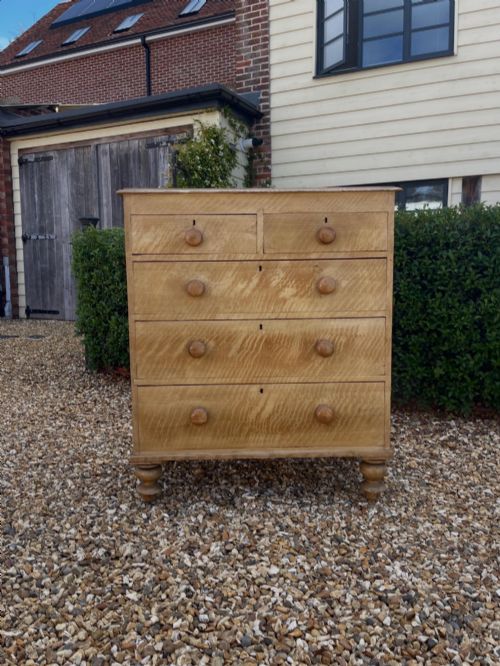
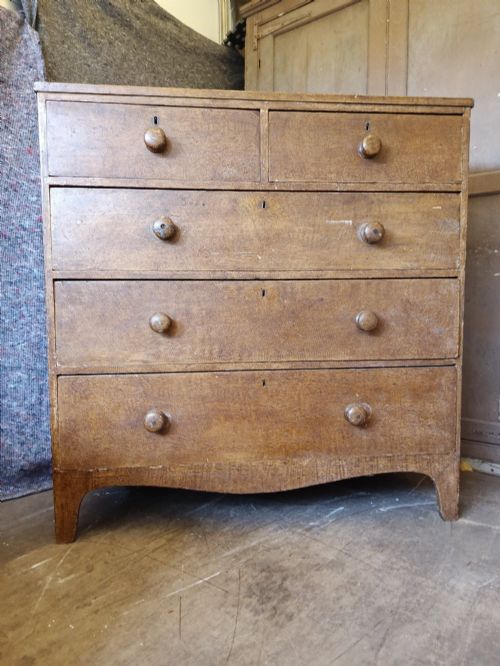
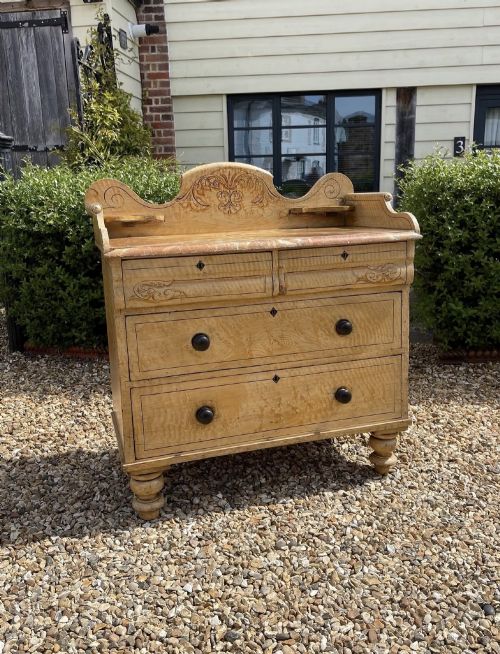
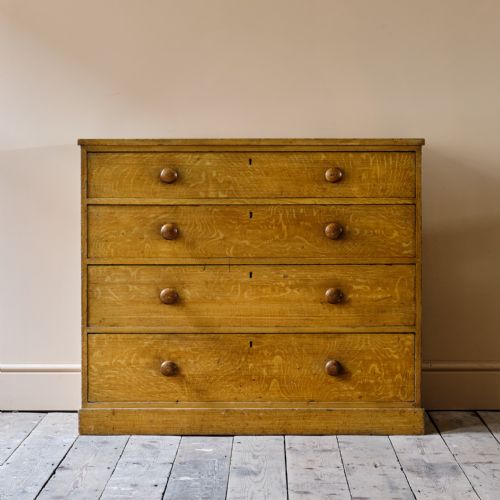
A scumble painted chest is a utilitarian storage piece treated with a translucent glaze that imitates finer wood grains or creates mottled patterns. The examples appearing here span the nineteenth century, including Victorian pieces and earlier Regency items.
Most entries are straightforward pine chests of drawers or blanket boxes created for country houses and farmhouses. Alongside these, buyers encounter trunks, mule chests, and dressing chests bearing original surface finishes.
The style leans heavily into rustic farmhouse and Victorian folk art traditions. These are honest household furnishings finished by hand to simulate mahogany, oak, or simply to add a decorative layer of protection to softwood.
Construction and surface technique
Makers constructed these carcases primarily from solid pine, utilising dovetailed joints for the drawers and sturdy boards for the main body. Iron and brass handles or ceramic pulls complete the hardware.
The distinct finish relies on applying a tinted oil or varnish glaze over a lighter base coat. Artisans manipulated this translucent layer using combs, feathers, rags, or brushes to drag and pattern the surface before it dried.
Listings feature pine as the primary wood, finished with scumbled paint, iron, and brass.
Judging the finish and condition
Quality rests entirely in the preservation and skill of the original surface treatment. A richly layered scumble with depth and movement separates a prized folk art object from a flat, plain application.
Structural integrity of the pine carcase and untouched original hardware heavily influence desirability. Pieces retaining their honest marks of age without heavy overpainting command greater interest from collectors.
The Scumble Painted Chest Glossary
- Scumbling
- The technique of applying a translucent glaze over a solid base coat to create mottled or grained effects. This layer is manipulated while wet to mimic costly timbers.
- Graining
- A specialised paint finish designed specifically to imitate the natural grain of exotic woods like oak, walnut, or mahogany. Artisans used fine brushes and combs to achieve this illusion on cheaper softwoods.
- Mule chest
- A storage chest featuring one or two drawers at the base beneath a hinged lid compartment. They bridge the gap between traditional blanket boxes and modern drawer units.
- Housekeeper's cupboard
- A large storage cabinet traditionally used for linens, dry goods, and household provisions. These utilitarian pieces often received durable painted or scumbled finishes.
- Wellington chest
- A tall, slender chest of drawers secured by a hinged vertical locking side bar held in place with a padlock. They originated in the nineteenth century for compact spaces.
Scumble Painted Chest: Frequently Asked Questions
What is a scumble painted chest?
A scumble painted chest is a wooden storage box or set of drawers finished with a decorative translucent glaze. This method creates faux wood grain or textured patterns on common timber like pine.
These pieces were produced extensively during the nineteenth century for domestic use in country homes and farmhouses. They combine everyday utility with decorative folk art appeal.
Are these chests made of solid wood?
Yes, these items are constructed from solid timber, predominantly pine. Craftsmen relied on traditional joinery methods such as dovetailing for the drawer construction.
Because they were built for daily use, the pine carcases are robust and heavy. The timber provides a stable base for the decorative painted finishes.
How can I date a painted chest?
Dating relies on examining construction traits like handmade dovetails, backboards, and internal drawer linings. Tool marks and the type of iron or brass hardware also offer clues.
The style of the scumble glaze and the wear patterns on the pine help place the piece within the nineteenth century or Regency periods.