







Sculptural Metal Art
Sculptural metal art brings industrial weight and fluid line together, turning utilitarian objects into dramatic focal points for a room.
Sculptural Metal Art
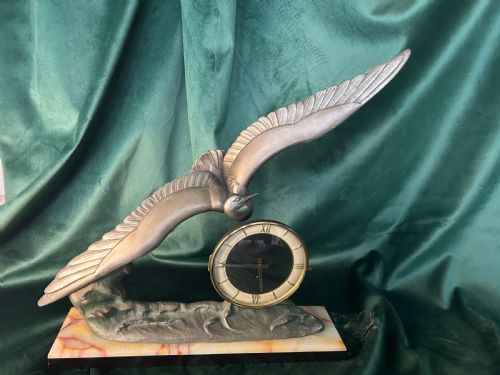
Sculptural metal art encompasses functional objects and decorative pieces fashioned from brass, bronze, spelter, and mixed metals across the nineteenth and twentieth centuries. When searching for sculptural metal art, buyers encounter items that bridge the gap between fine art and everyday utility, such as table lamps, mantel clocks, and bookends.
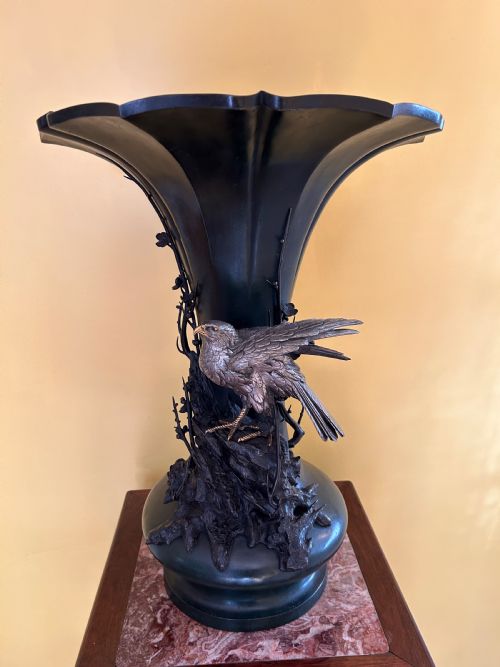
The selections span distinct historical movements, featuring Art Nouveau curves, Art Deco geometry, Japanese Meiji period craftsmanship, and rustic vernacular pieces. Table lamps and figural desk pieces dominate the current selection, often incorporating lighting elements or timepieces directly into the cast metal form.
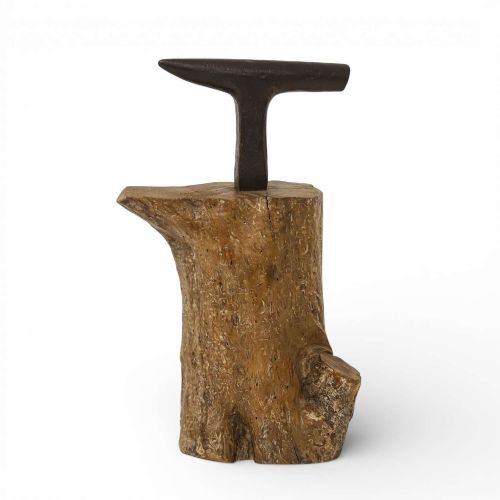
Origins stretch from British workshops to French foundries and Japanese metalworking studios, showing how different cultures approached the manipulation of metal. From a nineteenth-century farrier's anvil mounted on fruitwood to a brass lamp inspired by Fritz Lang's Metropolis, these pieces use metal to capture movement, figure, and architectural form.
Materials and methods of construction
Foundries utilised traditional casting techniques to shape bronze, brass, and spelter into complex figural and geometric compositions. Bronze and spelter allowed makers to render detailed human figures, animals, and architectural motifs with high precision.
Surface treatments complete the construction, incorporating paint, mixed metal patination, and chrome plating to alter the visual weight of the metal. Lamps frequently integrate glass shades and fabric flex wiring, combining rigid metallic structures with delicate illumination.
Sculptural Metal Art Retail Price Guide 2026
Typical asking prices for sculptural metal art among the pieces listed under this phrase on Sellingantiques today, from the lower quarter to the upper quarter. They describe what is for sale here now, not the wider market.
A nineteenth-century farrier's anvil mounted on a fruitwood trunk proves that heavy industry makes surprisingly handsome living room sculpture.
Distinctions in quality and execution
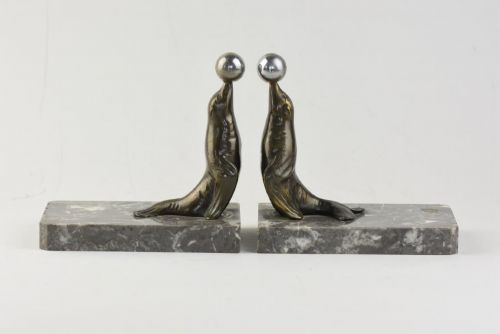
Quality rests upon the crispness of the cast and the sensitivity of the finishing work, separating mass-produced items from master foundry output. Superior pieces display finely chiselled surface details and harmonious proportions in figural subjects like nymphs and sea-lions.
The choice of base material dictates the structural integrity and ageing potential of the object, with bronze offering greater durability than painted spelter. Signed works by established makers demonstrate a higher grade of artistic conception and execution compared to anonymous workshop productions.
L & F Moreau·Francois Moreau·P.Sega
The Sculptural Metal Art Glossary
- Spelter
- An alloy of zinc and lead or copper, commonly utilised as a less expensive alternative to bronze for nineteenth and twentieth-century figures and lamp bases. It takes paint and patination well, though it is softer than bronze.
- Patina
- The surface sheen and colour acquired by metal through age, handling, or chemical treatment. Collectors value a natural pat patina for the historical depth it lends to bronze and brass objects.
- Meiji Period
- The era in Japanese history spanning from 1868 to 1912, noted for exceptional mixed metalwork and traditional craftsmanship. Pieces from this time often combine diverse metallic alloys for contrasting colour effects.
- Beaux-Arts
- An academic architectural and decorative style originating from the École des Beaux-Arts in Paris, characterised by classical symmetry and rich ornamentation. It heavily influenced late nineteenth-century sculptural objects and clocks.
Sculptural Metal Art: Frequently Asked Questions
What defines sculptural metal art?
Sculptural metal art describes pieces where metal is shaped into expressive, artistic forms, often while serving a practical function. This category includes items such as figural lamps, decorative bookends, and mantel clocks.
Unlike flat decorative items or plain utilitarian hardware, these pieces rely on three-dimensional casting and smithing to create visual impact. The metal is treated as a medium for sculpture rather than mere structural support.
How do I care for antique metal objects?
Caring for antique metal requires keeping pieces dry and dusting them gently with a soft, dry cloth. Avoid using harsh chemical polishes that can strip away original patination or damage painted surfaces.
Bronze and brass generally stabilise on their own once given a gentle clean. Painted spelter and mixed metal surfaces need particular care to prevent flaking or abrasion of the top finish.
How can I tell bronze from spelter?
Bronze is heavier, harder, and cooler to the touch than spelter, with a resonant ring when struck lightly. Spelter is a softer zinc alloy that feels lighter and often shows grey metal beneath chips in its painted finish.
Foundries used bronze for high-end sculptural castings, whereas spelter served as an economical substitute for decorative lamps and clocks during the late nineteenth and early twentieth centuries.
How do I date these metal pieces?
Dating relies on stylistic clues, maker signatures, manufacturing techniques, and integrated technology like electrical wiring or clock movements. Art Deco geometric lines point towards the 1920s and 1930s, while flowing organic curves indicate Art Nouveau of the 1890s.
Signatures from known Paris foundries or distinct periods like the Japanese Meiji era provide narrower chronological windows. Examining the construction of mounting hardware and bases also helps establish the era of manufacture.