
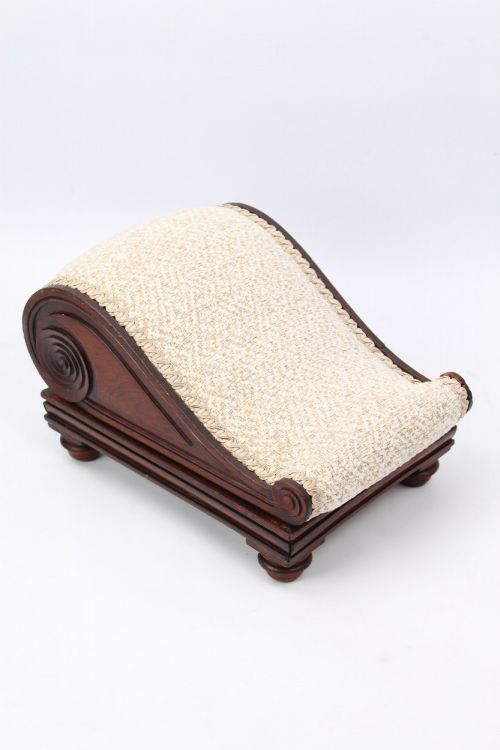


Scrolled Footstool
A scrolled footstool brings tactile comfort and historical character to a room, spanning periods from the seventeenth century through to the Edwardian era.
Scrolled Footstool
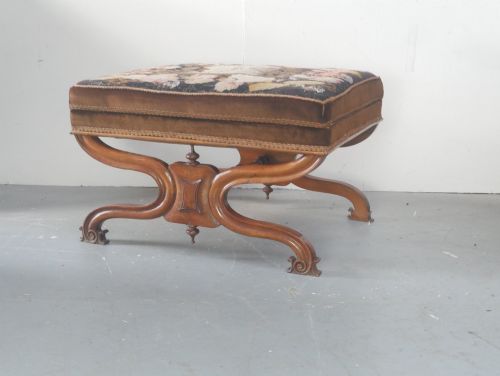
A scrolled footstool typically manifests as a compact seat, bench, or X-framed support designed to elevate the feet or serve as low seating within a period interior.
Buyers encountering this group will most frequently find nineteenth-century and Victorian examples, alongside earlier iterations referencing Regency, Carolean, and Georgian design traditions.
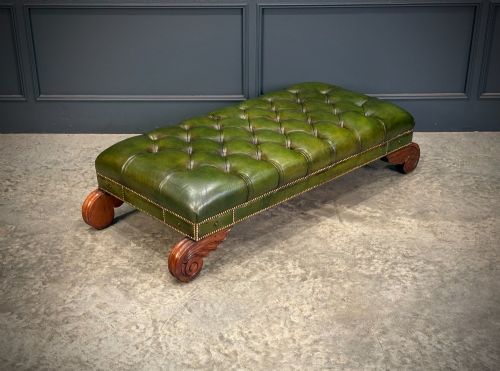
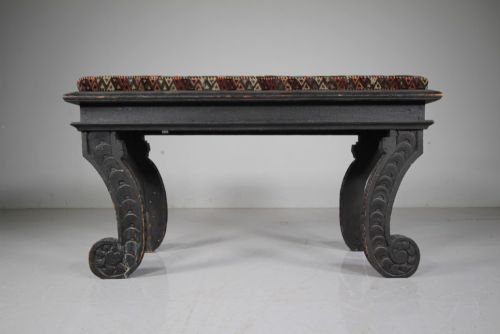
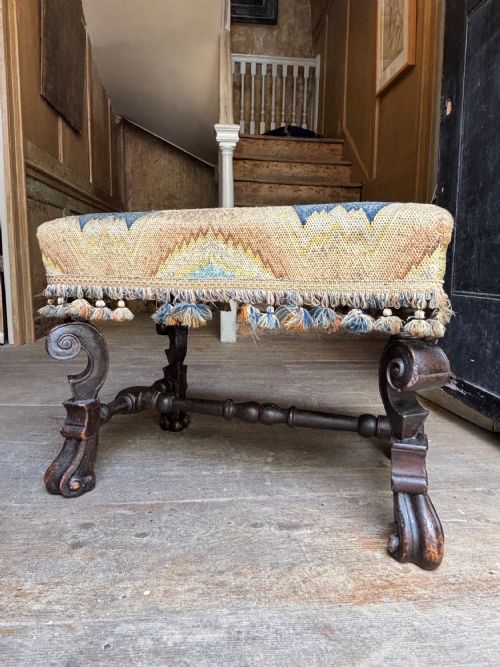
Constructed primarily as footstools or benches, these pieces integrate distinct scrolled wooden frameworks or upholstery treatments derived from classical and baroque vocabulary.
Materials and construction methods
Cabinetmakers utilised dense hardwoods such as mahogany, rosewood, walnut, and oak to carve the structural frames and scrolled supports that bear the weight of the piece.
Upholstery techniques combined traditional textile coverings, including tapestry, damask, velvet, leather, and fabric, often secured over internal padding to provide a durable surface.
Some nineteenth-century makers evidently believed feet deserved the finest rosewood scrolls imaginable.
Distinguishing quality in execution
The distinction between tiers rests upon the crispness of the timber carving on the scrolled elements and the integrity of the underlying joinery within the frame.
Superior examples demonstrate careful selection of figured timbers like rosewood or mahogany, paired with high-grade period textile or leather upholstery that respects the stylistic period.
The Scrolled Footstool Glossary
- Carolean
- A seventeenth-century stylistic period associated with ornate baroque forms, exuberant carving, and rich upholstery. This aesthetic often influences heavy timber framing.
- Regency
- A style spanning the early nineteenth century defined by neoclassical influences, refined mahogany or rosewood structures, and clean architectural lines.
- X-Frame
- A structural base formed by intersecting diagonal timbers resembling the letter X. This configuration provides stability and a distinct architectural profile to stools.
- Damask
- A reversible figured fabric traditionally woven with intricate patterns. It frequently appears as a period-appropriate upholstery choice on formal seating.
Scrolled Footstool: Frequently Asked Questions
How are scrolled footstools used today?
These pieces function primarily as low resting surfaces for feet in sitting rooms or as compact occasional seating beside armchairs. Their modest scale allows them to fit easily into various interior layouts without dominating the floor space.
Placing one near a fireplace or reading chair introduces both practical utility and a distinct historic focal point to the room.
What woods were used for scrolled footstools?
Cabinetmakers relied on dense, durable hardwoods such as mahogany, rosewood, walnut, and oak to construct the supportive frames. These timbers permitted intricate carving while providing the necessary structural strength.
Selected for their rich grain and ability to hold fine detail, these woods define the visual weight and longevity of each piece.
How do I identify a Regency footstool?
Regency pieces typically feature refined mahogany or rosewood timbers, restrained neoclassical lines, and characteristic scrolled wooden elements. Their design reflects early nineteenth-century tastes for classical antiquity.
Examining the turning, joinery, and timber selection helps confirm alignment with this specific stylistic period.
What upholstery materials appear on these stools?
Surviving examples show a variety of period textiles including woven tapestry, patterned damask, velvet, buttoned leather, and standard fabric. These coverings were chosen to complement the formal or domestic function of the furniture.
Original or period-correct replacement textiles contribute significantly to the historical integrity and tactile appeal of the stool.