


Scottish Silver Novelty
These scottish silver novelty pieces combine traditional regional motifs with ingenious mechanical designs to bring character to any collection.
Scottish Silver Novelty
When you search for scottish silver novelty, you encounter a fascinating intersection of regional identity and clever design from the nineteenth and early twentieth centuries. These items take familiar forms inspired by Highland culture and utilitarian objects, transforming them into whimsical desk accessories, condiments, and personal trinkets.
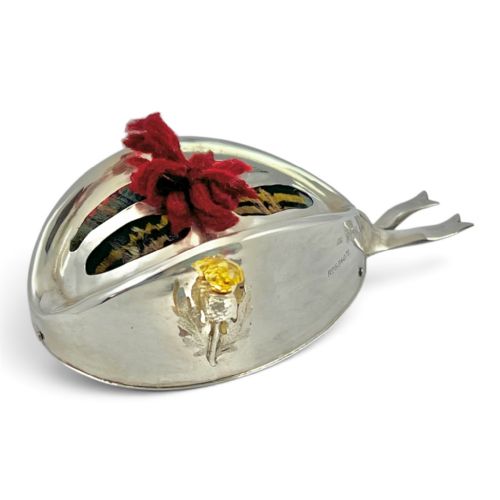
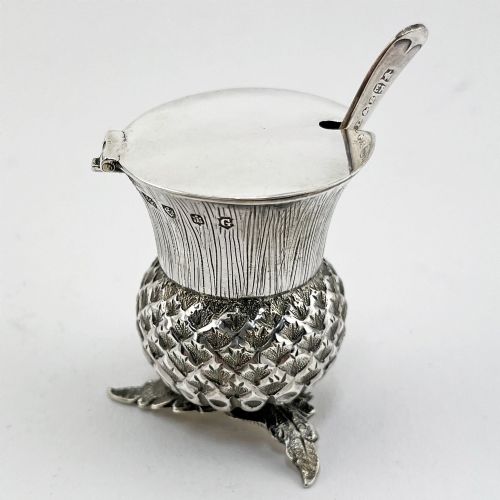
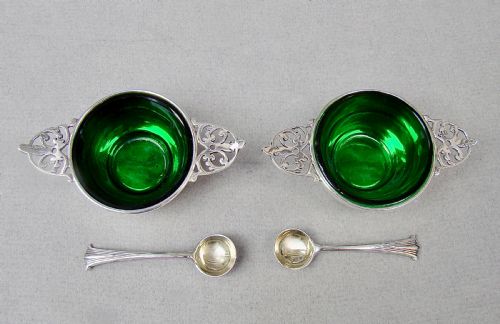
The pieces on this page span from the Victorian and Edwardian eras into the nineteen-thirties, showing how silversmiths played with traditional iconography. You will find items modelled as thistles, quaichs, Glengarry bonnets, trowels, and barrels that served practical functions while amusing their owners.
Smaller personal items such as charms, bookmarks, and vesta cases appear frequently alongside table wares like mustard pots, salt cellars, and double inkwells. Each object relies on a miniature scale and a distinct Scottish motif to deliver its surprising twist.
How they were made
Makers utilised sterling silver alongside silver plate, often pairing the metal with organic elements such as banded agate, mother-of-pearl, amber glass, green glass, wool, and fabric. These contrasting materials added texture and colour to small-scale items like bookmarks and pin cushions.
Silversmiths employed techniques like chased detailing, cut glass shaping, and mechanical joint construction to ensure that trick vesta cases, whistles, and articulated charms functioned smoothly. The integration of hardstones like banded agate required precise stone-cutting skills to fit the silver mounts.
Victorian pranksters delighted in trick vesta cases designed to baffle anyone trying to find the hidden opening.
What varies in quality
The distinction between ordinary and exceptional pieces lies in the crispness of the chasing and the cleverness of the mechanism. Superior items display sharp botanical details on thistles and flawless movement in trick cases or opening components.
Makers who incorporated hardstones like banded agate or detailed materials such as mother-of-pearl achieved a higher grade through precise stonemasonry and secure bezel settings. The weight of the sterling silver and the clarity of the hallmarks also define the standing of a piece within the range.
Josiah Williams & Co·Crisford & Norris·Mackay & Chisholm·Brook & Sons Edinburgh
The Scottish Silver Novelty Glossary
- Quaich
- A traditional Scottish two-handled drinking vessel used for spirits, often miniaturised in novelty silver as salt cellars or small presentation pieces.
- Vesta case
- A small pocket container designed to hold matches, with novelty versions often incorporating hidden spring mechanisms or unexpected shapes.
- Glengarry bonnet
- A traditional Scottish cap with a crease on top and a diced border, which inspired wool-accented silver pin cushions.
- Assay mark
- A stamped symbol indicating the testing of precious metal purity, providing a reliable guide to the town and date of creation.
Scottish Silver Novelty: Frequently Asked Questions
What is a novelty silver piece?
A novelty silver piece is a functional or decorative item shaped into an amusing or unusual form, such as a vesta case styled as a trick box or a mustard pot shaped like a thistle.
These items were popular gifts and desk accessories during the Victorian and Edwardian periods, combining practicality with playful design.
How were silver bookmarks used?
Silver bookmarks, sometimes shaped like trowels with agate or mother-of-pearl handles, marked pages in heavy volumes while offering a decorative flourish for the reader.
They often doubled as paper knives or decorative desk items, reflecting the Victorian fondness for ornamental stationery.
What makes Scottish novelty items distinct?
Scottish novelty silver draws heavily on regional motifs, including thistles, quaichs, and Highland bonnets, often incorporating local hardstones like banded agate.
This regional focus sets them apart from general English novelty pieces by celebrating specific cultural traditions through miniature metalwork.
How do I identify the date of a piece?
Dating is typically achieved by examining the hallmarks stamped on the silver, which reveal the assay office, year letter, and maker's mark.
Stylistic clues, such as the heavy ornamentation of Victorian pieces or the cleaner lines of nineteen-thirties items, also help determine the era.