

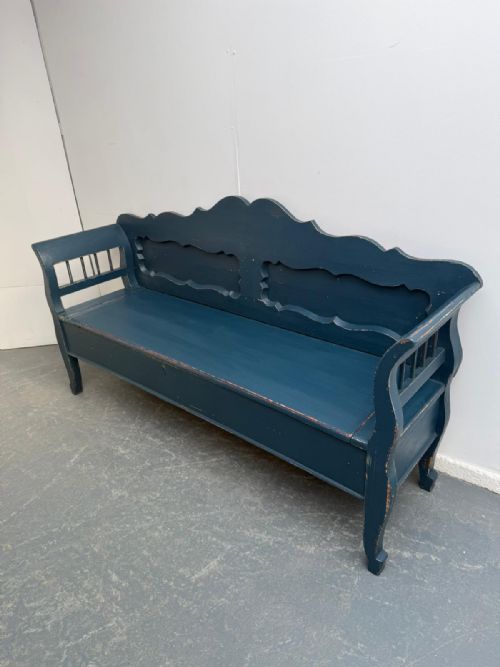


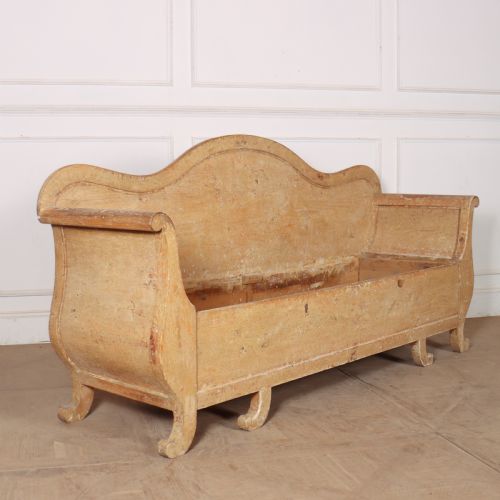

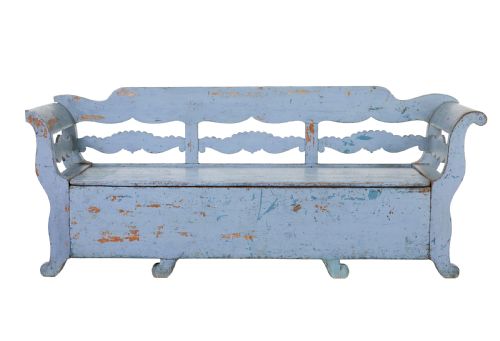

Scandinavian Settle
A scandinavian settle is a wooden seat built to keep out draughts, offering heavy timber construction and painted charm for any interior.
Scandinavian Settle
When you search for a scandinavian settle, you find large wooden seating pieces originating mainly from Sweden during the eighteenth and nineteenth centuries. These items serve as functional benches and storage units, often incorporating high backs and enclosed sides.
The versions met most frequently on this page belong to the nineteenth century, alongside earlier eighteenth-century examples and Georgian pieces. They appear in styles such as Scandinavian Country, Gustavian, and European Folk Art, reflecting domestic traditions.
Most entries take the form of benches or storage benches designed for daily household use. They combine practical storage capacity with sturdy wooden frames, making them central items in traditional northern European interiors.
How they were made
Makers constructed these pieces primarily from solid pine timber, shaping the wood to withstand heavy domestic demands. Surface finishes relied heavily on paint applied directly to the pine, creating layered colour effects over decades.
Upholstery appears through the use of fabric and linen on selected seated designs, while unpainted pine surfaces highlight the natural grain of the wood. Craftsmanship focuses on durable joinery that keeps large storage benches stable and rigid.
Scandinavian Settle Retail Price Guide 2026
Typical asking prices for scandinavian settle among the pieces listed under this phrase on Sellingantiques today, from the lower quarter to the upper quarter. They describe what is for sale here now, not the wider market.
The available selection highlights European folk art traditions alongside formal Gustavian design principles.
What varies in quality
The distinction between standard and superior pieces rests upon the integrity of the original paintwork and the crispness of the timber mouldings. Retaining an authentic painted surface without modern intervention elevates the character of the item.
Proportion and scale dictate the visual weight of the bench within a room, with finer examples displaying balanced architectural details. The condition of the underlying pine structure also determines how well the bench has survived centuries of use.
The Scandinavian Settle Glossary
- Settle
- A wooden bench with high backs, solid arms, and often a enclosed lower section for storage. This form protected occupants from cold draughts in historical homes.
- Gustavian
- The Swedish interpretation of neoclassical style, characterised by restrained ornamentation and pale painted finishes. It dates from the late eighteenth century onwards.
- Pine
- A softwood commonly utilised throughout northern European furniture making for its accessibility and workability. It accepts paint layers readily.
- Folk Art
- Objects created within a regional tradition by artisan makers rather than academic workshops. These pieces showcase local aesthetic preferences.
Scandinavian Settle: Frequently Asked Questions
What is a scandinavian settle?
A scandinavian settle is a high-backed wooden bench, frequently featuring enclosed sides and integrated storage beneath the seat. These pieces originated in northern European homes to block cold air.
They function today as statement seating that anchors a hallway, kitchen, or living space. Their robust build suits heavy everyday use.
How were these settles used historically?
Historically, families positioned these benches near fireplaces to trap heat and shield occupants from drafts circulating through stone rooms. The high backs directed warmth toward the people sitting.
Many examples included enclosed base compartments to store household goods, linens, or firewood. This dual purpose made them vital items in rural homes.
What materials make up these pieces?
Makers relied almost exclusively on solid pine timber to construct the frames and panels of these benches. Layers of traditional paint protect the wood and define their decorative appearance.
Some variants incorporate fabric or linen elements for added comfort. The combination of painted wood and textile details defines their rustic aesthetic.
How do I identify Gustavian style?
Gustavian pieces display neoclassical restraint inspired by French royal fashion but adapted with Scandinavian simplicity. They typically feature pale painted surfaces and subtle carved detailing.
This style emerged in late eighteenth-century Sweden and continued to influence nineteenth-century furniture makers. The aesthetic prioritises light colours and balanced proportions.