

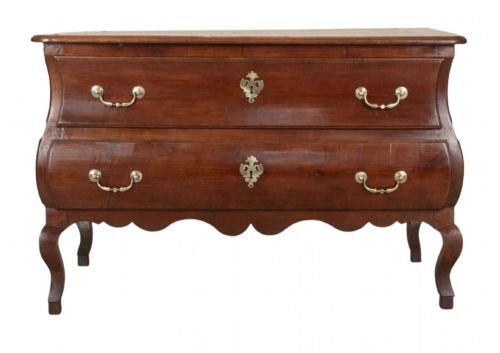


Scalloped Drawer Chest
A scalloped drawer chest brings sculptural movement and fitted storage to a room, offering serpentine or shaped profiles paired with traditional timber construction.
Scalloped Drawer Chest
A scalloped drawer chest encompasses antique chests of drawers, commodes, miniature furniture, and banks of drawers featuring curved or shaped fronts and edges. These storage pieces appear across eighteenth-century, nineteenth-century, Edwardian, and Victorian periods, reflecting diverse regional cabinetmaking traditions.
The selections available range from French provincial fruitwood commodes and serpentine chests to English oak, mahogany, and walnut designs, alongside small yew wood dressers and flight of drawers configurations. Buyers frequently encounter nineteenth-century mahogany or walnut chests and eighteenth-century painted or polished wood commodes.
Makers and workshops across England and France utilised distinct regional aesthetics, producing everything from miniature mahogany chests to monumental walnut commodes with scalloped brass handles. Each piece demonstrates how historical cabinetmakers adapted curved drawer fronts to domestic storage furniture.
How they were made
Cabinetmakers constructed these chests using solid and veneered timbers such as oak, mahogany, walnut, cherrywood, and yew wood, often applying painted finishes to wood surfaces. The shaping of a scalloped or serpentine drawer front required precise sawing and smoothing of dense hardwoods to achieve flowing, curved contours.
Fittings and hardware such as brass handles and mother of pearl details were secured to drawers that frequently incorporated traditional joinery like dovetails. French provincial commodes and English country chests alike relied on hand-finished timber frames designed to support multiple stacked drawers.
Scalloped Drawer Chest Retail Price Guide 2026
Typical asking prices for scalloped drawer chest among the pieces listed under this phrase on Sellingantiques today, from the lower quarter to the upper quarter. They describe what is for sale here now, not the wider market.
A twelve-drawer bank brings an unexpected archive room efficiency directly into the domestic sitting room.
What varies in quality
The refinement of the curved drawer front defines the distinction between standard examples and superior craftsmanship, as shaping a serpentine or scalloped edge demands exceptional hand-tool mastery. The fluidity of the wood grain across the curved facade indicates how carefully the maker selected and matched timber boards.
Hardware integration and timber selection also divide the range, with original brass handles and finely figured walnut, mahogany, or cherrywood elevating a piece. Structural integrity in the drawer boxes and the crispness of the moulded edges demonstrate the maker's skill.
The Scalloped Drawer Chest Glossary
- Serpentine
- A furniture front characterised by a double-concave central section flanked by convex ends. This undulating contour creates movement across the face of a chest.
- Commode
- A low French chest of drawers originating in the seventeenth century. These pieces often feature decorative wood veneers or painted finishes.
- Sauteuse
- A French term for a small, light commode or chest typically fitted with two drawers. They frequently stand on relatively tall legs.
- Dovetail
- A traditional wood joint formed by interlocking wedge-shaped fingers. It provides durable corner construction for drawer boxes.
- Raised gallery
- A low decorative railing or superstructure fitted to the top surface of a piece of furniture. It prevents items from sliding off the edge.
Scalloped Drawer Chest: Frequently Asked Questions
Which woods are most common?
Mahogany, walnut, oak, and cherrywood appear frequently in these listings. Painted wood and yew wood also feature in regional cabinetmaking.
Each timber offers different grain patterns that enhance the visual impact of curved drawer fronts.
How do French and English styles differ?
French pieces often take the form of commodes with serpentine or painted surfaces, reflecting continental provincial tastes. English examples tend to utilise oak, mahogany, or walnut in traditional chest of drawers formats.
Both traditions employ curved woodworking techniques to soften rigid rectangular storage forms.
Where were miniature chests used?
Miniature chests served as salesman's samples, apprentices' masterworks, or specialised tabletop storage for valuables. Their small scale mirrors the full-sized chests produced during the Victorian era.
Cabinetmakers used the same meticulous joinery and shaped fronts found on larger furniture.