





Scalloped Diamond Ring
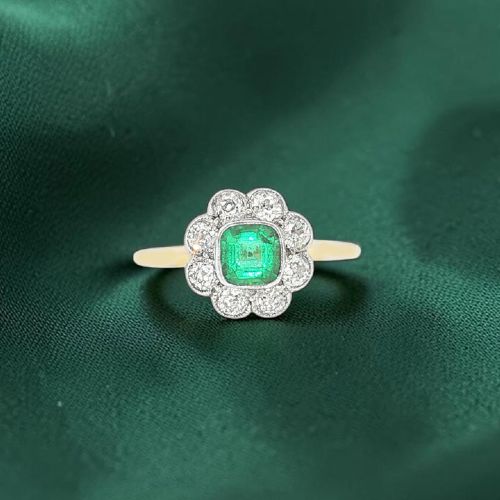
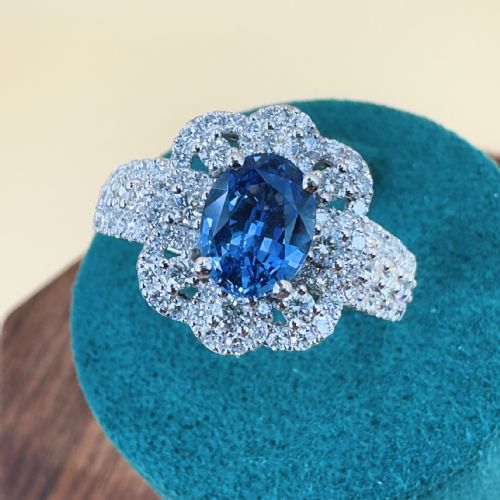
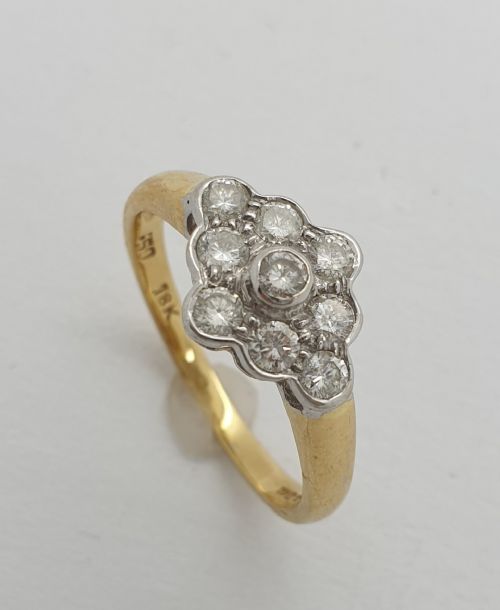
A scalloped diamond ring brings together angular geometry and soft scalloped edges, offering a striking cluster profile for everyday wear.
Scalloped Diamond Ring
When you search for a scalloped diamond ring, you encounter cluster rings featuring central diamonds or coloured gemstones framed by concentric or geometric outlines. These rings span periods from the Edwardian era through the 1930s, 1940s, 1950s, and 1960s, capturing distinct stylistic shifts in jewellery design.
The versions you meet most frequently on this page combine diamond clusters with platinum settings or 18ct gold, often incorporating emeralds, rubies, or sapphires. Examples range from delicate Edwardian French mountings to bolder mid-century cocktail pieces with distinct scalloped borders.
Cluster formations define the group, whether arranged in an Art Deco geometric pattern or a retro French tank design. The integration of old cut diamonds and cabochon gemstones gives each piece a distinct character tied to its decade of manufacture.
How they were made
Maker techniques rely on combinations of platinum and 18ct gold or 18ct white gold to securely mount stones while keeping metalwork refined. Platinum settings provide robust claws and intricate gallery work, contrasting with warm yellow or white gold shanks.
Gemstone selection pairs old cut diamonds with calibre-cut emeralds, rubies, and Ceylon sapphires. Setting styles utilise grain, bezel, and cluster arrangements to emphasise the scalloped outer edges characteristic of the designs.
Scalloped Diamond Ring Retail Price Guide 2026
Typical asking prices for scalloped diamond ring among the pieces listed under this phrase on Sellingantiques today, from the lower quarter to the upper quarter. They describe what is for sale here now, not the wider market.
Some cocktail rings carry enough platinum weight to remind your finger they survived decades of cocktail parties.
What varies in quality
Quality separates through the precision of the cluster symmetry and the crispness of the scalloped edge work. Higher tier examples demonstrate meticulous hand-pierced gallery construction and well-matched stone proportions.
The selection of central stones, from certified large diamonds to high-clarity sapphires and emeralds, dictates the presence of the piece. The integration between the platinum setting and the underlying gold shank also indicates the standard of workshop execution.
Le Vian
The Scalloped Diamond Ring Glossary
- Cluster ring
- A ring design featuring a central gemstone surrounded by a group of smaller stones. This configuration maximises visual presence and sparkle on the hand.
- Old cut diamond
- A diamond cut by hand before modern machinery, characterised by a smaller table, higher crown, and open culet. These stones display a softer, candlelit luminescence.
- Cabochon sapphire
- A sapphire shaped and polished with a smooth, rounded dome rather than faceted surfaces. This traditional cut highlights the deep blue tone of the gem.
Scalloped Diamond Ring: Frequently Asked Questions
What periods do these rings come from?
The pieces span several decades, including Edwardian examples alongside Art Deco designs from the 1930s and 1940s. Mid-century and 1960s rings also appear frequently.
Each period brings distinct mountings, from delicate milgrain Edwardian details to bolder retro cocktail proportions.
What metals are used in these rings?
Construction primarily involves 18ct gold, 18ct white gold, and platinum. Many pieces pair platinum settings with yellow or white gold shanks.
This combination provided both the bright white backdrop needed for diamonds and the structural support required for cluster designs.
Are coloured gemstones common in these designs?
Coloured stones frequently appear alongside diamonds in these clusters. Rubies, emeralds, and sapphires - including Ceylon varieties - act as central or accent stones.
These additions create high-contrast geometric patterns typical of the Art Deco and mid-century periods.
How do old cut diamonds differ from modern stones?
Old cut diamonds are shaped by hand with fewer, larger facets and distinct proportions. They produce a warm, distinctive glow under various lighting conditions.
This historic cutting style contributes to the authentic character of Edwardian and early twentieth-century cluster rings.