



Satinwood Tea Box
A satinwood tea box brings golden timber and precise marquetry to the table, holding dry leaves safely under lock and key.
Satinwood Tea Box
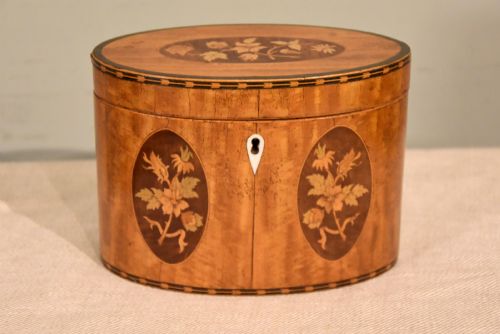
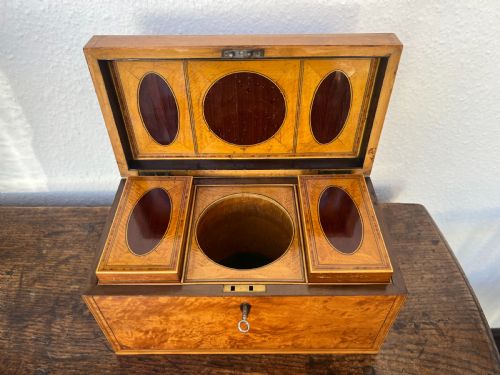
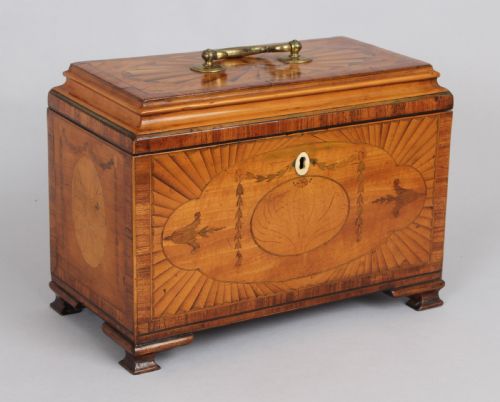
When you search for a satinwood tea box, you encounter Georgian and Regency pieces designed to store expensive imported leaves. These vessels appear in oval, octagonal, and sarcophagus forms, often accompanied by interior compartments for different tea varieties and sometimes retaining their original glass mixing bowls.
The objects span the eighteenth and nineteenth centuries, taking the shape of tea caddies, teapoys, and larger decorative boxes. Many examples exhibit classic geometric or shell inlays executed in contrasting timbers.
Georgian and George III items dominate the selection, showing the height of neoclassical taste in British cabinet making. Alongside standard tea caddies, related forms such as sewing tables and jewellery boxes occasionally surface.
How they were made
Cabinet makers built these boxes using a solid carcase or pine foundation covered in figured satinwood veneers. Artisans employed contrasting woods such as ebony, boxwood, harewood, and rosewood for stringing, crossbanding, and marquetry details.
Inlays frequently featured motifs like butterflies and conch shells, requiring meticulous hand-cutting and fitting. Brass escutcheons, handles, and occasional stringing completed the construction.
Internal compartments often included fitted lids with small bone or ivory knobs to keep the tea fresh.
Listings feature satinwood combined with brass, bone, ebony, boxwood, harewood, mahogany, and rosewood across Georgian and Victorian periods.
What varies in quality
Quality rests in the choice of timber and the precision of the veneer work. Highly figured satinwood with a deep, chatoyant grain distinguishes superior pieces from plain timber surfaces.
The intricacy and execution of the marquetry and stringing dictate the grade of the box. Finely cut shell motifs or complex butterfly inlays show the hand of a skilled workshop, whereas simpler boxes rely solely on plain veneers.
Original interior fittings, such as glass mixing bowls and matching caddy lids, elevate a piece. The survival of functioning locks with original keys also alters the standing of the box.
The Satinwood Tea Box Glossary
- Satinwood
- A durable tropical hardwood known for its golden lustre and reflective grain. It serves as the primary veneer on late eighteenth-century polite furniture.
- Harewood
- Sycamore timber stained to a greenish-grey hue, frequently utilised in Georgian marquetry and inlays. It provides a subtle contrast against warm satinwood.
- Stringing
- Thin lines of contrasting wood inlaid into channels on the surface of a box. This technique outlines panels and edges.
- Crossbanding
- A border of veneer laid around the main panel of a box so that the grain runs at right angles to the centre. It frames the primary wood.
- Teapoy
- A small stand or large caddy mounted on a pillar and claw feet, used for holding tea. These pieces often contain multiple interior compartments.
- Sarcophagus form
- A box shape featuring a domed or sloping lid resting on a rectangular base, popular during the Regency period.
Satinwood Tea Box: Frequently Asked Questions
What is a satinwood tea box?
A satinwood tea box is a small wooden chest created in the eighteenth or nineteenth century to store dry tea leaves. Because tea was a costly commodity, these containers were fitted with secure locks and divided interiors.
Cabinet makers used light-reflecting satinwood veneers decorated with contrasting timber stringing and shell inlays. Today, collectors value them for their cabinet-making skill and warm golden appearance.
Did these boxes always hold tea?
While originally manufactured to store black and green teas, many boxes lost their internal canisters over time. Owners subsequently repurposed them to hold jewellery, sewing equipment, or letters.
Some surviving pieces retain glass mixing bowls used for blending different teas before brewing. Others show dual compartments intended for sugar and leaf storage.
How do I care for satinwood?
Satinwood requires stable environmental conditions away from direct sunlight and strong heat sources. Excessive light can bleach the golden timber, while dry air causes the delicate veneers to lift.
Regular dusting with a soft, dry cloth is sufficient for maintenance. Avoid modern liquid polishes, applying traditional beeswax sparingly if the surface feels dry.