

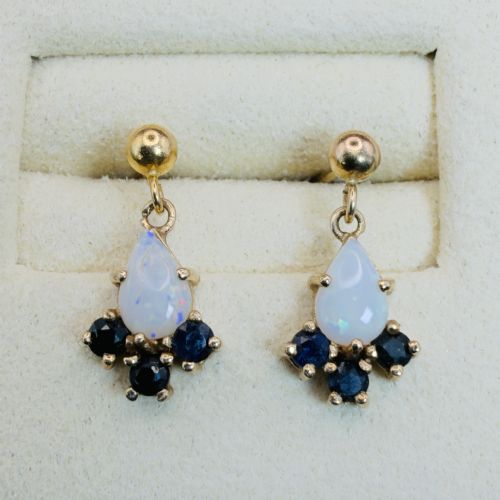


Sapphire Cluster Studs
Sapphire cluster studs are brilliant gemstone earrings that bring vivid colour and sparkle directly to the earlobe.
Sapphire Cluster Studs
When you search for sapphire cluster studs, you encounter a selection of earrings featuring central sapphires surrounded by accompanying gems. The pieces span periods from 1910 through the 1930s, 1950s, and 1960s, showing styles such as Edwardian, Art Deco, mid-century, and vintage classic.
Earrings and drop earrings dominate the listings, fashioned in 9ct yellow gold, 18ct gold, and 18ct white gold. The central stones range from standard sapphires to basaltic sapphires, padparadscha sapphires, and pink sapphires.
Surrounding stones predominantly include diamonds, alongside combinations involving peridots. You meet both straightforward gold mountings and complex multi-stone configurations across these decades.
How they were made
The makers build these cluster earrings using 9ct yellow gold, 18ct gold, and 18ct white gold as the primary metal foundations. Gemstones are securely set to form distinct floral or geometric clusters around the central focal stone.
Lapidary techniques shape the sapphires and diamonds into specific cuts, including marquis cuts alongside standard brilliant formats. Jewelers arrange peripheral diamonds or peridots to frame the central sapphire securely within the metalwork.
Sapphire Cluster Studs Retail Price Guide 2026
Typical asking prices for sapphire cluster studs among the pieces listed under this phrase on Sellingantiques today, from the lower quarter to the upper quarter. They describe what is for sale here now, not the wider market.
Materials span sapphires, diamonds, peridots, and three distinct gold types.
What varies in quality
The distinction between tiers rests upon the carat weight and saturation of the central sapphire, alongside the total carat weight of the surrounding diamonds. Pieces featuring larger basaltic sapphires or substantial diamond borders occupy the upper range of the selection.
Gold purity also dictates quality grades, moving from 9ct yellow gold settings to heavier 18ct white gold and standard 18ct gold mountings. The precision of the stone arrangement and the complexity of the cluster design define the finer examples.
The Sapphire Cluster Studs Glossary
- Cluster
- A setting style where a central gemstone is surrounded by a ring of smaller stones. This arrangement maximises overall visual presence and sparkle.
- Basaltic Sapphire
- A sapphire originating from alkali basaltic volcanic terrains. These stones typically display deep, saturated blue hues.
- Marquis Cut
- A boat-shaped gemstone cut featuring pointed ends and curved sides. This elongated shape offers a larger surface area appearance relative to its weight.
Sapphire Cluster Studs: Frequently Asked Questions
How do I wear sapphire cluster studs?
These earrings suit both daily wear and evening occasions due to their versatile size and secure fastening. They sit closely on the earlobe, making them practical for regular use.
Pair them with simple outfits to let the coloured stones and diamond borders stand out as the focal point of your attire.
What periods do these earrings represent?
The pieces span several decades from the early twentieth century through the mid-century era. You find Edwardian and Art Deco influences alongside 1950s and 1960s designs.
Each period introduces distinct gold choices, from 18ct white gold in earlier decades to 9ct yellow gold in later mid-century items.
Are all the cluster studs made of gold?
The metalwork relies entirely on gold alloys, specifically 9ct yellow gold, 18ct gold, and 18ct white gold. Different eras favoured different metal colours and purities for mounting stones.
White gold frequently accompanies diamond-heavy clusters from the 1930s, while yellow gold appears across various decades.
What stones accompany the central sapphire?
Diamonds form the most common surrounding stone, appearing in varying carat weights around the central sapphire. Peridots also appear in specific coloured cluster configurations from the mid-century period.
These secondary stones define the cluster pattern, creating contrast against the main sapphire.