



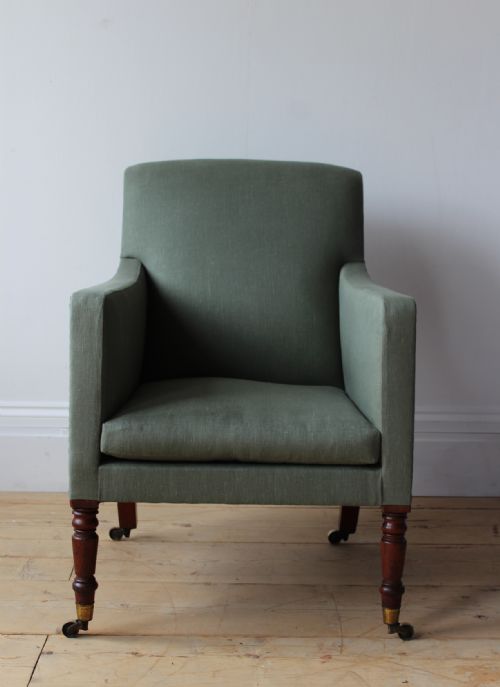
Sage Green Chairs
Sage green chairs bring rich nineteenth-century colour and textured upholstery into modern rooms.
Sage Green Chairs
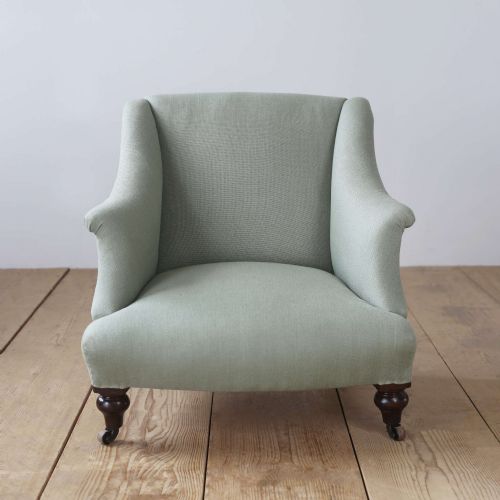
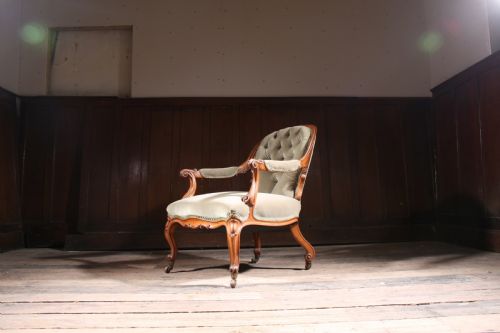
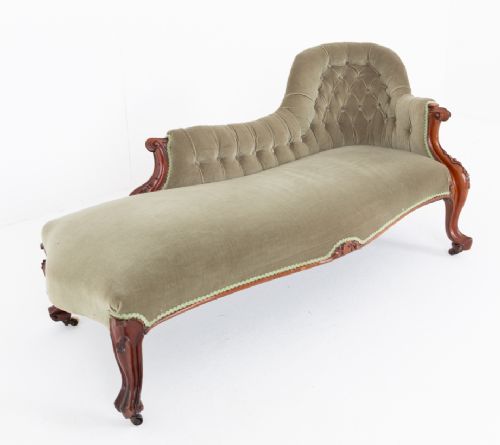
Sage green chairs on this page span the Victorian and Edwardian periods, taking forms such as armchairs, nursing chairs, library chairs, and chaise longues. These pieces offer deep-seated comfort and distinct nineteenth-century silhouettes.
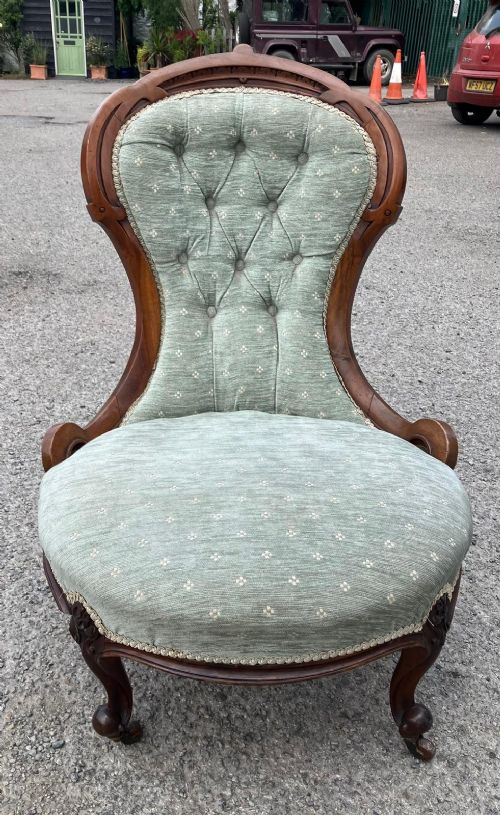
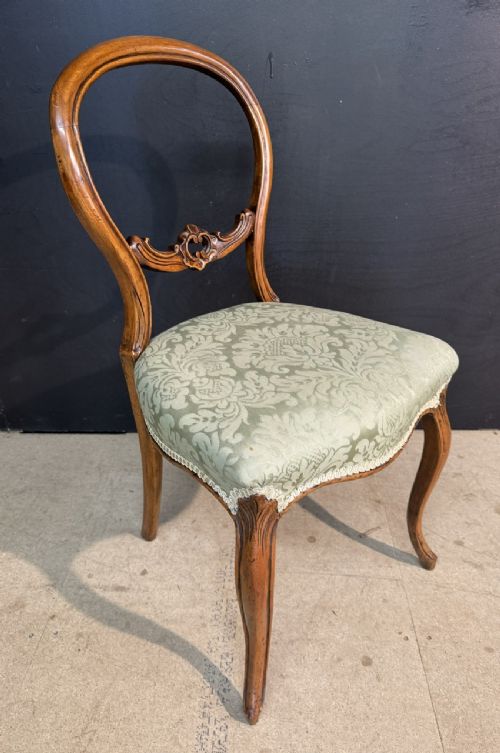
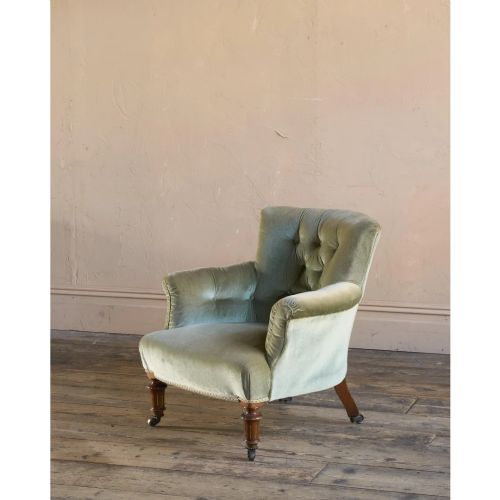
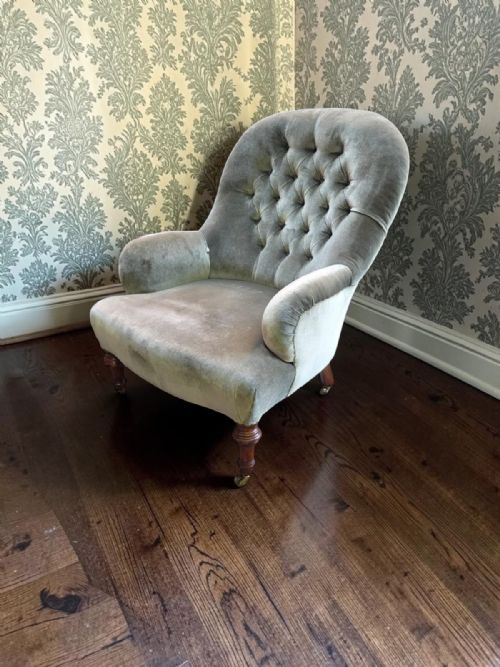
The most common forms you will encounter here are nineteenth-century armchairs and Victorian nursing chairs, often featuring button-backed upholstery. Alongside these sit occasional chaise longues and sets of dining chairs.
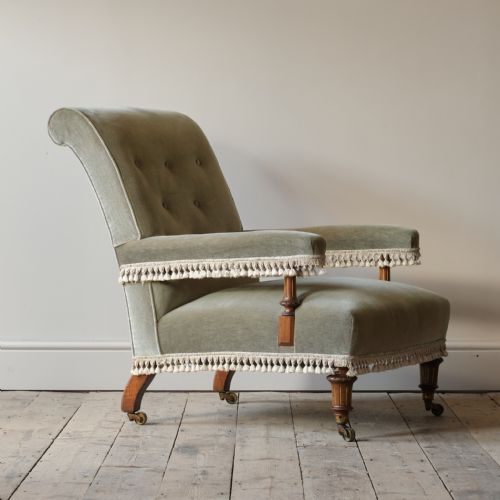
Makers and styles stretch from mid-nineteenth-century Gillows workshops to William and Mary revival pieces, as well as Howard style armchairs. Each piece demonstrates the period's preference for sturdy timber frames paired with soft textile coverings.
Materials and construction
Frames rely on hardwoods such as mahogany, walnut, oak, and rosewood, carved or turned to form cabriole legs and structural supports. Metal elements like brass appear periodically in castors and hardware.
Upholstery relies on velvet, linen, and general fabric coverings stretched over padded interiors, frequently finished with button-backed detailing.
Sage Green Chairs Retail Price Guide 2026
Typical asking prices for sage green chairs among the pieces listed under this phrase on Sellingantiques today, from the lower quarter to the upper quarter. They describe what is for sale here now, not the wider market.
Judging quality
Quality rests in the crispness of timber carving and the architectural proportion of the frame, where substantial walnut or mahogany structures outlast lighter alternatives. Maker attribution, such as work bearing the stamp of Gillows, elevates a piece through documented workshop provenance.
The refinement of the upholstery work, from tight buttoning to the selection of velvet or linen, distinguishes standard workshop production from finer examples.
Gillows
The Sage Green Chairs Glossary
- Cabriole leg
- A furniture leg that curves outward at the knee and tapers inward to an ankle, mimicking an animal's leg. This shape became popular during the seventeenth century and returned in later revival styles.
- Chaise longue
- An upholstered sofa shaped like a chair with a long seat for reclining. Nineteenth-century versions often feature a single scrolled end and exposed timber framing.
- Nursing chair
- A low-seated Victorian chair designed for comfort while nursing infants. The low seat allowed sitters to tend to children close to the hearth.
- Button back
- An upholstery technique where deep buttons are pulled through the padding at regular intervals to create geometric indentations. This method secured internal stuffing while adding texture.
- Giltwood
- Timber coated with a thin layer of gold leaf. It appeared frequently on decorative nineteenth-century revival seating.
Sage Green Chairs: Frequently Asked Questions
What is a nursing chair?
A nursing chair is a low-seated Victorian chair designed for comfort while tending to infants near the fire.
These pieces feature shortened legs and supportive upholstered backs, making them distinct from standard dining or desk seating.
How do I identify a Victorian armchair?
Victorian armchairs are identified by sturdy timber frames, often in mahogany or walnut, paired with sprung upholstery.
They frequently display button-backed covers and turned or cabriole wooden legs characteristic of nineteenth-century production.
What is a Howard style armchair?
A Howard style armchair is a nineteenth-century seating form known for deep, padded comfort and rolled arms.
These chairs set a standard for upholstered lounging that later inspired generations of English seating design.
Are these chairs suitable for daily use?
Most nineteenth-century chairs are structurally robust enough for regular seating if their wooden frames and joints remain sound.
Buyers often check the internal webbing and padding to ensure modern sitting comfort matches the historic frame.