


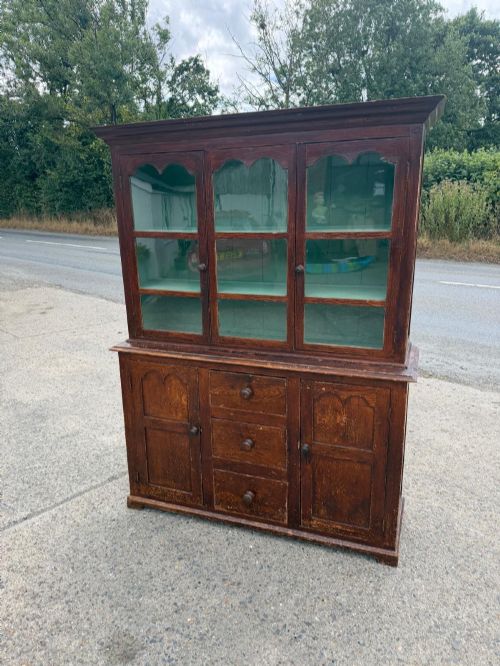


Rustic Wood Bookcase
These rustic wood bookcase pieces bring practical character and warmth to a room through solid timber construction and honest vernacular forms.
Rustic Wood Bookcase
A rustic wood bookcase offers straightforward shelving for libraries and living spaces, drawing on vernacular traditions rather than formal court styles. These pieces range from simple open standing shelves to glazed display cabinets and two-piece dressers.
The selections span English, French, and Italian regional designs, with pieces originating from the eighteenth century through to the early twentieth century. Buyers encounter vernacular expressions such as French Provincial and rustic country alongside Victorian country interpretations.
Open formats predominate among the simpler examples, while taller glazed configurations provide protected storage for books and ceramics. Each piece reflects the utilitarian needs of past households, fashioned from accessible regional timbers.
Materials and construction methods
Makers utilised available regional timbers, constructing carcasses principally from pine, deal, oak, pitch pine, elm, walnut, and mahogany. These solid woods provided the necessary structural strength for heavy volumes without relying on elaborate framing.
Glazed doors utilise fitted glass panes held by timber glazing bars, while hardware incorporates brass fixtures and porcelain details. Painted wood surfaces appear alongside polished and natural timber finishes, showing the original treatment of the grain.
Rustic Wood Bookcase Retail Price Guide 2026
Typical asking prices for rustic wood bookcase among the pieces listed under this phrase on Sellingantiques today, from the lower quarter to the upper quarter. They describe what is for sale here now, not the wider market.
The inventory records pieces spanning the eighteenth century, the Victorian era, and early twentieth-century decades up to nineteen-thirty.
Distinctions in quality
Quality rests in the integrity of the timber selection and the restraint of the joinery, distinguishing utilitarian workshop output from more considered regional cabinetmaking. Heavier woods like oak and walnut command attention for their durability and deeper grain patination.
Proportion and the handling of original surfaces define the better examples, where patinated painted finishes or warm deal surfaces remain undisturbed. Finer pieces demonstrate careful attention to cornice mouldings and the balance of open shelving against enclosed cupboard bases.
The Rustic Wood Bookcase Glossary
- Pitch pine
- A resinous softwood noted for its strong grain pattern and durability, frequently utilised in nineteenth-century vernacular furniture. It yields a robust surface that withstands heavy daily use.
- Deal wood
- A historical term for fir or pine timber used widely in regional European cabinetry. It provides a light, workable medium for painted or polished domestic furnishings.
- Commode
- A low standing cabinet or chest with doors or drawers, sometimes paired with upper display shelving. In French regional pieces, it forms the substantial base for a vitrine top.
Rustic Wood Bookcase: Frequently Asked Questions
What woods were used for these bookcases?
Makers relied on accessible regional timbers, predominantly pine, deal, oak, elm, pitch pine, and walnut. These woods were chosen for their local availability and structural reliability.
Selected pieces also incorporate painted wood finishes, mahogany, and porcelain or brass details to accent the primary timber structure.
How do I distinguish regional styles?
French country and provincial examples often display softer fruitwood or oak tones with subtle panel moulding, whereas English country pieces lean towards straightforward deal and pine construction.
Italian pieces from the eighteenth century demonstrate darker walnut tones and heavier proportions, reflecting the distinct cabinetmaking traditions of the Mediterranean.
Are these bookcases suitable for modern homes?
The open shelving and compact footprints of small standing bookcases integrate easily into contemporary living rooms and studies. Their honest vernacular character brings natural texture to modern interiors.
Glazed variants and two-piece dressers provide practical dual storage for books below and display space above, keeping collections organised and protected.
How do open and glazed bookcases differ?
Open bookcases offer immediate access to volumes and present a lighter visual weight within a room, utilising simple standing frames with fixed or adjustable shelves.
Glazed bookcases and vitrines protect books and delicate objects behind glass doors, adding architectural presence through panel work and upper display compartments.