





Rustic Umbrella Holder
These rustic umbrella holder designs bring rugged charm to an entrance hall, combining practical storage for wet days with striking natural materials.
Rustic Umbrella Holder
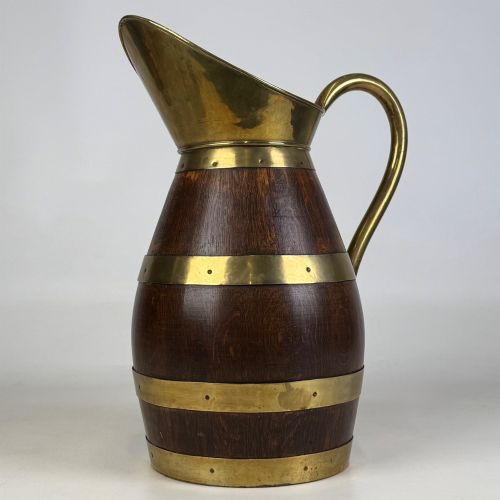
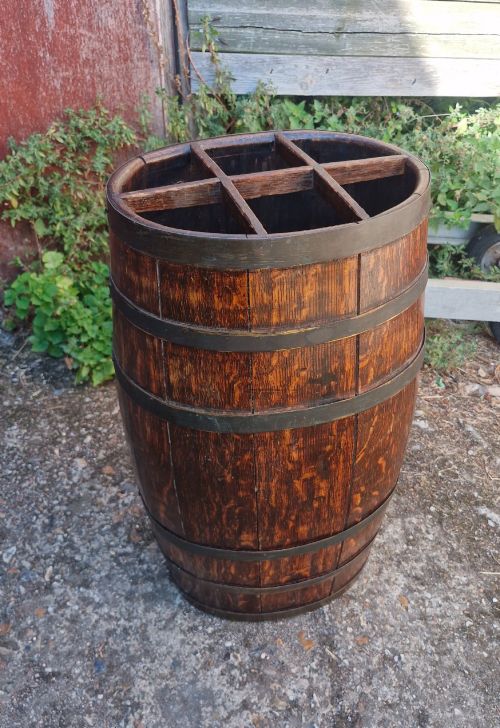
A rustic umbrella holder serves as a functional hallway piece designed to store wet walking sticks, canes and umbrellas. These items surface frequently in formats such as oak barrels, coopered vessels and carved wooden animal figures.
The pieces appearing on this page span the nineteenth century through to the early twentieth century, taking shape during periods including the Victorian, Edwardian and Arts and Crafts eras. Buyers encounter traditional English country items alongside ornate continental Black Forest carvings.
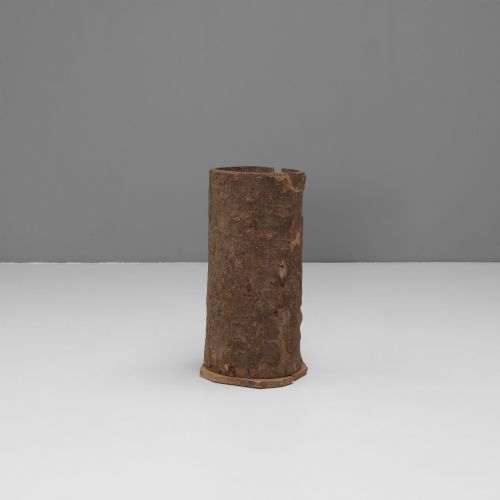
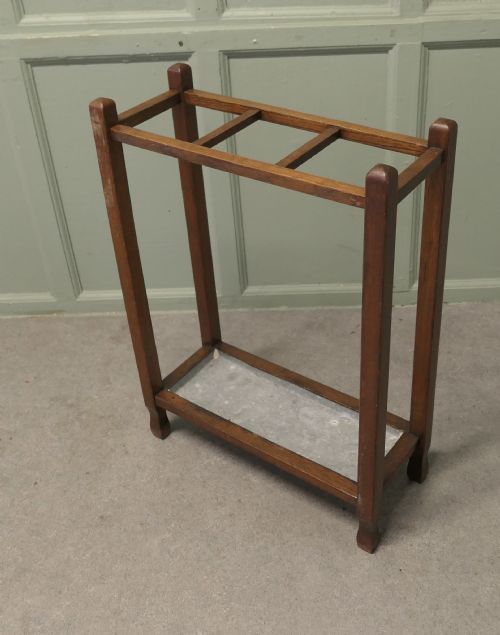
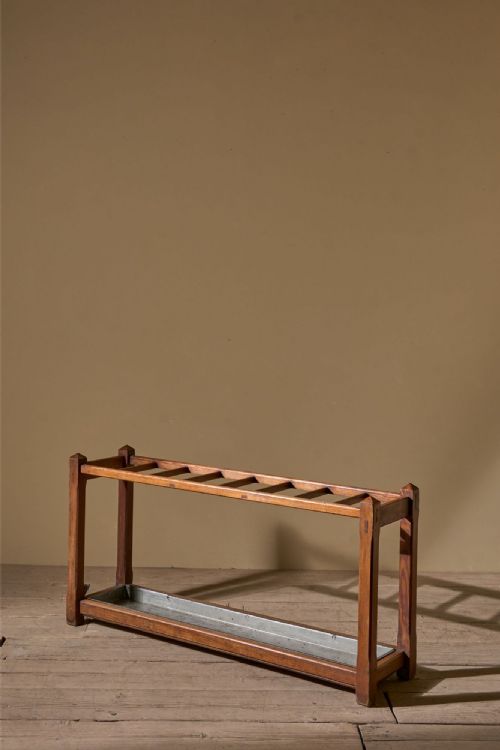
Common forms range from simple rectangular oak stands with drip trays to large tree trunk sections and milk churn planters. Many combine utilitarian storage with decorative woodwork or metal bindings suited to country house interiors.
How they were made
Makers utilised solid timbers such as oak, pine and lindenwood, often shaping them through cooperage techniques with metal bands or brass bindings to secure the staves. Carpenters constructed rectangular frames with dedicated sections and integrated metal drip trays to catch rainwater.
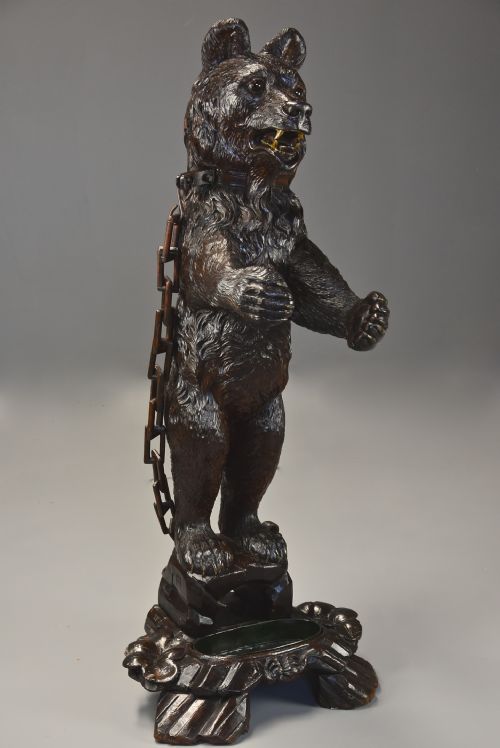
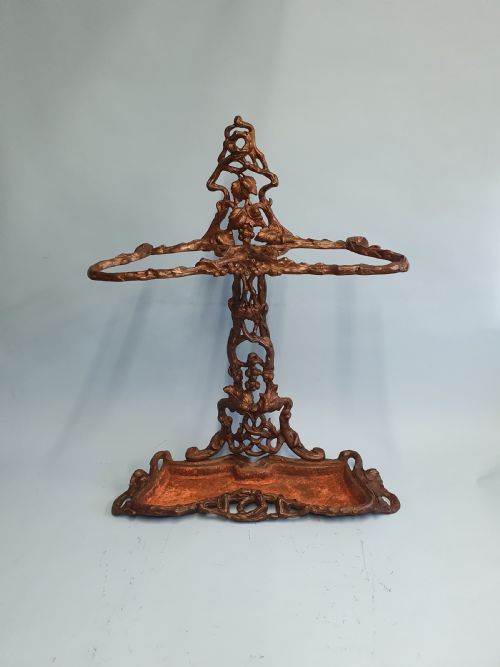
Carvers produced intricate figurative pieces, notably Black Forest bear stands, using hand chisels on logs and carved wood. Other workshops cast iron and brass into structural frames or applied painted finishes to utilitarian metal pots.
Rustic Umbrella Holder Retail Price Guide 2026
Typical asking prices for rustic umbrella holder among the pieces listed under this phrase on Sellingantiques today, from the lower quarter to the upper quarter. They describe what is for sale here now, not the wider market.
Listings feature oak as the predominant wood, accompanied by brass, iron, zinc and carved Lindenwood across the nineteenth and early twentieth centuries.
What varies in quality
The distinction between ordinary and superior pieces rests on the depth and skill of the hand carving, particularly evident in figurative Black Forest items where anatomical precision matters. Sturdiness of construction and the retention of original brass or metal bindings also elevate a piece.
Timber selection plays a major role, with figured golden oak or well-preserved dug-out tree trunks commanding greater visual appeal than plain or heavily restored pine. The presence of original fitted drip trays and stable internal framing preserves the integrity of the object.
A. Kenrick & Sons
The Rustic Umbrella Holder Glossary
- Coopered
- Constructed from wooden staves bound together with metal hoops, much like a traditional barrel. This technique ensures durability for holding wet items.
- Drip tray
- A removable metal basin placed at the base of a stand to catch water from wet umbrellas. These protect floors from moisture damage.
- Arts and Crafts
- A design movement valuing traditional craftsmanship and simple forms over mass production. Pieces from this style emphasise natural materials and honest construction.
- Gothic Revival
- An architectural and decorative style drawing inspiration from medieval forms. Items often incorporate pointed arches and heavy structural elements.
Rustic Umbrella Holder: Frequently Asked Questions
How do I clean a wooden umbrella stand?
Wipe the surface gently with a dry or barely damp cloth to remove dust without harming the aged finish.
Avoid soaking the wood or using harsh chemical cleaners that might strip the patina built up over decades.
Are these stands suitable for modern umbrellas?
Most historical stands accommodate standard walking umbrellas, though very wide modern golf umbrellas might not fit into smaller individual sections.
Check the internal dimensions or divider layouts if you plan to store larger modern designs.
Do these pieces include drip trays?
Many traditional stands retain their original metal or zinc drip trays positioned at the base to catch runoff water.
Some simpler dug-out or barrel designs rely on the natural properties of the sealed wood instead.
How do I identify a Black Forest stand?
Look for deeply carved wooden animal motifs, most commonly bears holding card trays or framing the umbrella well.
These continental pieces typically date from the late nineteenth century and showcase highly detailed hand chiselling.