


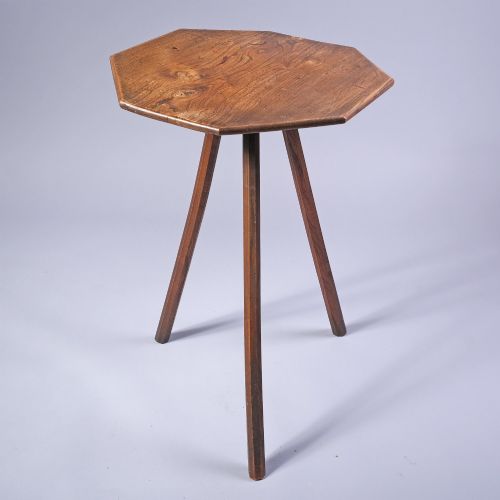
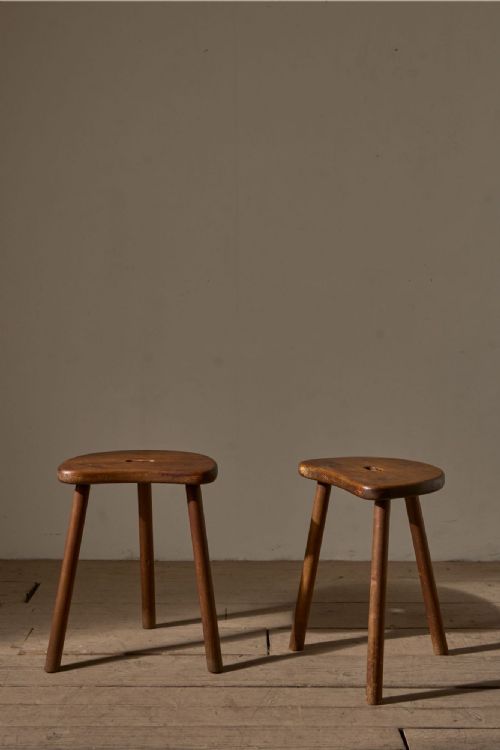


Rustic Three Leg Stool
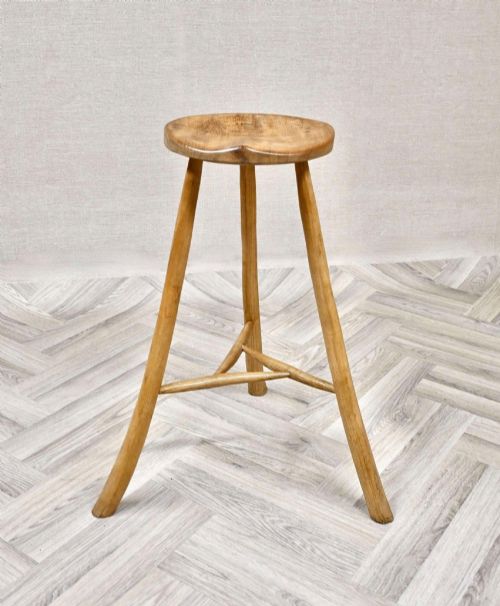
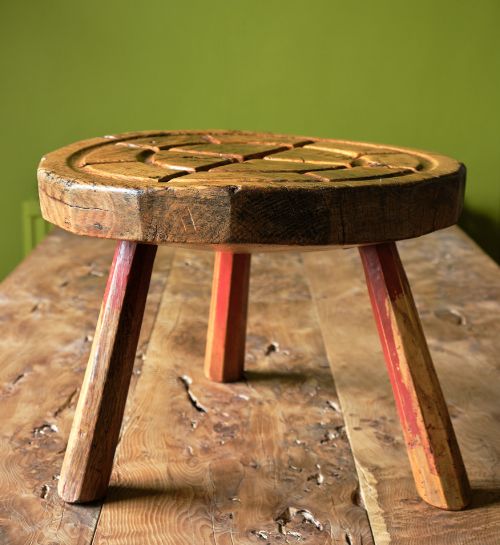
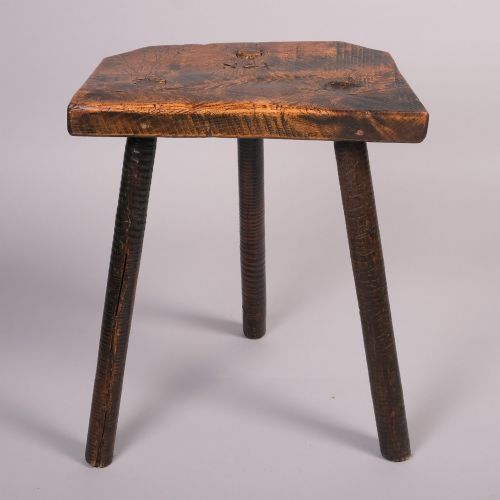
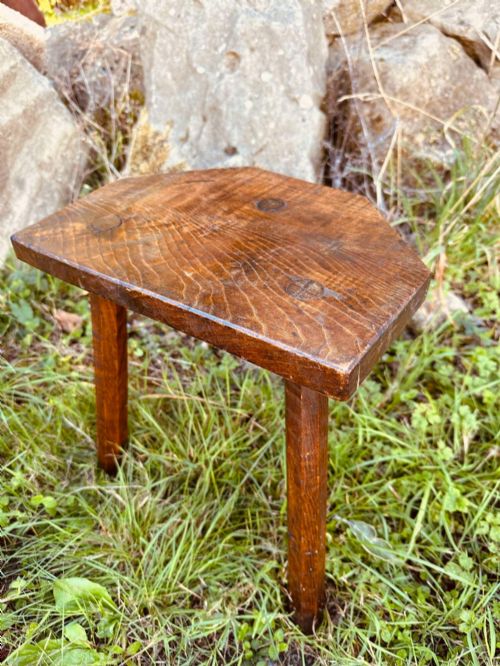
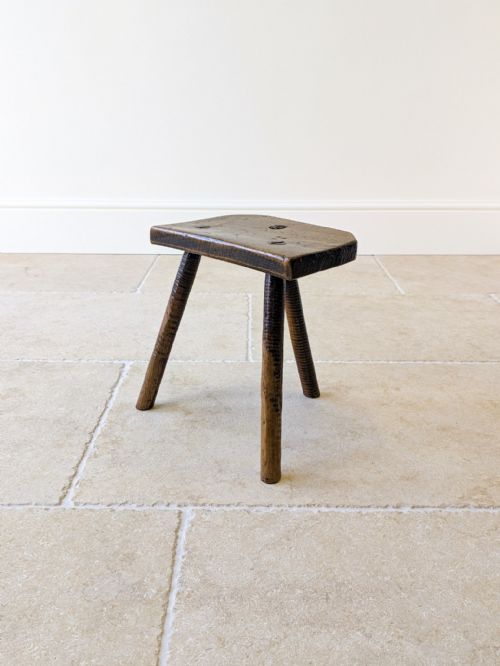
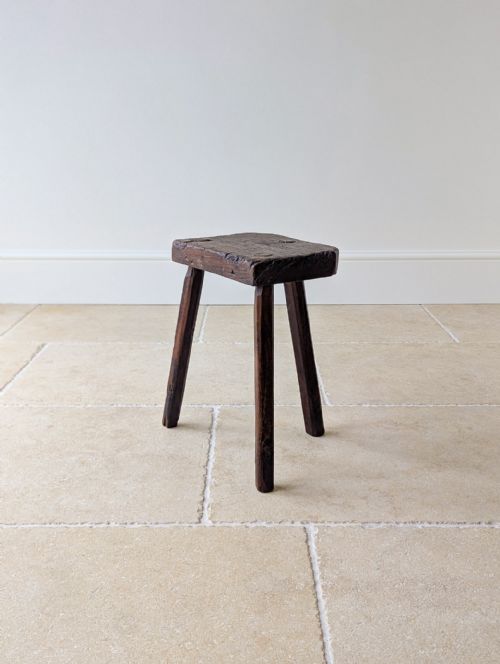
These rustic three leg stool examples combine honest utilitarian function with organic country character, offering solid timbers and tactile working surfaces.
Rustic Three Leg Stool
A rustic three leg stool represents practical country seating and workshop furniture shaped by daily trade use across the eighteenth and nineteenth centuries. Buyers searching for a rustic three leg stool encounter various vernacular forms including milking stools, cutler and jeweller work stools, and simple tripod designs.
The selections span English, French, and Catalan origins, utilising robust domestic hardwoods like elm, ash, and oak. Surviving examples reflect straightforward construction methods intended for heavy utility rather than formal display.
How they were made
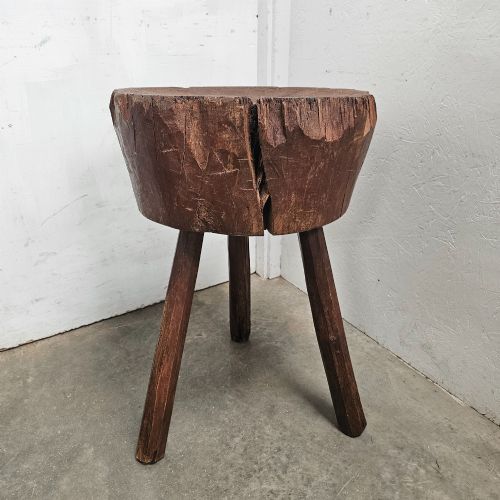
Maker-craftsmen built these pieces using solid timber tops wedged or joined directly to three independent wooden legs. Woods such as elm, ash, pine, and beech provided the necessary toughness for daily workshop or agricultural tasks.
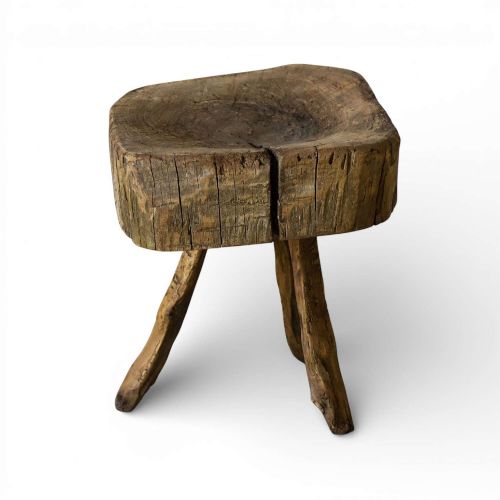
Working surfaces often show the natural contours of tree trunks, live edges, or hand-hewn shaping from axes and drawknives. Legs were frequently turned on a lathe or formed from gnarled natural branches to create a stable tripod base on uneven floors.
Rustic Three Leg Stool Retail Price Guide 2026
Typical asking prices for rustic three leg stool among the pieces listed under this phrase on Sellingantiques today, from the lower quarter to the upper quarter. They describe what is for sale here now, not the wider market.
Listings feature timbers including oak, elm, ash, beech, pine, and pollard oak across eighteenth and nineteenth-century periods.
What varies in quality
Quality rests in the harmony between timber selection, structural integrity, and the honesty of age-related wear. Superior pieces display thoughtful grain orientation in the seat top and robust wedged leg joints that remain firm through generations of use.
The character of the patina, derived from natural wax build-up and tool marks, separates utilitarian survivors from ordinary later reproductions. Original gnarled legs and untouched surface finishes elevate the visual presence of individual pieces.
The Rustic Three Leg Stool Glossary
- Vernacular
- Everyday objects made by local craftsmen for specific regional functions rather than high stylistic design. These pieces prioritize utility and local material availability.
- Tripod
- A three-legged support structure that guarantees stability on uneven stone or earth floors without rocking. This construction is standard for many traditional country stools.
- Live Edge
- A natural edge of the tree retained on the wooden slab top, showing the organic contour of the trunk. It highlights the direct origin of the timber.
- Patina
- The deep surface sheen and mellow colour developed through decades of handling, cleaning, and ageing. A good patina reflects genuine history.
Rustic Three Leg Stool: Frequently Asked Questions
What were three leg stools used for?
These stools served practical roles in dairies, workshops, and domestic settings where uneven floors required a stable three-legged base. Tradespeople such as cutlers and jewellers used low seating tailored to their specific bench tasks.
In agricultural contexts, milkers relied on similar portable seats for daily livestock tending. Their simple construction made them durable companions for heavy labour.
How do I date a wooden stool?
Dating relies on examining tool marks, timber shrinkage, and the method used to join the legs to the seat top. Hand-sawn surfaces and wedged tenons point towards eighteenth and nineteenth-century vernacular production.
Secondary materials and overall wear patterns also provide clues to age. Comparing construction details with documented period examples helps confirm the timeline.
How do I style a rustic stool at home?
These pieces function well as small side tables, plant stands, or minimalist bedside surfaces alongside contemporary or traditional interiors. Their organic wood tones introduce warmth and historical texture to neutral rooms.
Placing them in living spaces allows the weathered grain and patinated surfaces to stand out. They offer practical display spots while adding character to empty corners.