

Rustic Painted Country Chest
A rustic painted country chest brings utility and domestic history to a room through weathered pigment and honest timber.
Rustic Painted Country Chest
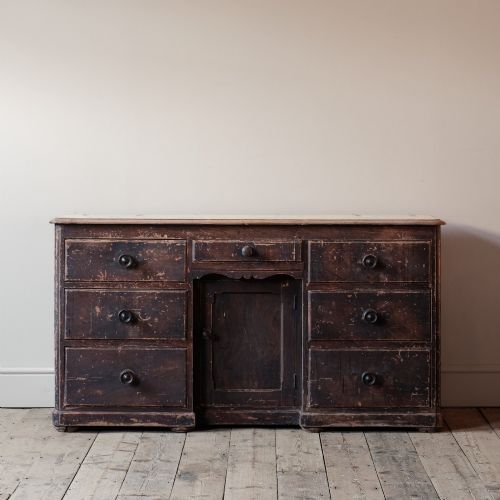
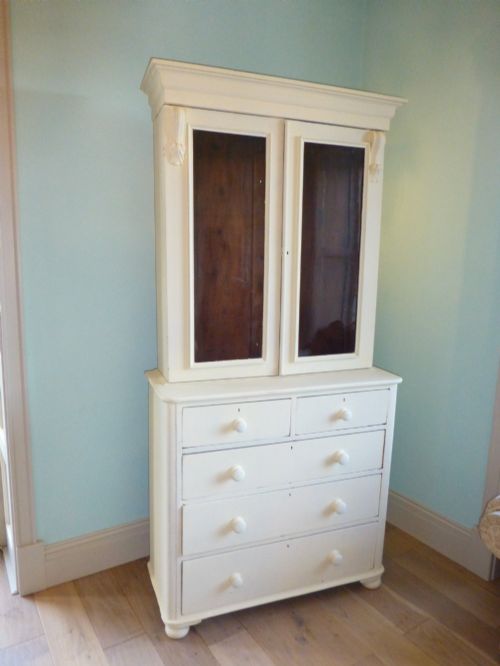
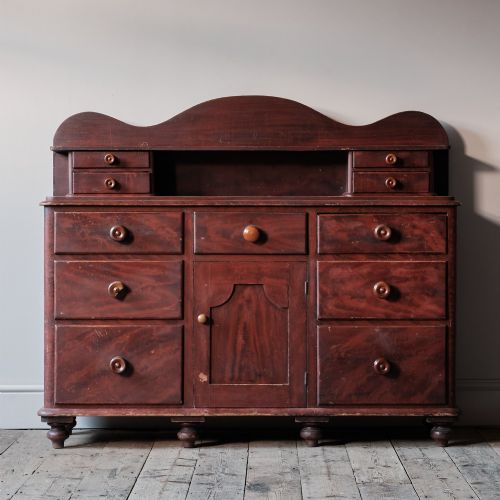
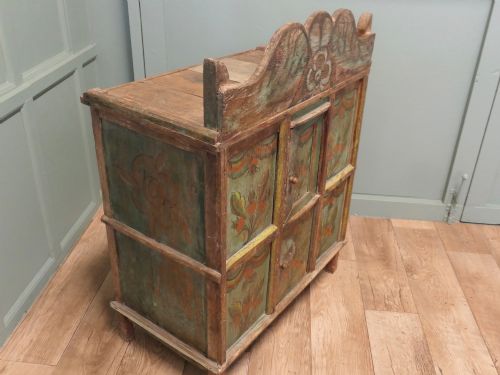
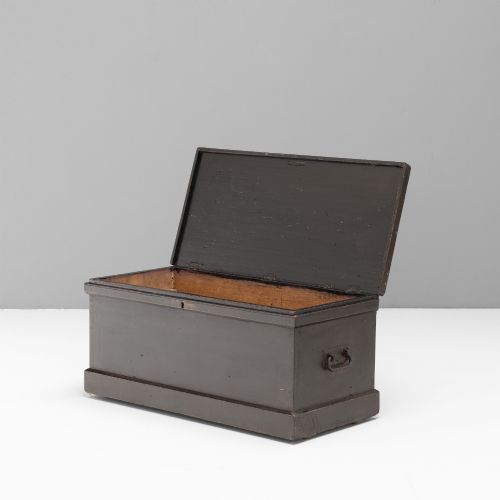
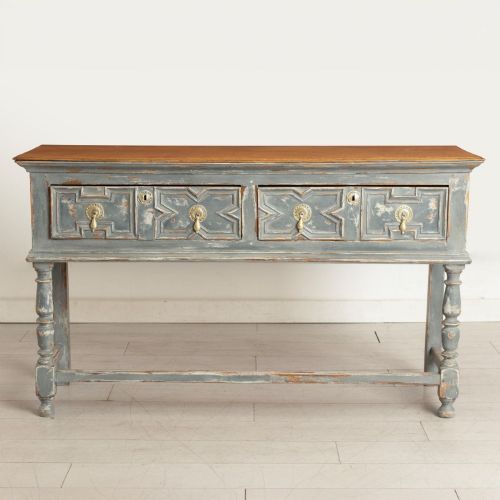
A rustic painted country chest is a utilitarian storage piece typically constructed from native softwoods or hardwoods and finished with historic surface treatments. When you search for this phrase, you encounter forms ranging from two-over-two drawer chests and mule trunks to linen presses and housekeepers cupboards. These pieces originate from domestic and rural workshops across Britain, France, Scandinavia, and Hungary during the Georgian, Regency, and Victorian periods.
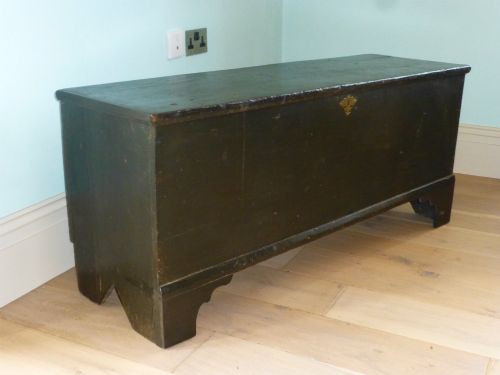
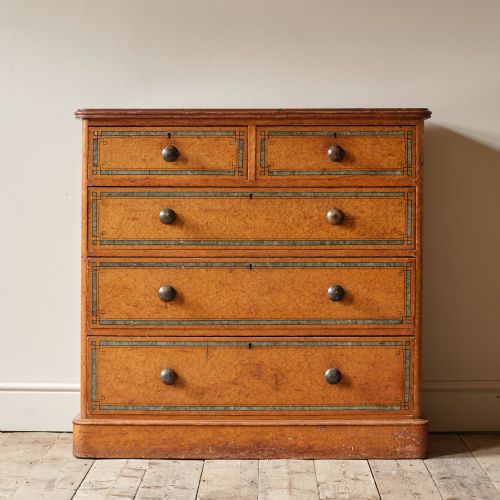
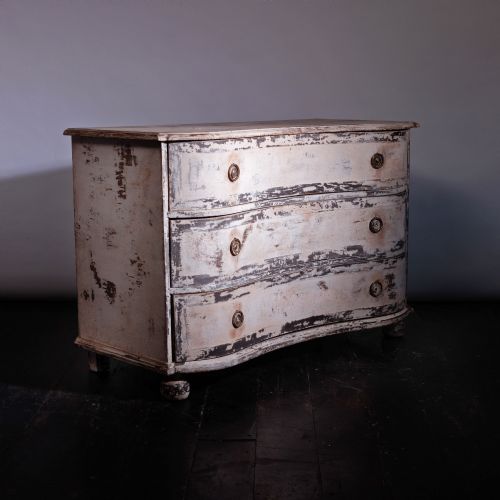
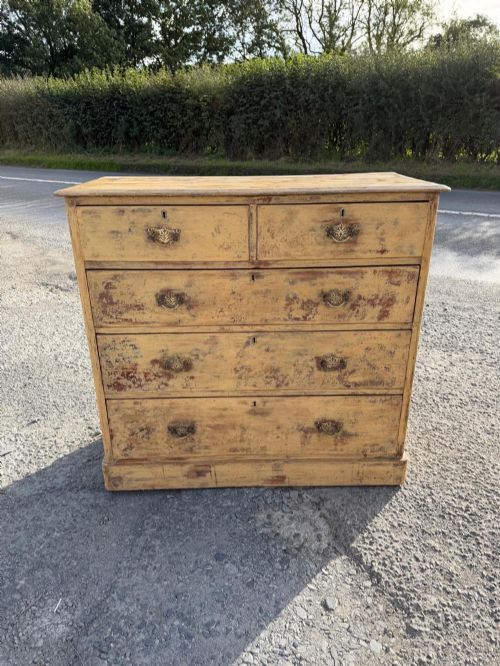
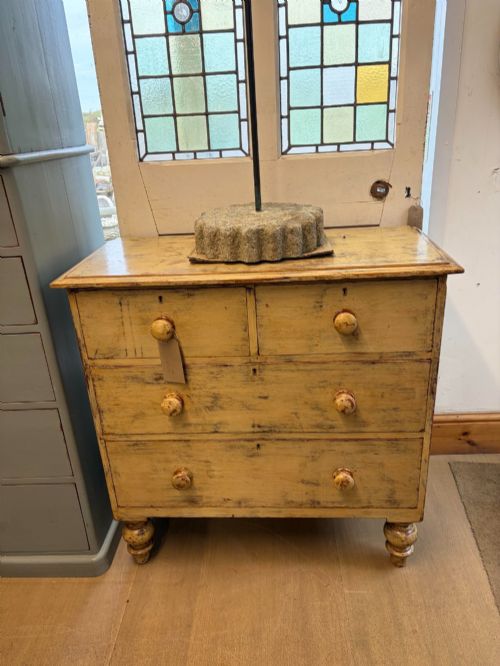
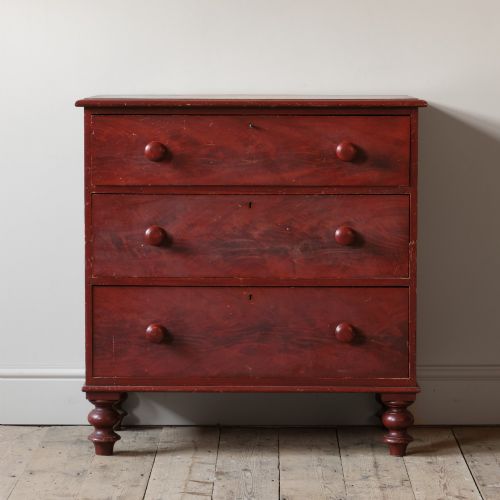
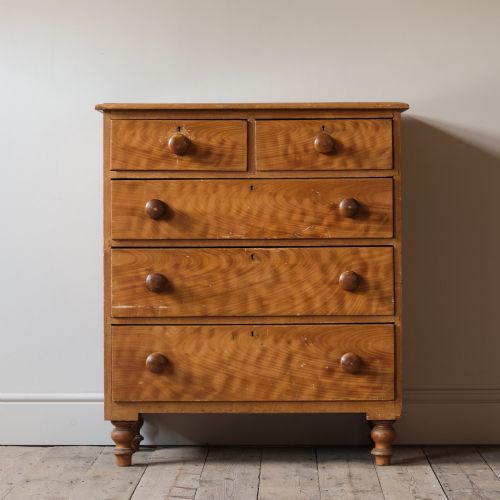
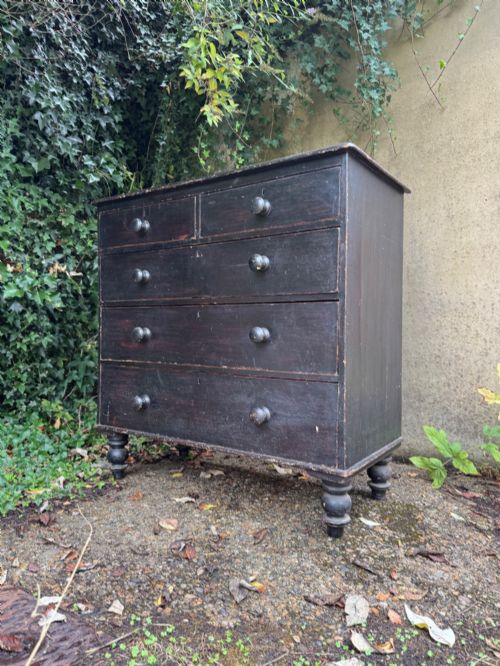
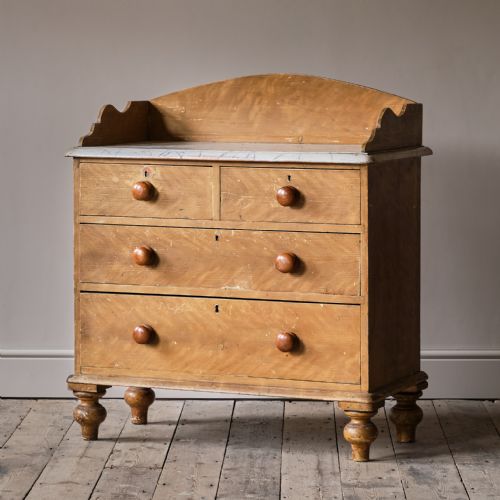
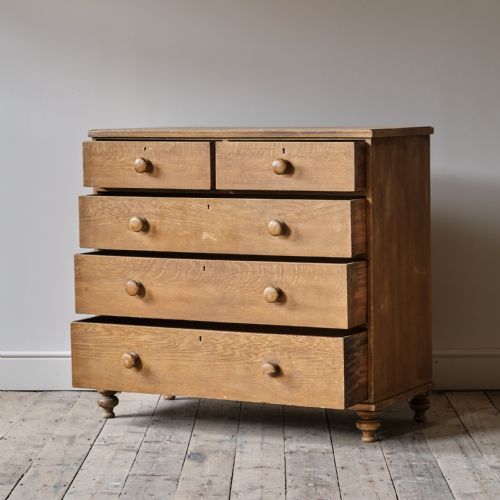
The version you are most likely to meet on this page is the nineteenth-century pine chest of drawers or blanket box retaining its original or scumble painted surface. Alongside drawer chests, the selection includes regional variations such as Danish commodes, French jam cupboards, and Hungarian storage boxes. Their forms reflect practical household needs, combining drawers, drop-fronts, and lifting lids within straightforward proportions.
Materials and construction methods
Makers relied primarily on pine, oak, and ash, selecting timbers for local availability and structural reliability. Boards were joined using traditional dovetail joints at drawer corners and housing joints for carcases, ensuring stability for heavy daily use. Iron and brass hardware, including drop handles and bracket feet, completed the functional assembly.
Surface finishes define these pieces, featuring original paint, scumble glazes, and graining techniques applied over bare wood. Painters used lead-based pigments, milk paints, or oil colours that aged to patinated textures through decades of household wear.
Rustic Painted Country Chest Retail Price Guide 2026
Typical asking prices for rustic painted country chest among the pieces listed under this phrase on Sellingantiques today, from the lower quarter to the upper quarter. They describe what is for sale here now, not the wider market.
Listings feature nineteenth-century pine, oak, and ash pieces finished in original paint, scumble, and graining.
Distinctions in quality and survival
Quality rests in the integrity of the original surface and the honesty of the timber construction. Pieces retaining their untouched early paintwork without heavy modern overpainting command greater interest from collectors who value authentic domestic history. Structural soundness, such as original bracket feet and smoothly operating drawers, separates robust utilitarian examples from compromised items.
Proportion and regional character also influence distinction among these functional items. Pieces that display confident vernacular design, such as balanced drawer arrangements and clean Scandinavian or English proportions, demonstrate superior craftsmanship within rural traditions.
The Rustic Painted Country Chest Glossary
- Scumble
- A decorative painting technique where a translucent glaze is dragged or brushed over a lighter base coat to imitate wood grain or create mottled texture. It was frequently used on nineteenth-century pine furniture to give softwood a richer appearance.
- Mule chest
- A storage chest featuring one or more drawers beneath the main lifting-lid compartment. This hybrid form bridges the traditional blanket box and the chest of drawers.
- Commode
- A low chest of drawers, often of continental European origin. The term describes refined domestic storage units distinct from purely utilitarian kitchen or linen boxes.
- Dovetail
- A joint formed by interlocking wedge-shaped fingers, used primarily at the corners of drawers. Hand-cut dovetails with narrow pins indicate older, pre-industrial cabinet-making methods.
- Bracket foot
- A structural and decorative foot shape supporting the base corners of a chest or cabinet. These feet are typically mitred at the corner and fixed directly to the carcase.
Rustic Painted Country Chest: Frequently Asked Questions
What is a scumble painted finish?
A scumble painted finish involves layering a translucent glaze over a solid base coat to create simulated wood grain or textured movement. Makers applied this technique to nineteenth-century pine to elevate simple softwoods.
Over decades, this finish develops a characteristic crackle and patina that reveals the history of the piece. It remains a hallmark of authentic country furniture.
How do I date a pine chest?
Dating relies on examining construction markers such as hand-cut dovetails, backboards, and hardware types. Nineteenth-century examples often feature solid pine carcases with distinct tool marks and early paint layers.
Proportions and foot styles, such as bracket feet or simple plinths, also help narrow down the period of manufacture. Regional construction habits offer further clues to the origin.
Were these pieces always painted?
Many utility chests were painted from the outset to protect the softwood, imitate costlier hardwoods, or simply brighten dark farmhouse interiors. Paint was a practical and decorative choice in rural homes.
While some pieces retain their first coat, others acquired multiple layers of historic colour during their working lives. Original paint surfaces are prized for their untouched character.
How should I care for painted wood?
Keep painted chests away from direct sunlight and steady heat sources to prevent the historic pigments from fading or the timber from splitting. Dust gently with a dry, soft cloth.
Avoid chemical polishes or abrasive cleaners that can strip away fragile early paint layers. Maintaining stable room humidity preserves both the wood and the surface coating.