
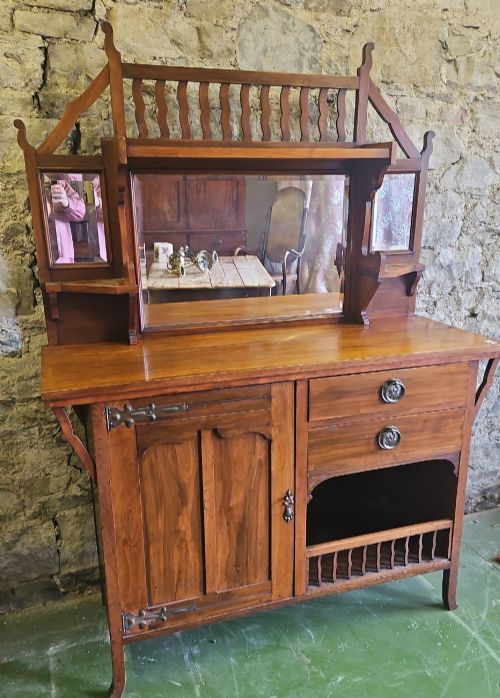
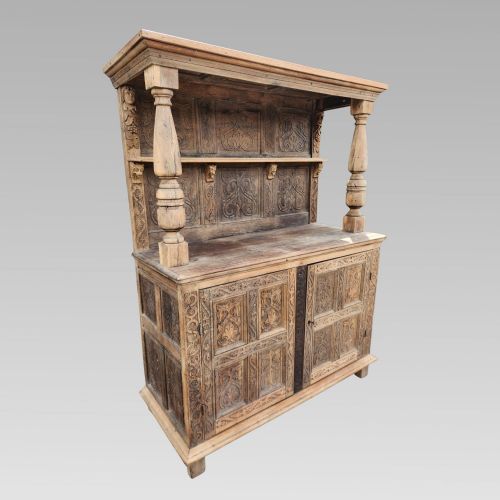


Rustic Oak Sideboard Cabinet
A rustic oak sideboard cabinet provides sturdy domestic storage, bringing timber grain and traditional joinery directly into dining rooms and kitchens.
Rustic Oak Sideboard Cabinet
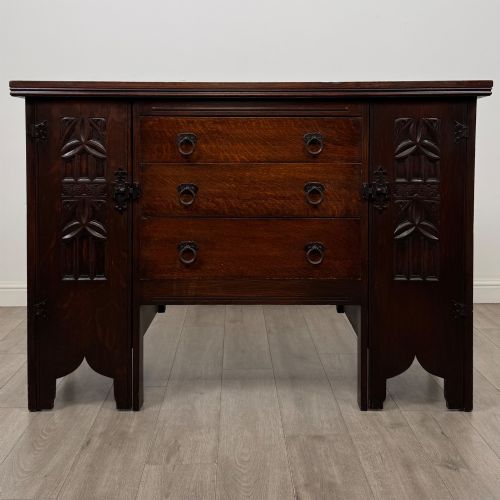
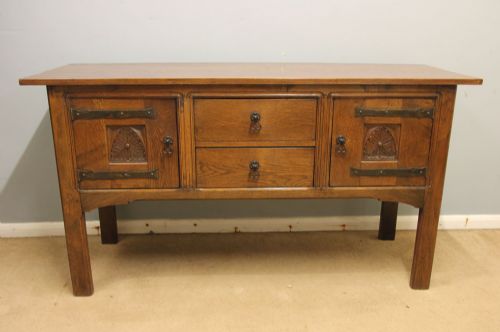
A rustic oak sideboard cabinet encompasses heavy timber dressers, low buffet units, and enclosed cupboards intended for practical storage. These pieces bridge centuries of domestic utility, spanning Georgian country workshops, Victorian cottages, and Edwardian halls.
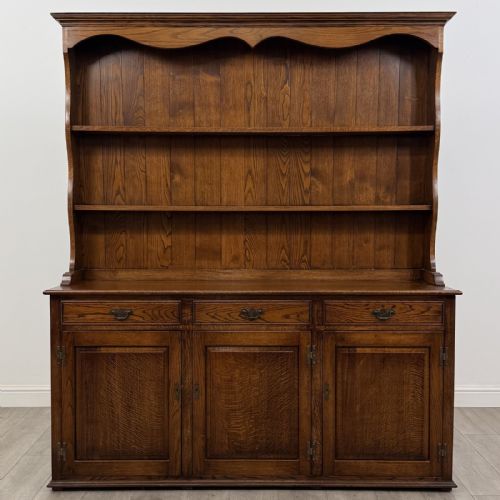
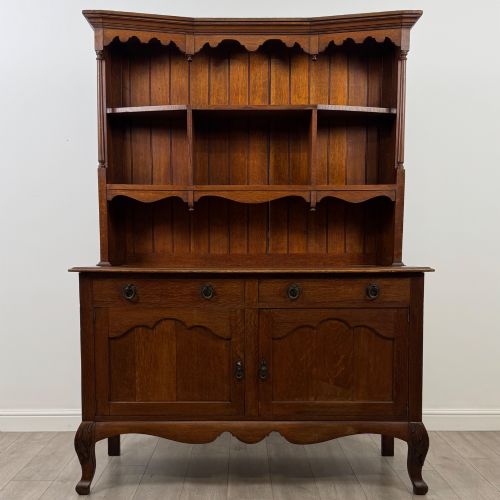
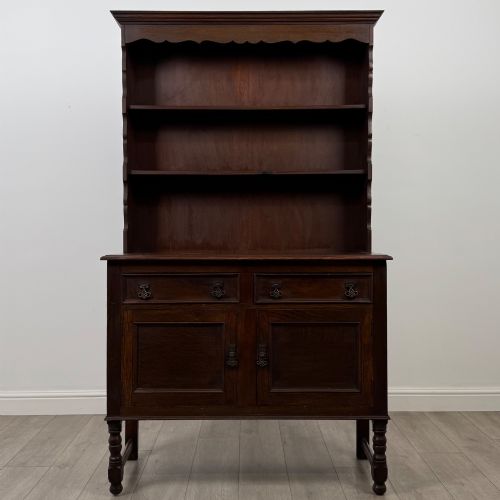
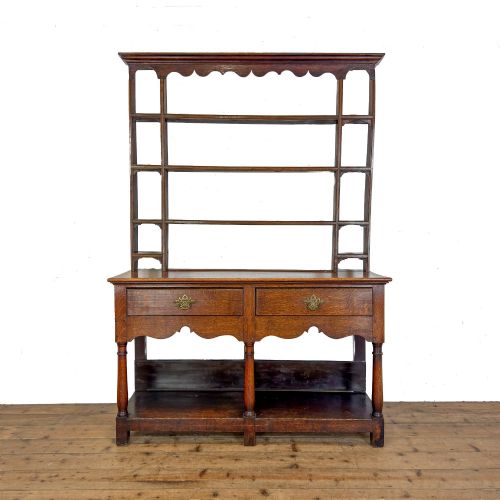
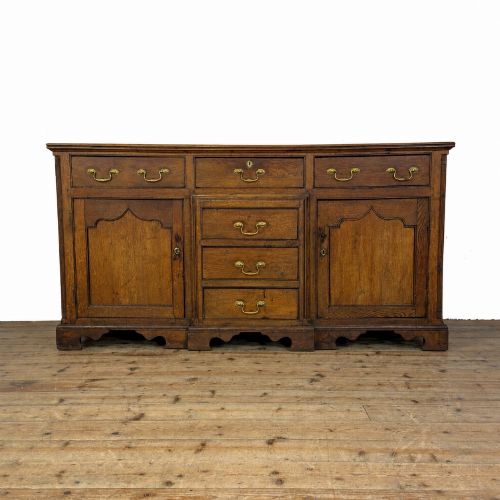
The version most commonly met on this page is the traditional Welsh dresser or low sideboard base, often featuring open plate racks, drawers, and lower cupboard doors. Such forms originate from British country houses and continental provincial kitchens alike.
Periods represented stretch from the mid-eighteenth century through the nineteenth century and into the early twentieth century. Makers of these eras utilised durable regional timber to build functional furniture for everyday household use.
Materials and technique
Construction relies heavily on solid oak, frequently paired with secondary woods like pine, chestnut, or elm for internal elements and drawer linings. Artisans shaped these domestic timbers using traditional hand tools, securing frames with pegged joints and dovetails.
Hardware consists principally of wrought iron and brass for hinges, drop handles, and escutcheons. Surfaces show the character of grain and carved detailing without synthetic finishes.
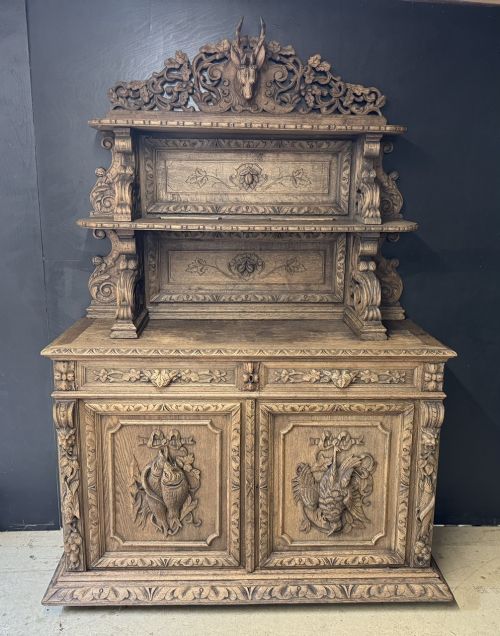
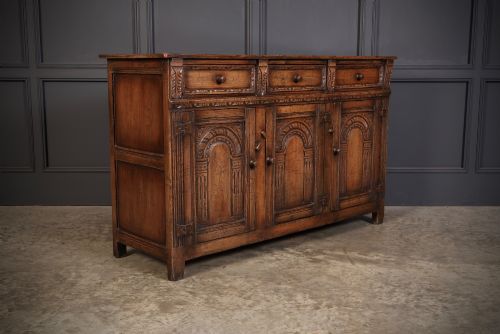
Some provincial cabinets incorporate salvaged bed fronts and hunting scenes carved directly into the cupboard doors.
Build quality and proportion
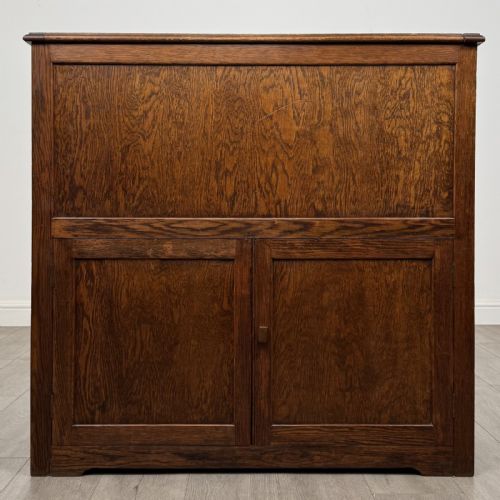
Quality rests in the integrity of the timber selection and the precision of the joinery rather than surface embellishment. Pieces built with thick, unwarped oak boards and original backboards hold structural stability better than later modifications.
Proportion and regional style define the upper tier of these utilitarian pieces. Clean lines in vernacular cabinetry, balanced drawer arrangements, and retained original brass hardware separate ordinary utility furniture from finer country examples.
The Rustic Oak Sideboard Cabinet Glossary
- Enfilade
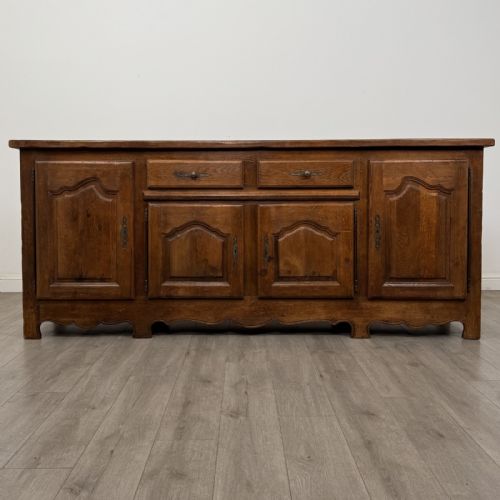
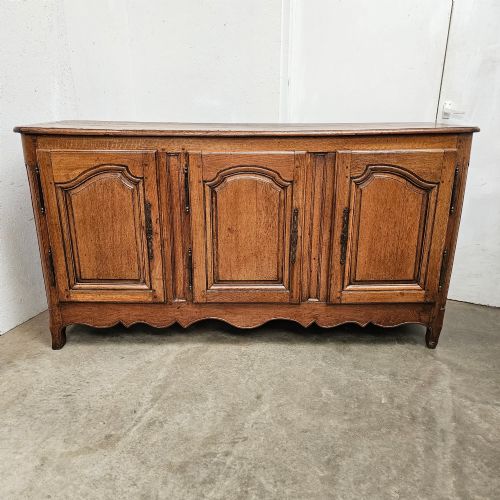
- A long sideboard or buffet featuring multiple doors in a linear sequence, commonly found in French provincial dining spaces.
- Welsh dresser
- A traditional tall storage unit combining open plate shelves above a set of lower drawers and a cupboard base.
- Court cupboard
- A heavy, enclosed wooden cabinet with two tiers, used historically for storing food and utensils.
- Buffet
- A low sideboard cabinet designed for serving food and storing tableware in dining areas.
- Dovetail
- A traditional interlocking joint used to connect drawer sides to drawer fronts securely.
- Escutcheon
- A protective plate surrounding a keyhole, often fashioned from brass or iron.
Rustic Oak Sideboard Cabinet: Frequently Asked Questions
What is a rustic oak sideboard cabinet?
A rustic oak sideboard cabinet is a traditional timber storage item designed for dining rooms and kitchens, combining drawers, cupboards, and sometimes open shelving.
These pieces reflect vernacular furniture-making traditions across Britain and France, prioritising utility and sturdy construction.
How were these cabinets used historically?
Households utilised these heavy oak units to store serving dishes, cutlery, linens, and provisions for daily meals.
Upper plate racks displayed ceramic tableware, while lower cupboards and drawers kept heavy cookware and household stores out of sight.
How do I fit one in my home?
These sideboards anchor dining rooms, kitchens, and large hallways, providing substantial surface space and deep interior storage.
Pair the timber tones with simple walls and neutral surroundings to let the grain and traditional joinery stand out.
How do I tell the periods apart?
Eighteenth-century examples often display hand-carved details, pegged joinery, and simpler country proportions built by local joiners.
Later Victorian and Edwardian pieces frequently introduce machine-sawn elements, Arts and Crafts styling, or revival motifs like gothic tracery.