


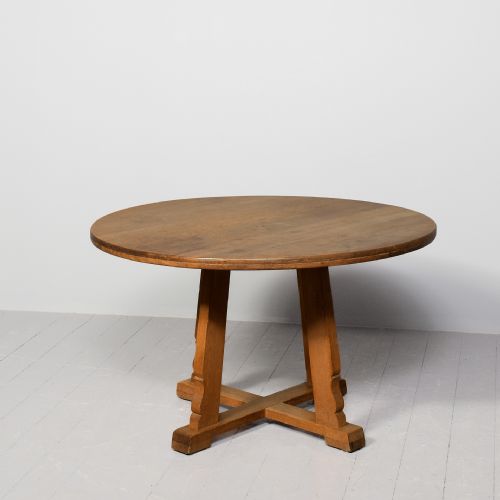


Rustic Oak Center Table
A rustic oak centre table brings substantial timber and honest grain into a room, offering a sturdy surface shaped by centuries of practical use.
Rustic Oak Center Table
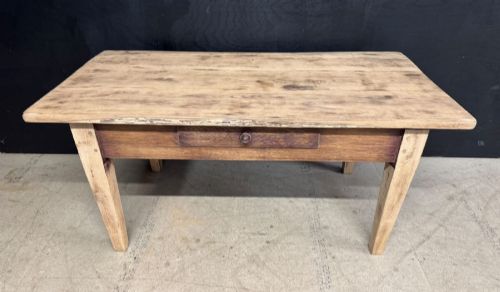
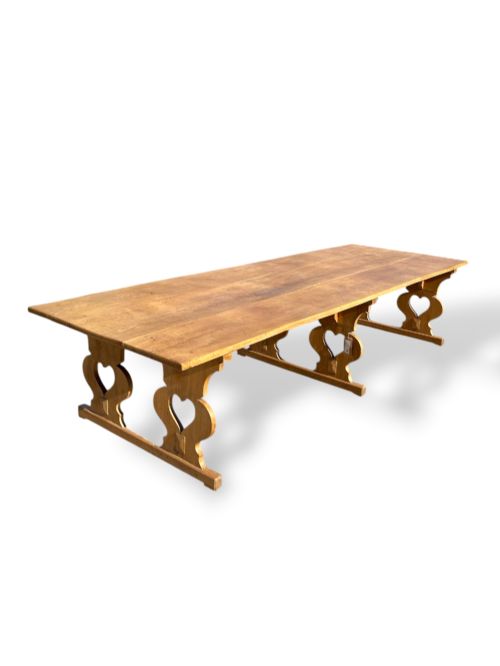
A rustic oak centre table encompasses heavy timber furnishings built for daily utility, spanning periods from the seventeenth century through to the early twentieth century. These pieces appear in forms ranging from low coffee tables and occasional tables to tavern tables and large dining pieces.
English, French, and Dutch origins dominate the selections, alongside Austrian and regional European examples. Makers utilised sturdy local hardwoods, creating low profiles and circular or rectangular formats suited to central room placement.
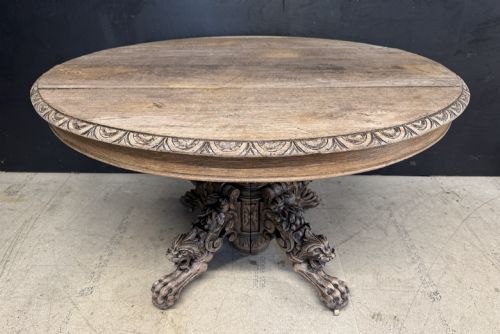
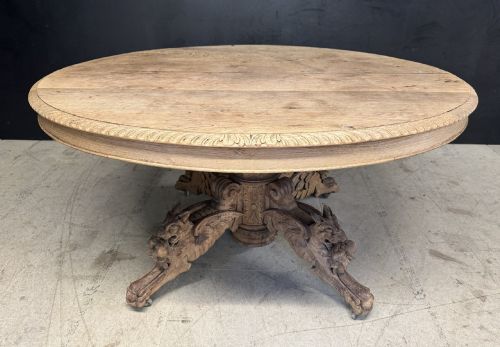
The assortment on this page leans heavily toward nineteenth-century adaptations and earlier seventeenth-century survivals. Buyers frequently encounter low tables on turned legs, bleached oak finishes, and heavy carved hunting styles.
Materials and construction
Carpenters relied primarily on solid oak, supplemented by fruitwood, mahogany, walnut, and pine for specific panels or secondary timbers. Iron brackets, brass fittings, and carved wood details provided structural reinforcement and decorative articulation.
Joinery methods reflect traditional hand-tool techniques, utilising pegged mortise and tenon joints to secure heavy tops to robust underframes. Surface treatments range from natural waxed patinas to bleached finishes and painted applications.
Periods represented on this page extend from the seventeenth century through to early twentieth-century Arts and Crafts designs.
Evaluating quality and proportion
Quality rests in the integrity of the timber selection and the honesty of the construction. Superior examples display dense, mature grain patterns and harmonious proportions that avoid clumsiness despite heavy materials.
The handling of carved ornamentation and the stability of the underframe distinguish finer provincial workshops from basic utility furniture. Patina accumulated through genuine age and use elevates the visual depth of the timber.
Sir Robert Stoddart Lorimer
The Rustic Oak Center Table Glossary
- Jacobean
- A style dating from the early seventeenth century characterised by straight lines and geometric moulded decoration. It forms an important stylistic reference point for early oak furniture.
- Parquetry
- A geometric mosaic of wood pieces used for decorative floors and tabletops. Fruitwood and other contrasting timbers are often employed to create these patterns.
- Tavern table
- A sturdy wooden table historically used in public houses and domestic settings alike. These pieces typically feature strong underframes designed to withstand heavy daily use.
- Bleached oak
- Timber treated to lighten its natural tone, a finish frequently seen on nineteenth-century French and Dutch tables. This process softens the visual weight of dark wood.
- Hunting table
- A large, robust table often embellished with deep relief carvings reflecting sporting or rural motifs. These pieces originated in French provincial settings.
Rustic Oak Center Table: Frequently Asked Questions
How do I clean my table?
Maintain timber surfaces by dusting regularly with a dry, soft cloth to prevent grit accumulation.
Avoid chemical polishes that build up residue, opting instead for occasional applications of high-grade beeswax to nourish the wood.
Can these tables handle daily use?
Solid oak and heavy fruitwoods provide exceptional durability for everyday activities and central placement.
Use coasters and placemats to protect antique finishes from moisture rings and heat damage.
How do I date a wooden table?
Examine the underside and joints for tool marks, hand-cut peg construction, and natural timber shrinkage.
Tool signatures and wood coloration provide reliable indicators of seventeenth, eighteenth, or nineteenth-century origins.
Where should I place this furniture?
Position these substantial pieces in the middle of living rooms or reception spaces to utilise them as focal points.
Keep wooden items away from direct heat sources and strong sunlight to prevent timber warping or cracking.