



Rustic Metal Coal Scuttle
These rustic metal coal scuttles are utilitarian hearth vessels of copper, iron and brass built to hold solid fuel by the fire.
Rustic Metal Coal Scuttle
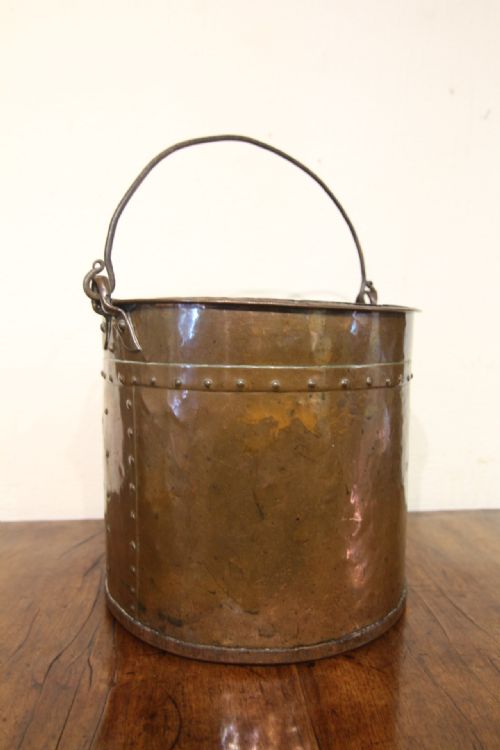
A rustic metal coal scuttle serves as a heavy-duty container for domestic fuel beside the hearth, taking the form of buckets, cauldrons and coal wagons. When browsing for a rustic metal coal scuttle, expect to encounter 19th-century pieces alongside Arts and Crafts designs and industrial utilitarian vessels.
The selection ranges from riveted copper buckets and copper ferrats to wrought iron coal receivers and brass vessels. Most examples date from the Victorian era and the late nineteenth century, spanning various hearth accessories and storage forms.
How They Were Made
Makers shaped these vessels using heavy sheets of copper, brass, iron and zinc, often joining the metal plates with visible rivets. Wrought iron and brass handles provide the necessary strength for carrying heavy loads of coal or logs.
Blacksmiths hammered and riveted the metal by hand, producing durable industrial utilities that double as decorative hearth containers. Some pieces incorporate wooden elements alongside the primary metal structure.
Rustic Metal Coal Scuttle Retail Price Guide 2026
Typical asking prices for rustic metal coal scuttle among the pieces listed under this phrase on Sellingantiques today, from the lower quarter to the upper quarter. They describe what is for sale here now, not the wider market.
The listings feature copper, brass, wrought iron, iron, cast iron, zinc and wood across 19th-century, Victorian and Arts and Crafts styles.
What Varies in Quality
Quality rests in the weight of the metal and the integrity of the construction, distinguishing sturdy blacksmith-made pieces from lighter domestic vessels. Riveted joints executed with precision mark the distinction between everyday utilitarian items and superior decorative examples.
The character of the metal surface, whether warm patinated copper or solid wrought iron, dictates the visual presence of each scuttle by the hearth.
The Rustic Metal Coal Scuttle Glossary
- Ferrat
- A traditional metal container or bucket used for domestic tasks. These vessels often utilise riveted construction for durability.
- Gladstone Bag
- A rigid travelling bag shape adapted for decorative metal storage vessels. This form appears in Arts and Crafts copper pieces.
- Wrought Iron
- Iron that has been heated and shaped by a blacksmith's hammer. This material provides sturdy handles and structural frames for hearth vessels.
- Arts and Crafts
- A design movement valuing handcraftsmanship and simple functional forms. Pieces from this period show careful metalwork and thoughtful proportions.
Rustic Metal Coal Scuttle: Frequently Asked Questions
How do I clean a copper coal scuttle?
Wash the metal gently with warm soapy water to remove dust and soot without stripping the aged surface. Avoid harsh abrasives that destroy the historic patina built up over decades of use.
Dry the vessel thoroughly with a soft cloth to prevent water spots and maintain the natural metallic sheen.
Can I use these scuttles for logs?
Many of these metal vessels were originally built to hold coal, logs or kindling by the fireplace. Their robust construction handles heavy wood storage easily.
Ensure the interior is clean and dry before loading logs to protect the historic metal surface from unnecessary moisture damage.
What is an industrial coal receiver?
An industrial coal receiver is a heavy-duty utilitarian container designed for commercial or large domestic hearths. These pieces prioritize robust iron and copper construction over delicate ornament.
They reflect straightforward utilitarian manufacturing from the nineteenth century.
How do I date a metal coal scuttle?
Examine the construction methods, such as hand-beaten panels and riveted seams, which point toward nineteenth-century workshop practices. Stylistic markers like Arts and Crafts motifs help narrow down the period of manufacture.
Compare the materials and form against documented examples from the Victorian era.