




Rustic Metal Cauldron
These heavy rustic metal cauldron vessels bring honest utility and character to hearths and gardens.
Rustic Metal Cauldron
A rustic metal cauldron is a sturdy vessel originally forged for open fire cooking, boiling, or large scale dairy work. Buyers search for these pieces to repurpose them as log bins, fireplace accessories, and garden planters.
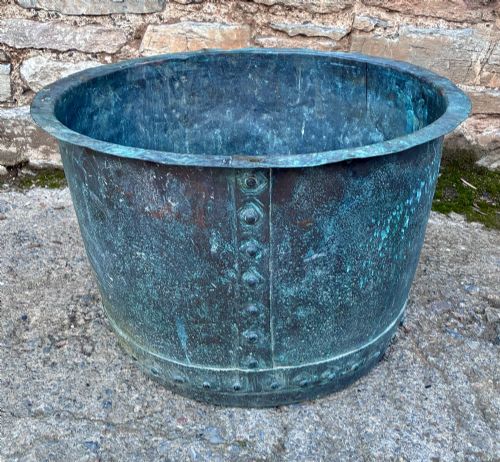
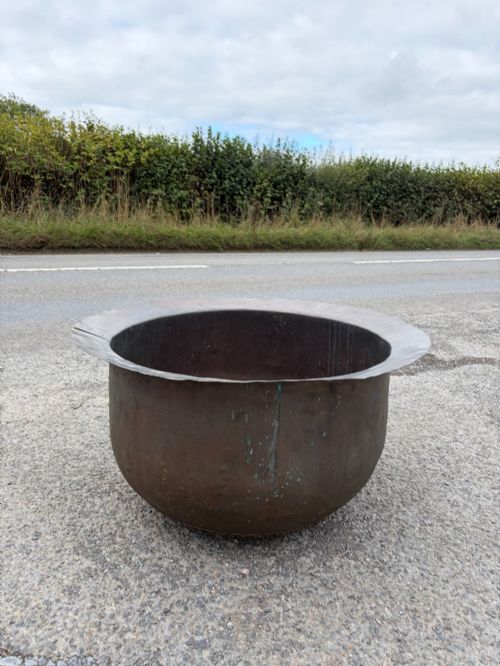
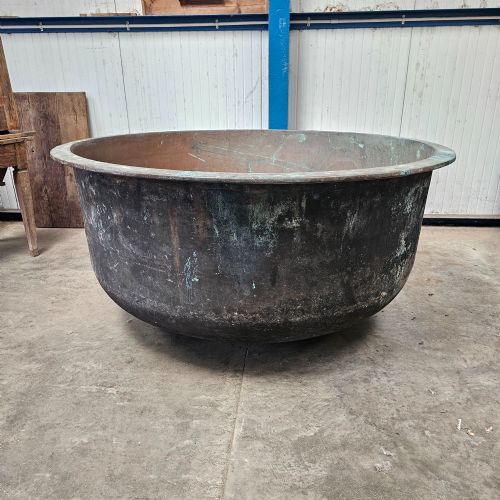
The versions most commonly met on this page date from the nineteenth century, including Victorian examples and earlier Georgian forms. They appear primarily as large copper pots, boilers, and cheese vats, often paired with iron handles.
Many of these utilitarian objects now function as decorative planters and pots for domestic and outdoor spaces. Their scale and presence suit rustic farmhouse, country, and industrial interiors.
How they were made
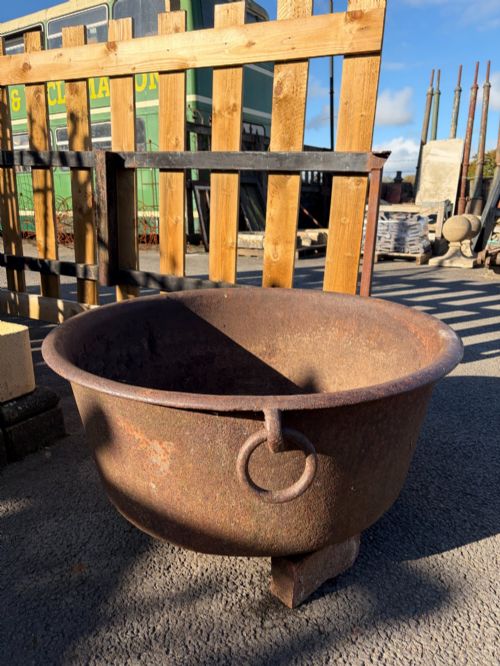
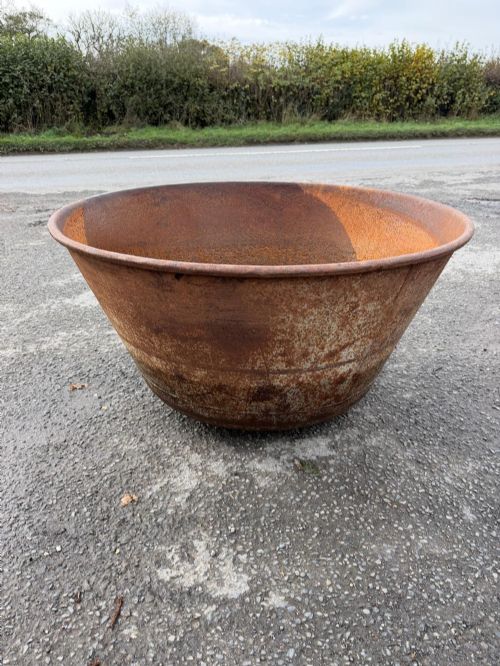
Makers constructed these vessels predominantly from heavy gauge copper, cast iron, and steel, often incorporating wrought iron swing handles and brass fittings. Metals were beaten, cast, or riveted together to form durable containers that could withstand intense hearth heat.
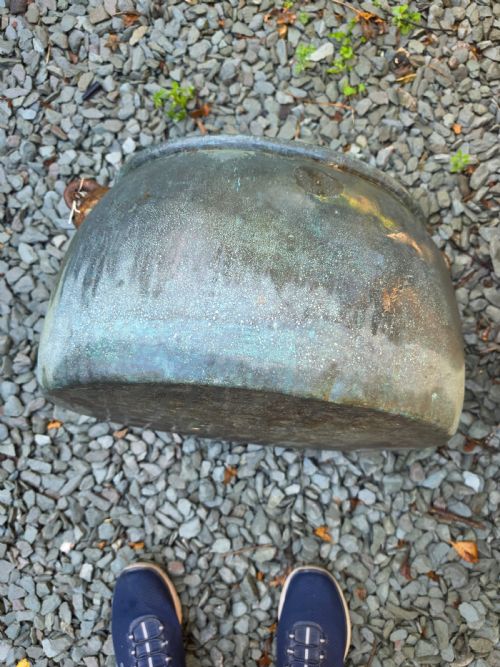
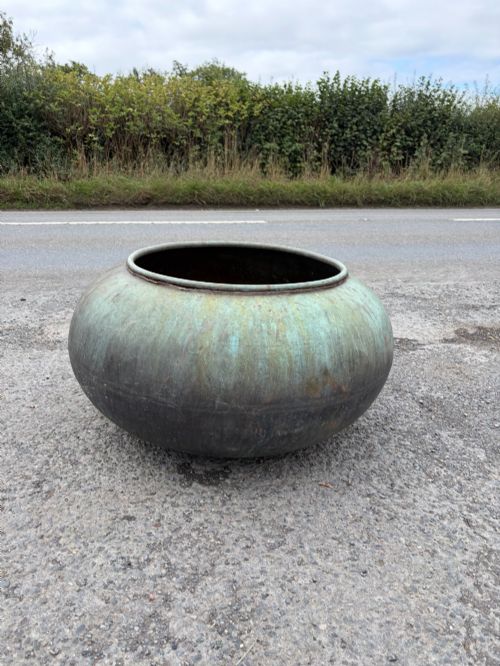
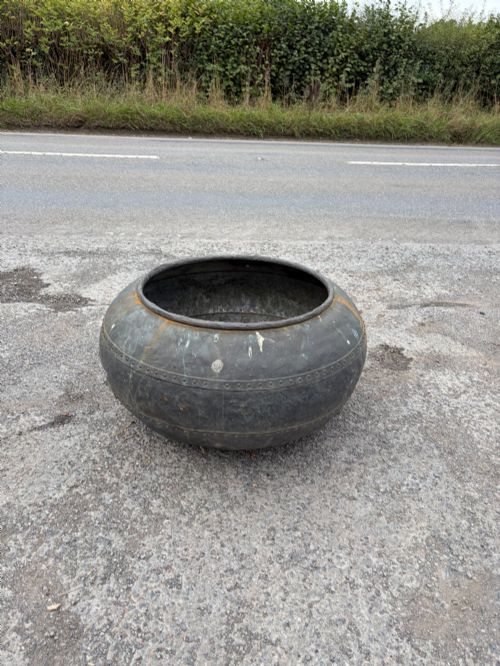
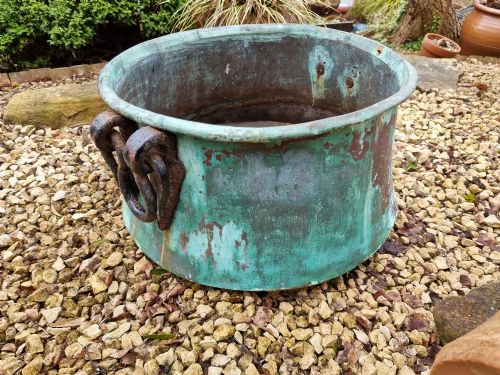
Surfaces developed authentic patinas over decades of use, sometimes showing distinct verdigris finishes from exposure to moisture and air. Original construction methods are visible in the heavy rivets and seams joining the metal body.
Rustic Metal Cauldron Retail Price Guide 2026
Typical asking prices for rustic metal cauldron among the pieces listed under this phrase on Sellingantiques today, from the lower quarter to the upper quarter. They describe what is for sale here now, not the wider market.
Listings feature nineteen-century copper, iron, and brass vessels shaped as log bins, cheese vats, and garden planters.
What varies in quality
Quality rests in the original gauge of the metal and the integrity of the construction, such as hand beaten seams and robust riveting. Vessels that retain their original wrought iron handles and unpolished surface patinas stand apart from lesser examples.
The presence of maker marks, balanced proportions, and substantial scale elevate certain pots and cauldrons. The distinction lies in how honestly the piece has aged while retaining its structural strength.
The Rustic Metal Cauldron Glossary
- Cauldron
- A large metal pot with a wide mouth, traditionally used for cooking over an open fire. These heavy vessels now frequently serve as planters or log bins.
- Verdigris
- A green patina that forms naturally on copper, brass, or bronze through atmospheric weathering. This surface oxidation is valued for its rich historic appearance.
- Swing handle
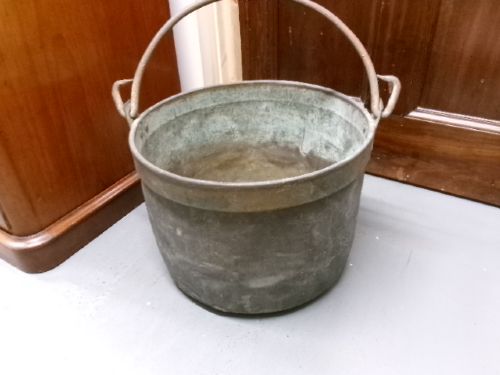
- A movable arched metal handle attached to opposite sides of a pot or cauldron. They are typically fashioned from wrought iron or brass to assist in lifting heavy loads.
- Log bin
- A large container used beside a fireplace to hold firewood. Nineteenth-century copper and iron vessels are frequently repurposed for this role.
- Cheese vat
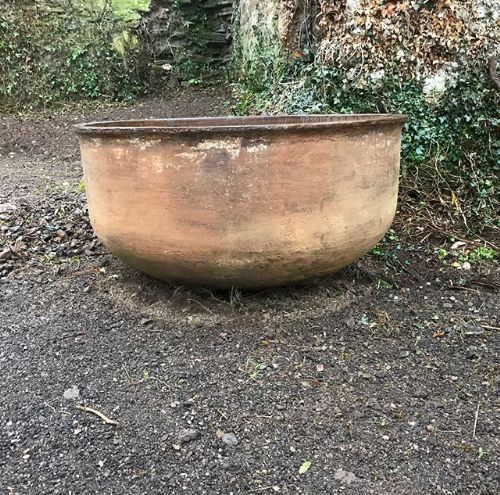
- A large industrial vessel used in dairy production to heat and process milk. French examples in heavy copper are often repurposed as impressive garden planters.
Rustic Metal Cauldron: Frequently Asked Questions
How were rustic metal cauldrons used originally?
These robust metal vessels served essential roles in domestic and agricultural life, primarily for boiling water, cooking large quantities of food over hearths, and processing dairy products like cheese.
Over time, many of these heavy pots transitioned from active utility into decorative storage and garden vessels, prized for their ability to withstand the elements.
How can I tell the age of a metal cauldron?
Dating relies on observing construction techniques, such as hand-beaten metal panels, heavy hand-cut rivets, and the composition of the attached handles. Earlier pieces often display distinct Georgian or nineteenth-century fastening methods.
The character of the metal and the depth of the natural patina also offer clues to a vessel's age and history of use.
Can I use an antique copper pot outdoors?
These durable copper and iron vessels make excellent outdoor planters and garden pots. Their heavy metal construction withstands outdoor conditions while developing further character.
Exposure to moisture will often enrich the verdigris finish on the surface over time.