




Rustic Landscape Watercolour
A rustic landscape watercolour captures pastoral life and rural scenes on paper through pigment and ink, offering a direct view into past country ways.
Rustic Landscape Watercolour
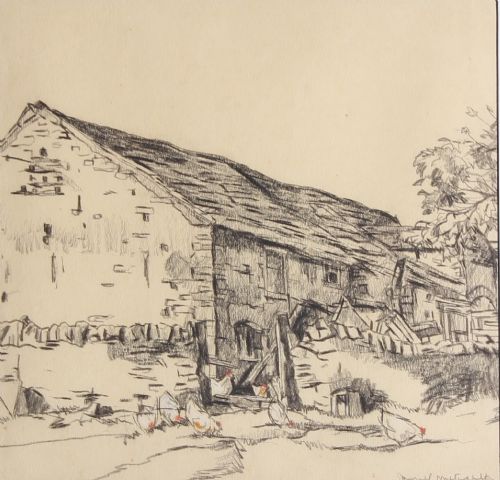
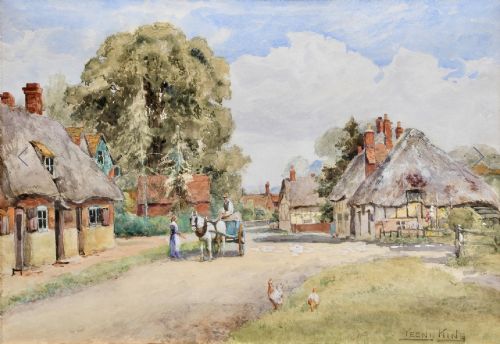
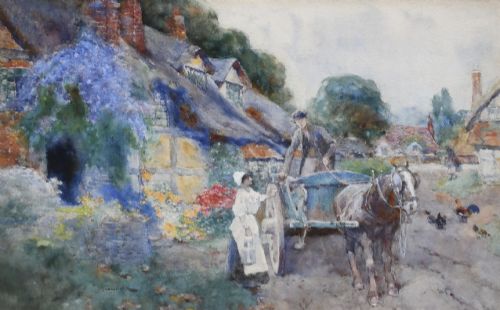
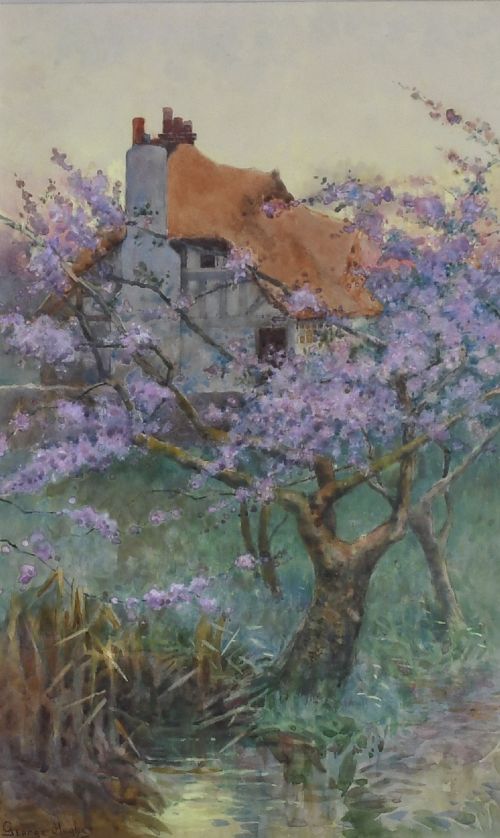
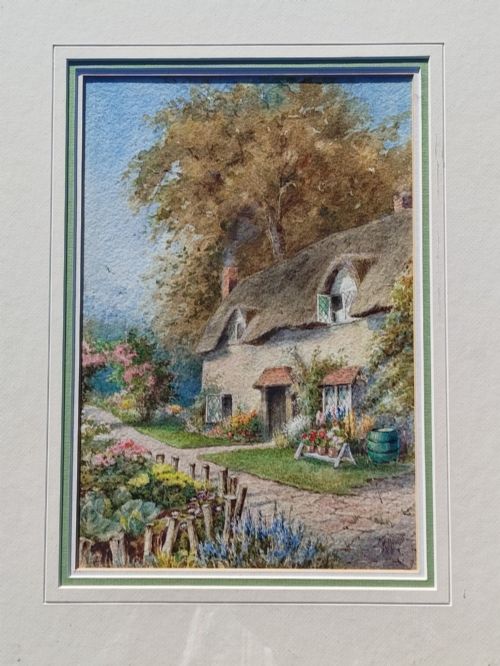
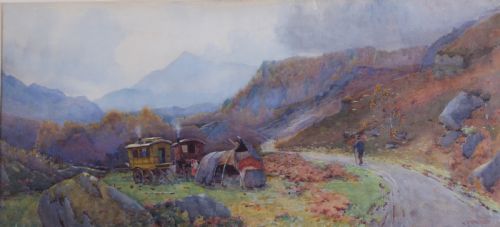
A rustic landscape watercolour focuses on countryside views, farmyards, cottages, and rural workers set across various British locations. These works document agricultural scenes, village streets, and pastoral life as recorded by artists working from the eighteenth century through the early twentieth century.
Most examples found in this selection date from the nineteenth and early twentieth centuries, spanning Victorian, Edwardian, and pastoral styles. They take the form of original paintings on paper, frequently presented in period frames made of wood or gilded wood under glass.
Materials and Technique
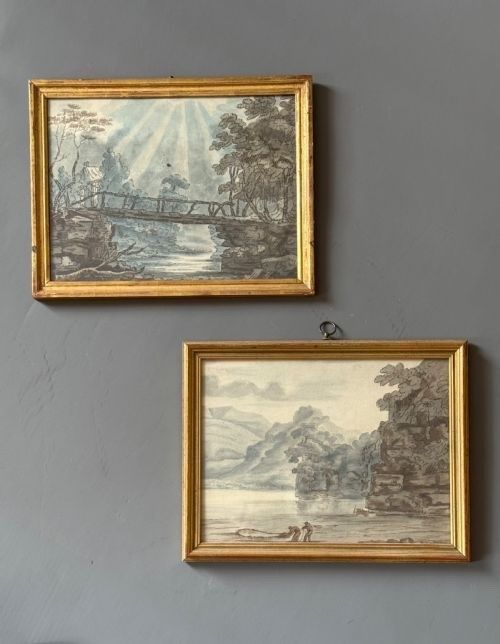
These pieces rely on watercolour paint, pigment, and ink applied to paper supports to build tone, line, and atmosphere. Artists layered translucent washes alongside finer ink marks to define details in cottages, figures, and surrounding foliage.
Framing materials range from plain wood to gilded wood, often set behind protective glass to preserve the delicate paper surface from atmospheric changes.
Rustic Landscape Watercolour Retail Price Guide 2026
Typical asking prices for rustic landscape watercolour among the pieces listed under this phrase on Sellingantiques today, from the lower quarter to the upper quarter. They describe what is for sale here now, not the wider market.
Materials recorded across the selection include watercolour paint, ink, paper, wood, gilded wood, and protective glass.
Defining Quality
Quality rests on the sureness of the brushwork and the artist's ability to render light, atmosphere, and human or animal form convincingly within a rural setting. Stronger pieces display confident handling of pigment and ink that brings depth to the pastoral subject matter.
The choice of framing contributes to the overall integrity of the piece, with period burr or wood frames providing appropriate context for works from the Georgian, Victorian, and Edwardian eras.
Henry E Hobson·John Atkinson·Thomas James Lloyd·David Woodlock·Henry Sylvester Stannard·William Lucas·John R K Duff·William Manners·George Hamilton Constantine·Walter Henry Sweet·Thomas Nicholson Tyndale·Frederick Tucker·Francis William Topham·Lester Sutcliffe·Fred Lawson·Henry John Sylvester Stannard·Fred C Jones·Theresa Sylvester Stannard·Yeend King·Willie Stephenson·James Hughes Clayton·John Baragwanath King·George Soper·Wycliffe Egginton
The Rustic Landscape Watercolour Glossary
- Watercolour pigment
- The finely ground colouring substance mixed with a binder to create the paint used on paper.
- Gilded wood
- Wood frames treated with a thin layer of gold leaf or metallic gilt, common in period presentations.
- Pastoral style
- An artistic approach dedicated to depicting rural life, shepherds, farmworkers, and countryside views.
- Pen and ink
- A drawing technique utilising dark fluid ink applied with a pen, often combined with watercolour washes.
Rustic Landscape Watercolour: Frequently Asked Questions
What subjects appear in these watercolours?
These works depict rural life, including farmyards, cottages, agricultural workers, animals, and village scenes across Britain. Artists focused on everyday country activities such as tending livestock, harvesting, and gathering fuel.
The compositions often capture specific regional locations, ranging from West Country villages to northern fells and fenland landscapes.
How should I display these watercolours?
Watercolours on paper require protection from direct sunlight to prevent the pigments from fading over time. Hanging them away from damp walls and intense heat sources helps preserve the paper support.
Keeping the original glass and frame intact maintains the historical context of the piece while shielding the surface from dust.
How do I identify the period of a watercolour?
Dating relies on the style of dress worn by figures in the scene, the architectural details of cottages, and the framing materials. Eighteenth-century and Georgian works often use pen and ink alongside restrained washes.
Victorian and Edwardian pieces tend to show greater tonal range, capturing pastoral realism or early British impressionist tendencies.
Are these works original paintings?
Each listed piece is an original painting executed by hand on paper rather than a modern reproduction or print. The visible brushstrokes, ink lines, and variations in pigment density confirm the direct touch of the artist.
Many bear the signature or attribution of the painter who recorded the scene.