

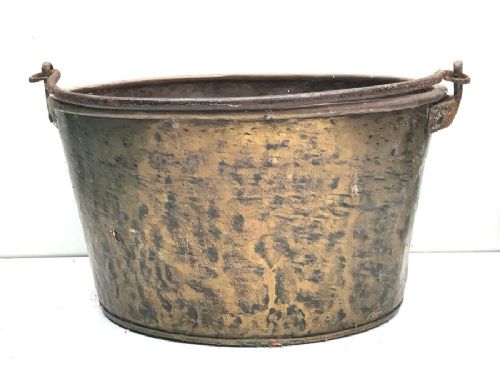
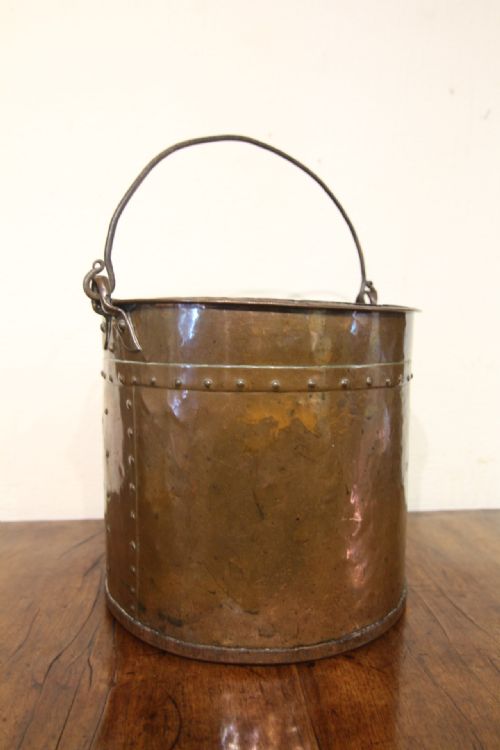


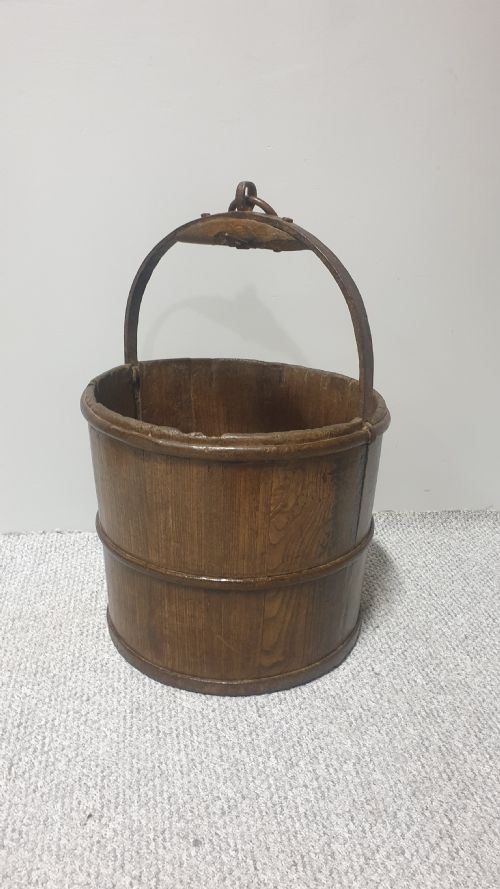


Rustic Iron Log Bucket
These rustic iron log bucket examples are heavy hearth vessels combining metal and timber, chosen for practical fireside strength and honest utility.
Rustic Iron Log Bucket
A rustic iron log bucket brings together heavy metal hardware and traditional forms for hearth fuel storage. Buyers searching for a rustic iron log bucket encounter sturdy containers built to hold wood, coal, or kindling beside the fireplace.
The selections available here span several centuries and styles, drawing from Georgian, Victorian, and Arts and Crafts periods. Pieces often blur the line between utilitarian workshop items and domestic hearth accessories.
Forms vary from riveted cauldrons and coal receivers to well buckets repurposed as fuel stores. Oak and wrought iron combinations appear alongside solid copper vessels fitted with iron handles.
Materials and construction
Construction relies heavily on durable combinations of wrought iron, cast iron, and timber such as oak. Metal bands secure wooden staves in well buckets, while larger cauldrons and bins use hand-riveted sheet metal.
Blacksmiths shaped handles and swing bales from bar iron, attaching them with sturdy mounts to bear the weight of heavy fuel. Copper and brass bodies provide contrast against dark iron strapwork and riveted seams.
Rustic Iron Log Bucket Retail Price Guide 2026
Typical asking prices for rustic iron log bucket among the pieces listed under this phrase on Sellingantiques today, from the lower quarter to the upper quarter. They describe what is for sale here now, not the wider market.
A sturdy blacksmith-made coal wagon brings miniature industrial charm straight to the hearthrug.
Assessing quality and character
Quality rests in the integrity of the construction and the balance of the materials used. Hand-hammered rivets, substantial gauge metal, and tightly fitted wooden staves indicate careful workshop production rather than mass manufacture.
Patina and surface wear reveal the age and utility of each vessel. Original handles, secure mounts, and uncompromised structural joins elevate a piece from basic utility to a striking hearth centrepiece.
The Rustic Iron Log Bucket Glossary
- Wrought iron
- Tough, malleable iron worked by hand while hot to create straps, handles, and mounts. It displays a fibrous texture and subtle surface irregularities from the forging process.
- Cauldron
- A large round vessel with a deep bowl, traditionally used for cooking or boiling over a fire. In a domestic context, these heavy vessels often transition into fuel and log storage.
- Stave
- A narrow strip of wood with a bevelled edge, combined with others to form the curved sides of a bucket or tub. Oak staves are tightly bound by metal hoops to hold dry contents.
- Swing handle
- A movable arched handle attached to opposite sides of a vessel by pivoting mounts. This allows the container to be lifted and tilted with greater control.
- Riveted
- Joined together using short metal pins hammered flat at the ends to secure overlapping sheets of metal. This technique creates strong, permanent bonds on copper and iron bodies.
Rustic Iron Log Bucket: Frequently Asked Questions
How do I clean an old metal log bucket?
Maintenance requires only a soft brush to remove dust and loose debris from the interior surfaces.
Avoid harsh chemical polishes that strip away the aged patina built up over decades of use.
Can these buckets hold logs directly?
Most of these vessels were constructed to contain heavy fuel like firewood, coal, and kindling near the hearth.
Checking the interior for moisture retention helps protect older timber bases from damp wood.
Are these pieces waterproof for plants?
Many examples on this page served double duty as garden planters or well buckets alongside their hearth roles.
Older wooden staves and iron seams may require an internal liner to hold water safely without leaking.
How do I date a metal and wood bucket?
Dating relies on examining the construction methods, such as hand-beaten rivets versus machine stamps and fastener types.
Material choices like heavy oak staves or Arts and Crafts copper details also point to specific manufacturing eras.