


Rustic Horse Oil Painting
A rustic horse oil painting captures the quiet rhythm of nineteenth-century agricultural life through the weight of canvas and oil.
Rustic Horse Oil Painting
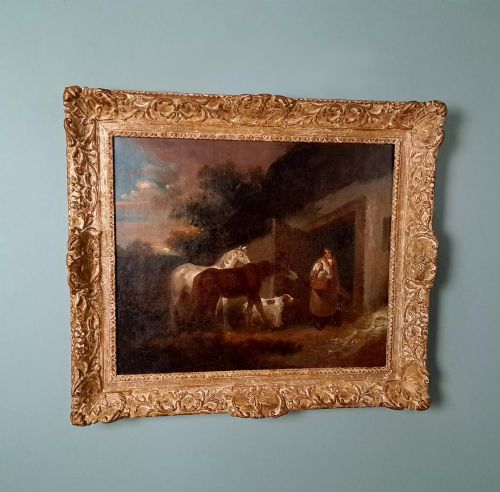
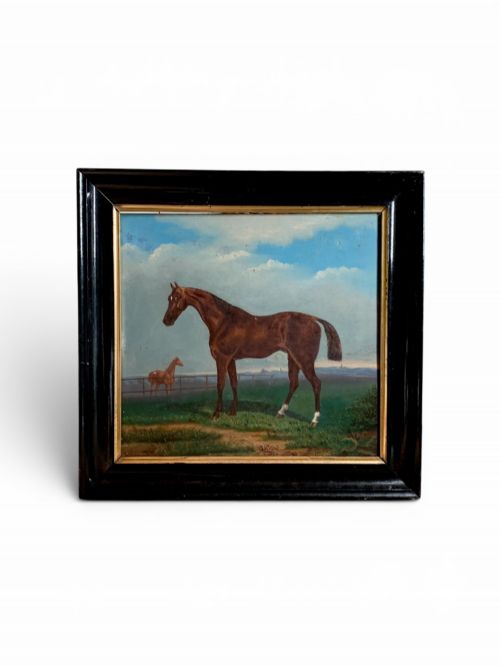
When you search for a rustic horse oil painting, you encounter works that record working animals, farmyards, and rural landscapes across the Georgian and Victorian eras. These pieces bridge fine art and agricultural history, depicting shires, ponies, and carts in fields or stable interiors.
You are most likely to meet nineteenth-century British pastoral or French school examples on this page, rendered on canvas or wood panel. The makers range from named painters such as William Joseph Shayer Senior and John Frederick Herring to accomplished continental and domestic hands working in styles like rural realism.
The subjects focus firmly on working rural scenes rather than formal portraiture, showing horses in carts, hay fields, and farmyard settings. Such works reflect a period when the horse remained central to rural labour and transport.
How they were made
These works rely on oil paint applied to prepared canvas or solid wood panels, sometimes housed in original gilt wood frames. The painters built up the surface through layered brushwork to render the sheen of horse coats and the texture of rural settings.
Support materials vary between stretched canvas and wooden boards, each influencing how the oil medium retains its pigment over time. Frames of gilded wood frequently accompany the panels and canvases, adding a finished boundary to the pastoral scene.
Several canvases ensure the working horses are immortalised alongside their attendant hounds and weary carters.
What varies in quality
Quality rests upon the sureness of the drawing and the fidelity with which the artist captures the anatomy and weight of working horses. Stronger compositions handle light across the farmyard or stable interior with conviction, avoiding stiffness in the figures.
The handling of the surrounding landscape and atmospheric depth also distinguishes finer examples from simpler provincial works. Attribution to recognised hands like George Morland or John Frederick Herring elevates the standing of a piece within the field.
William Joseph Shayer Senior·George Morland·James William Booth·John Frederick Herring·W E Millner
The Rustic Horse Oil Painting Glossary
- Oil paint
- A slow-drying medium consisting of pigments suspended in a drying oil, typically linseed. This allowed artists to achieve rich tonal gradations and subtle blending in their depiction of horses and landscapes.
- Wood panel
- A rigid wooden support used by painters instead of stretched canvas. Panels were often favored for smaller works and offered a stable surface for detailed brushwork.
- Gilt wood
- Wood coated with a thin layer of gold leaf or gilt paint, commonly used for framing nineteenth-century paintings. The metallic finish complements the warm tones of oil on canvas.
- Rural realism
- An artistic style dedicated to depicting everyday agricultural life and labour without idealization. It forms the backbone of many nineteenth-century farmyard and pastoral scenes.
Rustic Horse Oil Painting: Frequently Asked Questions
What periods do these paintings date from?
The listings span from the Georgian era through the nineteenth century and into the early twentieth century. Most pieces cluster in the Victorian period.
Dates reflect the active periods of the artists and the stylistic conventions of rural realism and British pastoral painting.
Are these works on canvas or panel?
Painters of this subject matter utilised both stretched canvas and rigid wood boards. The support often depends on the scale and date of the work.
Smaller domestic paintings frequently appear on wood panels, while larger compositions tend to use traditional canvas.
How should I frame an oil painting?
Many nineteenth-century works retain their period gilt wood frames, which complement the darker earth tones of the pastoral palette. Keeping an appropriate period frame preserves the historical integrity of the piece.
Avoid modern framing styles that clash with the traditional aesthetic of rural oil paintings.
What subjects appear most often?
Common subjects include shire horses being unyoked, carts in farmyards, hay fields, and stable interiors. These scenes reflect the everyday realities of agricultural labour.
Figures of attendants, rustics, and hounds often accompany the working horses to anchor the landscape context.