





Rustic Firewood Holder
These rustic firewood holder pieces are utilitarian hearth vessels and log baskets built for holding logs by the fire.
Rustic Firewood Holder
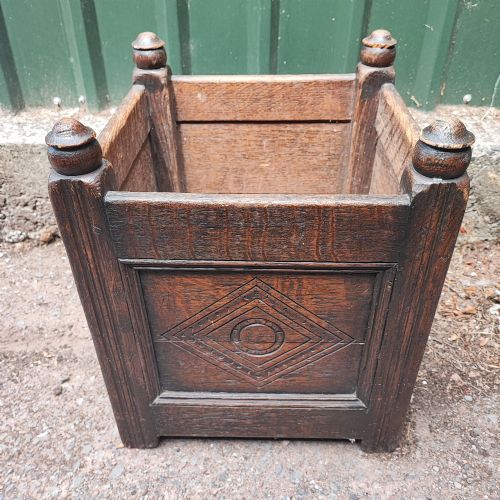
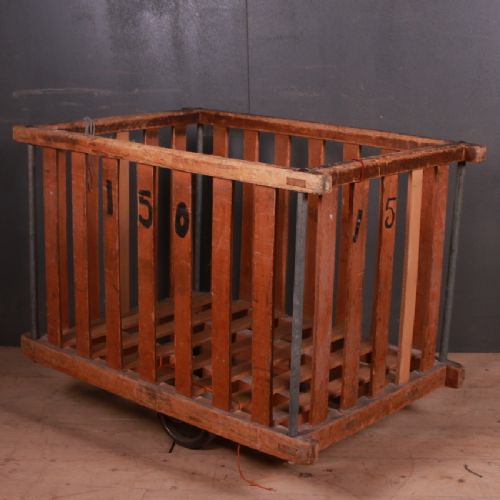
Every rustic firewood holder on this page serves the practical purpose of storing wood near the hearth. The selection spans the nineteenth century up to the early twentieth century, taking the form of log baskets, log bins, log boxes, cauldrons, and buckets.
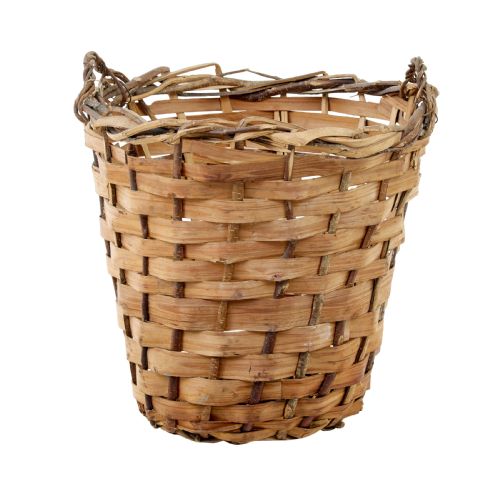
The primary forms include woven baskets alongside heavy metal bins and cauldrons fitted with wrought iron handles. Buyers seeking a rustic firewood holder will find both traditional woven storage and rigid metal containers suitable for hearth use.
How they were made
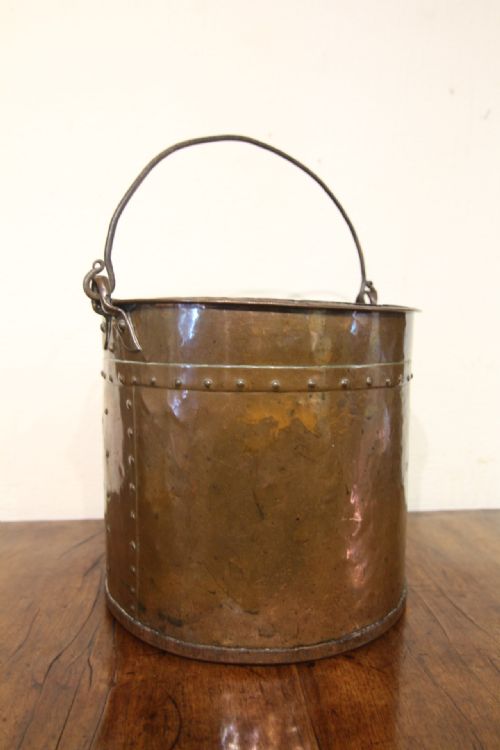
Metal vessels utilise heavy sheet copper joined with visible rivets, paired with forged wrought iron swing handles and brass fittings. These construction methods ensured the containers could withstand the heavy weight of logs and frequent hearth use.
Wooden and woven pieces employ natural materials such as oak, pine, hazel, and willow. Carpenters built rigid log boxes from solid boards, whilst basket makers utilised pliable natural branches for woven log baskets.
Several heavy copper vessels spent their early years boiling laundry or containing soup before retiring to a peaceful life holding logs.
What varies in quality
Quality rests in the substance of the materials and the integrity of the original construction, such as heavy gauge copper walls and solid riveted joints. Thicker metal and dense hardwoods like oak represent superior durability compared to lighter utility items.
The integrity of handles and fixings dictates the practical strength of each vessel. Securely mounted wrought iron swing handles and tight basket weaves indicate higher standard craftsmanship from the period.
The Rustic Firewood Holder Glossary
- Cauldron
- A large metal pot with a rounded base and a swing handle, traditionally used over fires and later repurposed for holding logs. These heavy metal vessels often feature riveted construction.
- Wrought iron
- Iron that has been heated and shaped by a blacksmith's hammer, creating durable handles and fittings. This material provides strong structural support for heavy copper and wooden vessels.
- Log bin
- A rigid container designed specifically to store firewood beside the hearth. They appear in copper, brass, and solid timber.
- Hazel
- A flexible wood commonly utilised in traditional basketry. Craftsmen wove these natural materials to create sturdy storage receptacles.
Rustic Firewood Holder: Frequently Asked Questions
What materials were used for these holders?
These pieces utilise natural timber and metals selected for durability. Common materials include copper, iron, wrought iron, oak, pine, willow, and hazel.
Metal items rely on heavy sheet construction with riveted joints, whilst wooden examples feature solid boards or woven natural plant fibres.
How do I date a copper log bin?
Dating relies on construction techniques, style indicators, and material characteristics. Nineteenth-century examples often feature hand-hammered surfaces and heavy wrought iron handles.
Makers utilised specific joining methods like visible copper rivets before modern manufacturing processes became widespread.
Where were these pieces made?
The pieces originate from various domestic and continental European workshops. Country styles reflect distinct regional traditions from France and Scandinavia.
Local artisans and metalworkers produced these utilitarian objects for everyday agricultural and domestic hearth use.
Can I use an antique cauldron for logs?
Many heavy metal cauldrons and buckets originally built for domestic tasks now serve as hearth storage. Their sturdy iron handles and rigid walls accommodate heavy loads of firewood.
Ensure the base remains stable and the handles are securely attached before loading timber.