


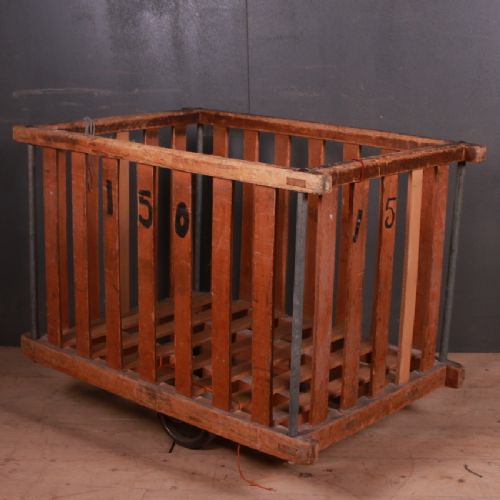


Rustic Fireplace Storage
Rustic fireplace storage brings together robust oak, iron, and copper to hold hearth fuel with practical charm.
Rustic Fireplace Storage
Rustic fireplace storage encompasses log boxes, coal bunkers, buckets, and log bins designed to keep hearth fuel close at hand. These pieces serve a direct domestic purpose while adding historical character to a room.
The versions most commonly met on this page span the Victorian and Edwardian eras alongside earlier Georgian and 18th Century examples, often hailing from English or Scandinavian workshops.
Forms range from coopered oak barrels and wrought iron log layers to hammered copper vessels and painted pine bins. Each object reflects the utilitarian needs of traditional domestic heating.
Materials and construction
Construction relies heavily on durable timbers such as oak and pine, frequently shaped using cooperage techniques with staves and bands. Metal elements incorporate wrought iron, brass, and copper, sometimes worked into riveted buckets or sturdy frames.
Finishes include original paint surfaces on pine, polished or patinated copper, and raw timber left to age naturally. These methods ensured the vessels could withstand the heavy, daily burden of logs and coal.
Copper log bins occasionally double as garden planters in a second life after the hearth fires go out.
Judging quality and character
Quality rests in the integrity of the original construction, whether that is tight coopered joints on a barrel or hand-forged riveting on a copper bin. Pieces that retain their honest, unaltered patina command greater interest than those stripped or overly restored.
The choice of materials also dictates distinction, moving from simple painted pine storage to finely figured oak or heavy-gauge copper vessels with integrated handles and feet.
The Rustic Fireplace Storage Glossary
- Coopered barrel
- A cylindrical container built from curved timber staves bound together by metal or wooden hoops. This traditional method was standard for holding liquids and dry goods alike.
- Wrought iron
- Iron that is heated and hammered into shape by hand, resulting in a fibrous texture and high durability. It appears frequently in fireside fuel keepers and stands.
- Patina
- The surface sheen and colour acquired by materials through age, handling, and use. A good patina indicates genuine historic character.
- Log bin
- A sturdy container specifically proportioned for holding firewood beside a hearth. These range from simple wooden boxes to ornate metal vessels.
Rustic Fireplace Storage: Frequently Asked Questions
What is rustic fireplace storage?
Rustic fireplace storage covers containers used to hold logs, coal, and kindling near a hearth. These include copper buckets, oak log boxes, and iron fuel keepers.
They combine practical utility with traditional craftsmanship, using materials built to withstand the heavy wear of daily fireside use.
How were these pieces used historically?
Historically, these vessels transported and stored solid fuel from outdoor stores or cellars directly to the living room fireplace. They kept the hearth area tidy while ensuring dry wood or coal stayed within easy reach.
Larger bins and trolleys managed heavier loads, while smaller buckets served daily top-ups.
How do I live with antique log bins?
Living with these pieces simply involves placing them beside a working hearth or using them as standalone decorative storage in a room. Their robust construction makes them well-suited for holding logs today just as they did in the past.
Care typically involves occasional dusting and preserving the natural timber or metal finish.
How can I tell the periods apart?
Periods are identified through construction methods, material choices, and stylistic cues. Georgian and 18th Century pieces often display fine oak cabinetry or traditional cooperage, while Victorian and Edwardian examples introduce heavier industrial metals and copper.
Scandinavian country pieces frequently feature original painted pine surfaces distinct from English hardwood items.