





Rustic Elm Bench Table
A rustic elm bench table brings honest utility and deep timber grain to a room.
Rustic Elm Bench Table
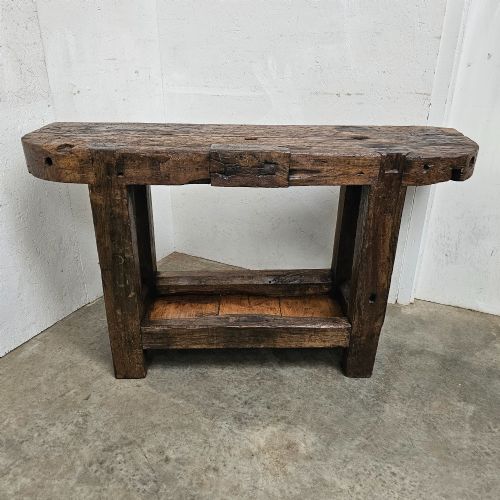
A rustic elm bench table encompasses sturdy low tables, long benches, and workbenches forged for practical use. You will frequently encounter examples originating from French provincial settings, English country workshops, and Chinese dynasties.
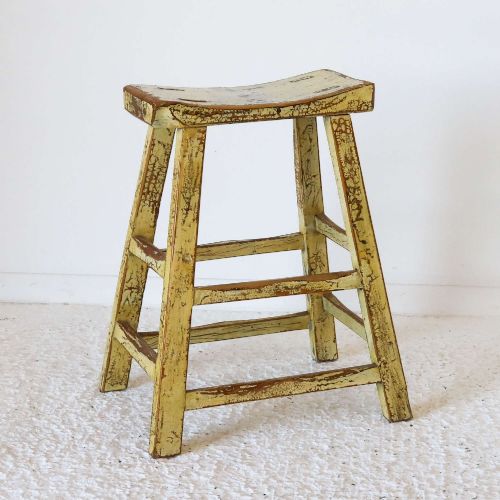
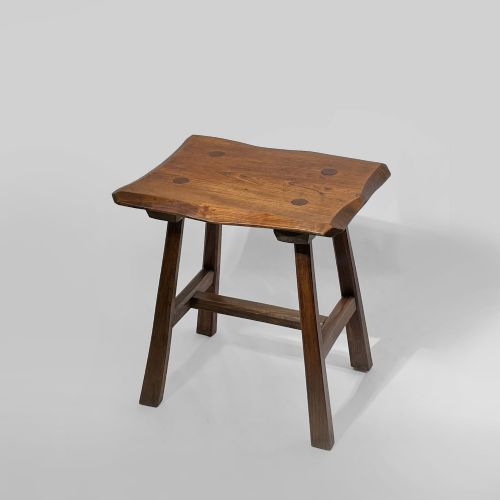
The selection ranges from small Edwardian stools and low coffee tables to substantial Georgian tavern tables and trestle forms. These pieces serve readily as functional seating, low display surfaces, or central dining focal points.
Makers shaped these utilitarian objects from domestic hardwoods to withstand decades of daily labour. Their survival demonstrates the robust nature of vernacular design across different continents and centuries.
Materials and construction
Elm forms the principal timber across the selection, prized for its interlocking grain that resists splitting under heavy use. Cabinet makers and rural joiners paired this resilient wood with sycamore, ash, and general hardwood.
Surfaces often display scrubbed finishes, original lacquer, or aged patinas developed through generations of handling. Joinery relies on traditional pegged joints and thick plank tops designed for durability rather than delicate display.
Rustic Elm Bench Table Retail Price Guide 2026
Typical asking prices for rustic elm bench table among the pieces listed under this phrase on Sellingantiques today, from the lower quarter to the upper quarter. They describe what is for sale here now, not the wider market.
Listings feature elm, sycamore, and ash across nineteenth-century, Edwardian, and Georgian periods.
Assessing quality and character
Quality rests in the integrity of the timber and the honesty of the surface wear. Pieces that retain their original finish or display a deep, undisturbed patina command greater appreciation among collectors.
Structural proportions dictate practical value, where balanced trestle bases and thick plank tops offer superior presence. Lesser examples show excessive timber replacement or unsympathetic modern stripping that removes historical surface character.
The Rustic Elm Bench Table Glossary
- Elm
- A tough, durable hardwood characterised by an intertwined grain pattern that makes it exceptionally resistant to splitting. Rural makers utilised it extensively for seating and work surfaces.
- Trestle table
- A table construction featuring a horizontal beam supported by two pairs of sloping legs. This form allows for maximum legroom and easy dismantling.
- Pig bench
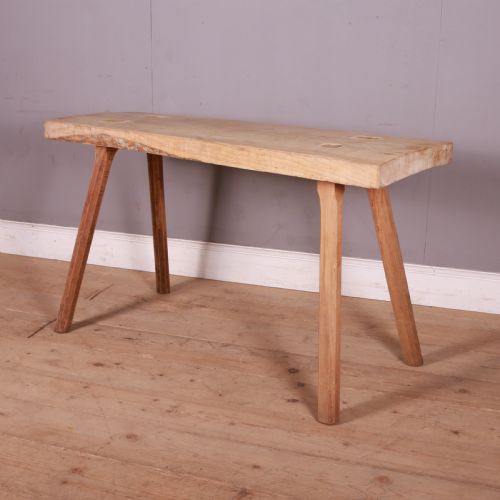
- A low, heavy bench traditionally utilised in agricultural settings for butchery tasks. Their low profile and thick timber tops now suit modern interior placement.
- Patina
- The deep sheen and surface alteration developed on timber over decades of use and polishing. It serves as a visual indicator of age and handling.
Rustic Elm Bench Table: Frequently Asked Questions
What is a rustic elm bench table?
A rustic elm bench table is a utilitarian wooden furnishing built for domestic or agricultural labour, spanning low tables, benches, and work surfaces. These pieces display honest vernacular construction with thick timber tops.
They originate from diverse regions including English country houses, French provinces, and Chinese workshops. Their enduring appeal lies in the visible grain and aged patina of the elm.
Can I use these tables daily?
These pieces were originally constructed for heavy daily work, making them remarkably robust for modern domestic environments. Their solid hardwood frames readily withstand regular use as dining surfaces or coffee tables.
Protective felt pads beneath hot dishes or heavy objects will safeguard the historic surface finish. Gentle handling preserves the integrity of the original joints and timber.
How do I date an elm bench?
Dating relies on examining the construction methods, tool marks left by the maker, and the nature of the timber wear. Hand-cut joinery and traditional pegging indicate older vernacular manufacturing.
Comparing the style against known regional forms, such as French provincial trestles or Georgian tavern tables, helps narrow the period of origin. Surface wear should match the proposed age of the piece.