
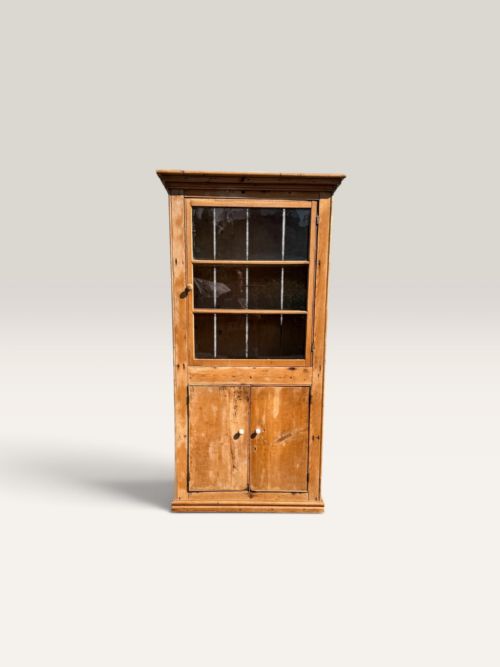
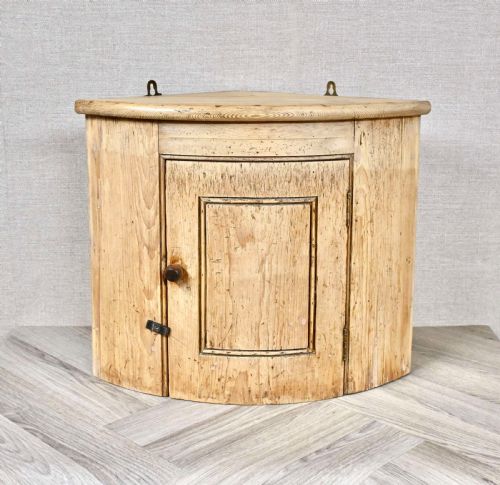
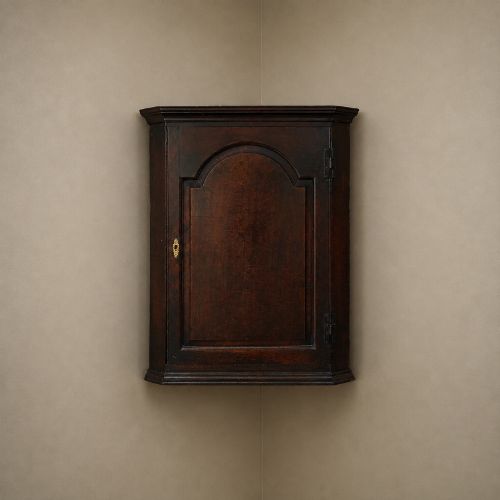
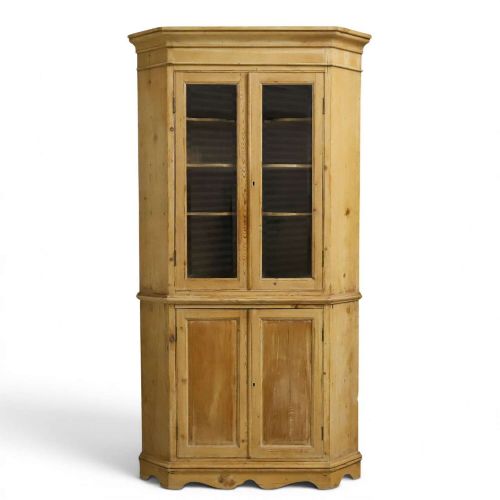


Rustic Corner Cupboard
A rustic corner cupboard turns unused angles into practical storage, bringing character and provincial charm to a room.
Rustic Corner Cupboard
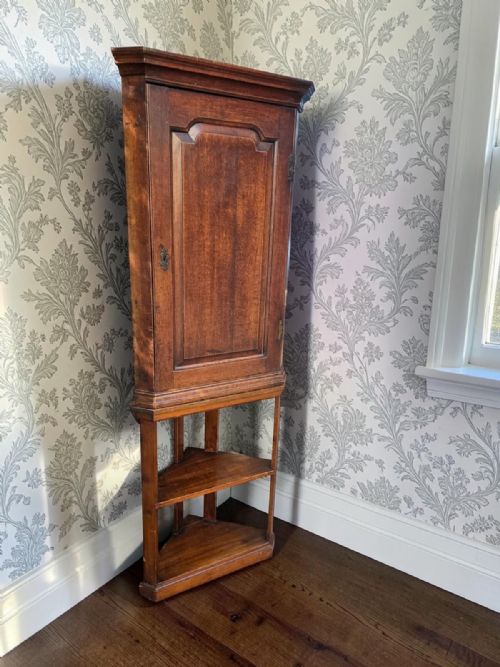
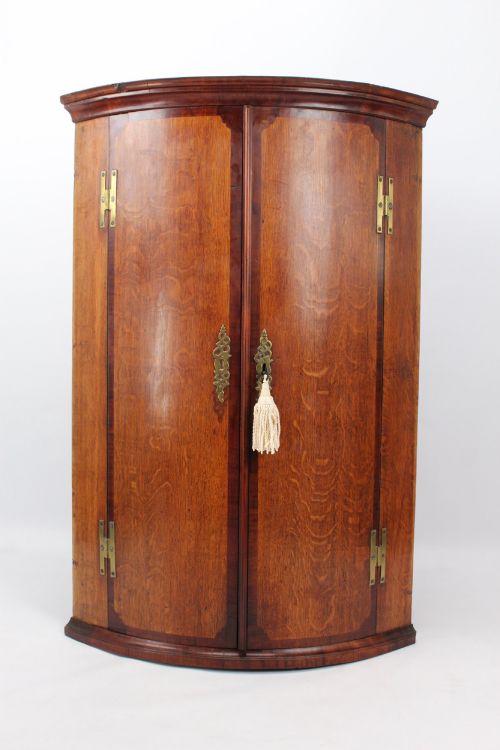
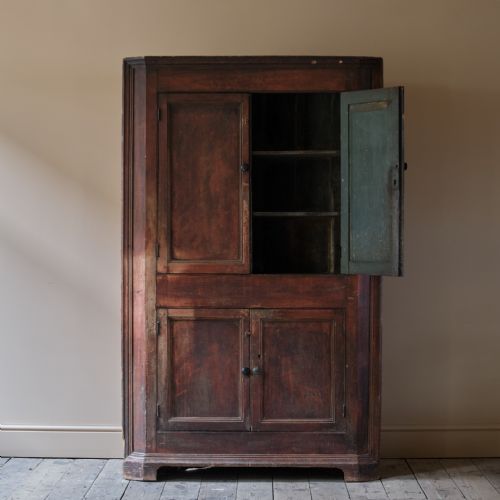
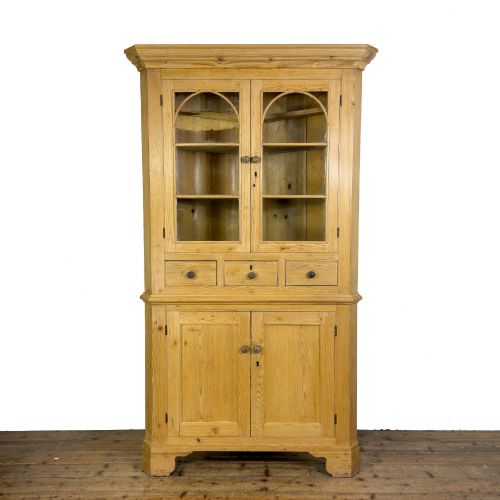
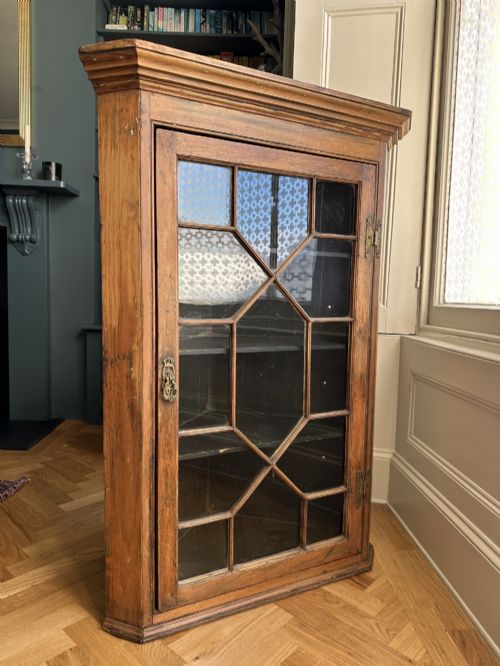
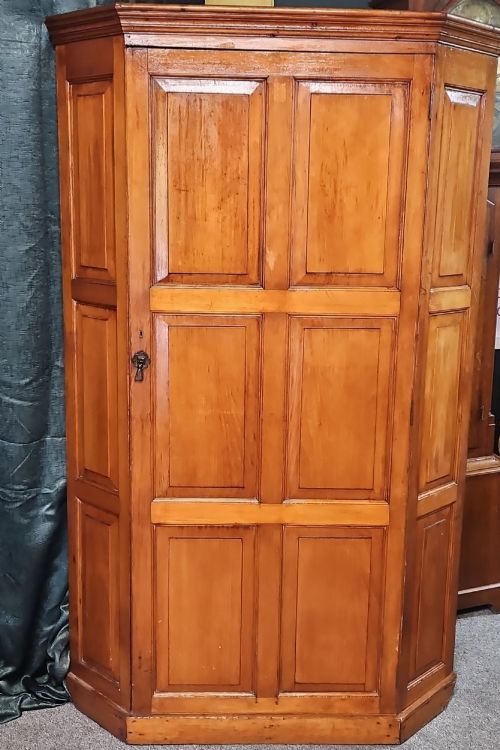
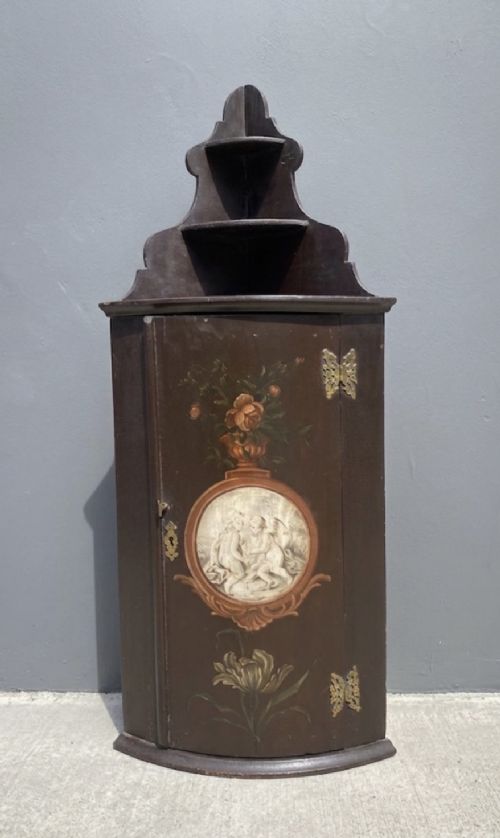
A rustic corner cupboard makes use of empty angles in a room while providing enclosed storage for household items. These pieces appear in various configurations, including wall-hanging versions, two-part designs, floor-standing models, and tall cupboards.
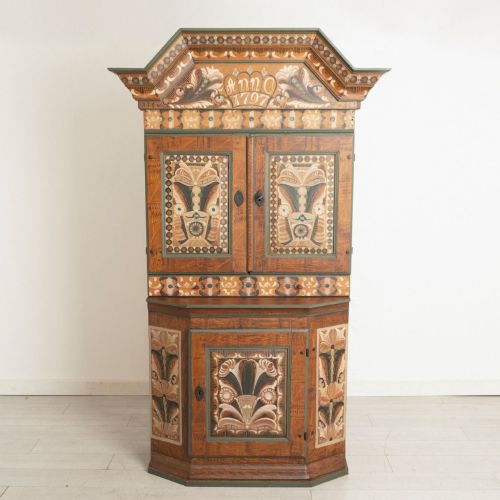
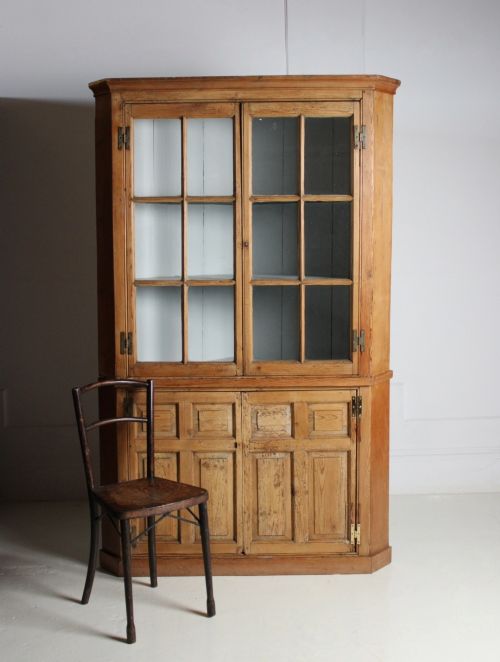
The pieces on this page span the eighteenth and nineteenth centuries, taking influences from Georgian, Victorian, and Scandinavian folk art traditions. Oak and pine dominate the selection, often complemented by original paint, glass doors, or brass fittings.
Materials and Construction
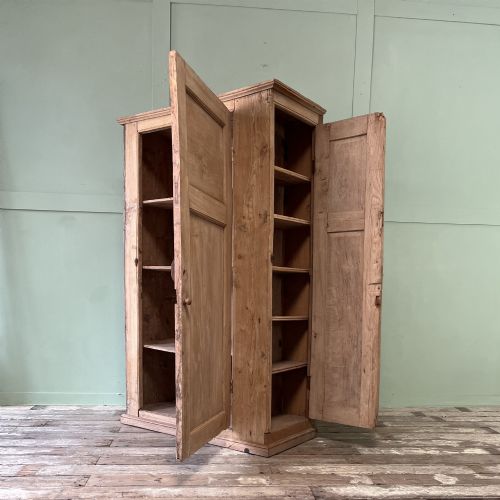
Local timbers such as oak, pine, and pitch pine form the sturdy carcass of each rustic corner cupboard, joined using traditional provincial carpentry techniques. Workshops frequently utilised fruitwood, elm, or walnut for specific panels and detailing.
Surface treatments range from stripped natural wood to original painted finishes and liming. Brass hinges, key escutcheons, and glass panes appear across eighteenth and nineteenth-century examples to secure doors and display interior shelves.
Some provincial cupboards hide secret little shelves behind their painted doors for very private tucks.
Design and Proportion
The visual appeal of a rustic corner cupboard rests upon the balance of its proportions, the integrity of its timber, and the retention of original surface treatments. Pieces featuring shaped interior shelving, panelled doors, or early painted finishes show particular consideration by provincial makers.
Structural variations, such as bow fronts or two-part forms, distinguish standard utility pieces from more ambitious regional cabinet-making. The survival of period brass hardware and unblemished wood patination further elevates the standing of an individual cabinet.
The Rustic Corner Cupboard Glossary
- Bow front
- A convex curved cabinet front that projects outward from the corner. This curved profile requires skilled timber shaping.
- Wall hanging
- A cabinet designed to be mounted directly to wall studs rather than standing on the floor. These pieces often feature smaller proportions for domestic spaces.
- Two-part form
- A cabinet constructed in separate upper and lower sections for easier transport and placement. This construction is common in taller floor-standing cupboards.
- Escutcheon
- A protective plate surrounding the keyhole of a door. They are frequently cast in brass and help date the period of manufacture.
Rustic Corner Cupboard: Frequently Asked Questions
How were corner cupboards used?
These cabinets stored provisions, tableware, or household goods in domestic spaces where wall space was limited. Their angled design allowed them to fit neatly into room junctions.
Over generations, they transitioned from utilitarian storage to decorative display units for ceramics and glassware within dining rooms and hallways.
What woods were used?
Provincial workshops relied heavily on native hardwoods and softwoods available in their local regions. Oak and pine appear most frequently across these pieces.
Cabinet-makers also utilised fruitwood, elm, and pitch pine, depending on regional timber supplies and the desired finish for the cupboard.
Are painted finishes original?
Many eighteenth and nineteenth-century pieces retain early or original painted surfaces, sometimes accompanied by decorated interiors. Scandinavian and British vernacular examples frequently show historic layers of paint.
Closer inspection of the paint texture, wear patterns, and underlying timber helps determine whether the finish dates to the period of manufacture.
How do I mount a hanging cupboard?
Wall-hanging models require secure attachment to structural wall timbers or masonry using appropriate brackets to support their weight. The internal fixing points must bear the combined load of the timber frame and stored items.
Consulting a professional installer ensures the cabinet remains stable and secure against the corner walls.