



Rural Watercolour Art
Rural watercolour art captures the quiet charm of nineteenth and early twentieth century countryside life through delicate washes and traditional brushwork.
Rural Watercolour Art
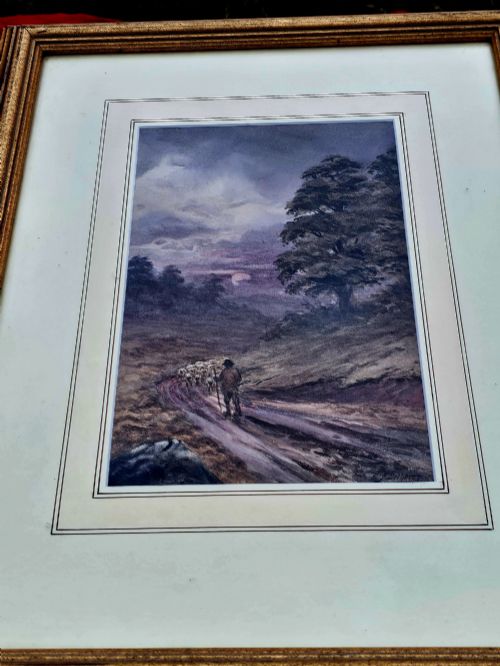
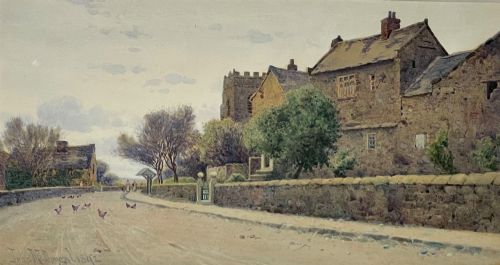
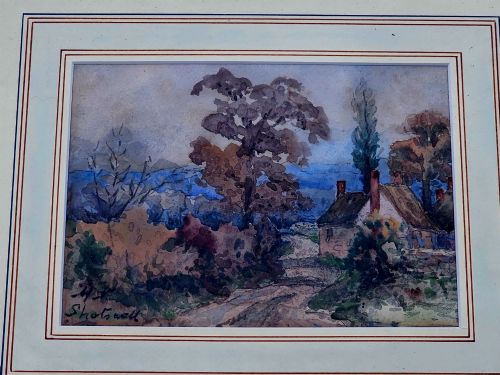
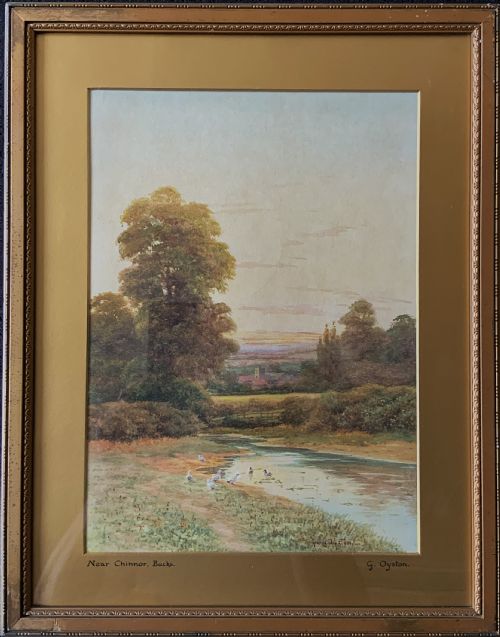
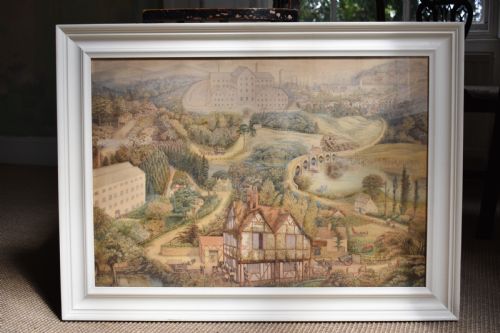
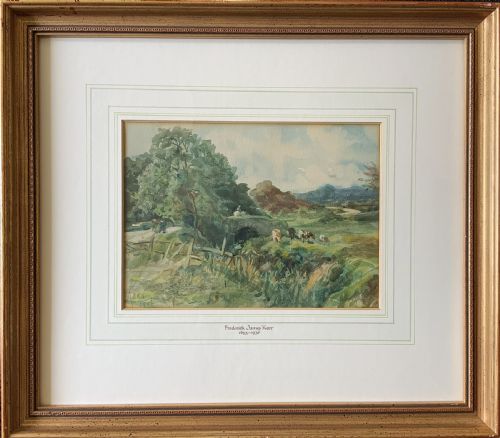
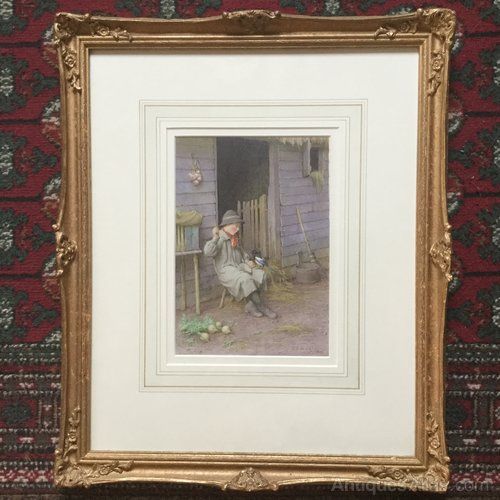
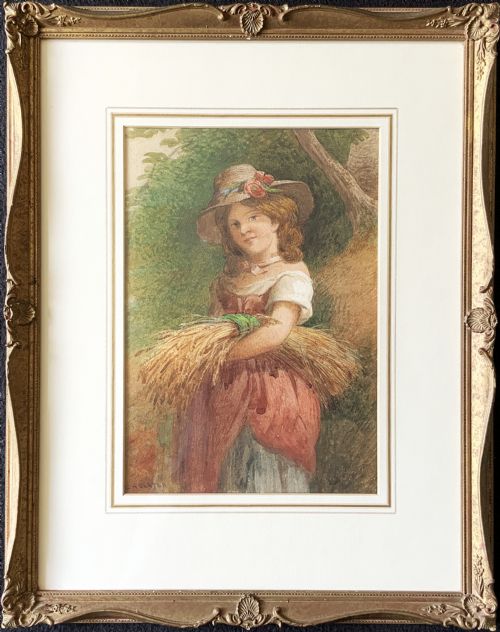
Rural watercolour art encompasses pastoral landscape scenes, farming views, and depictions of village life rendered on paper during the Victorian and Edwardian periods.
A buyer examining these pieces will frequently encounter framed paintings dating from the 1880s through to the 1930s, often signed by named British artists.
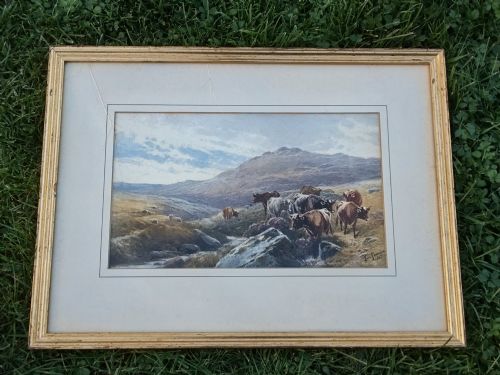
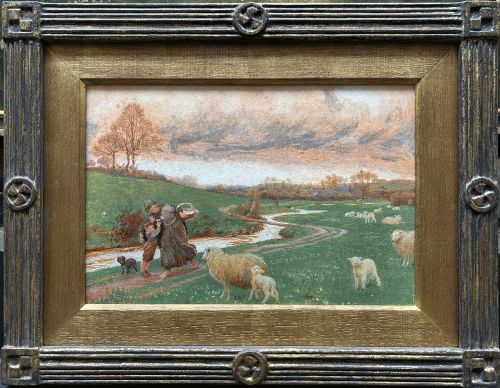
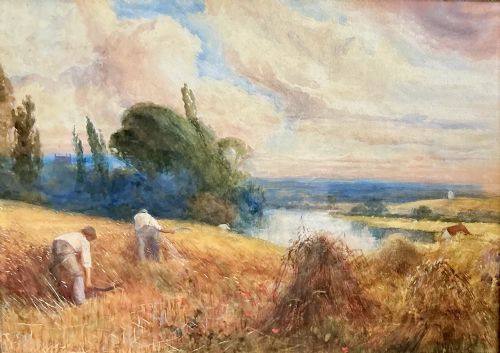
The subjects range from haymaking and cattle herding to quiet river views and gypsy caravans, reflecting a predominantly agrarian society.
Materials and technique
Artists applied watercolour pigment onto paper support, sometimes enhanced with touches of bodycolour or ink to define details in the foliage and livestock.
The resulting works were typically protected beneath glass and housed within wooden frames, occasionally featuring gold leaf or gilt wood moulding.
Rural Watercolour Art Retail Price Guide 2026
Typical asking prices for rural watercolour art among the pieces listed under this phrase on Sellingantiques today, from the lower quarter to the upper quarter. They describe what is for sale here now, not the wider market.
Listings feature works created across several decades, spanning the Victorian and Edwardian eras up to the nineteen thirties.
Assessing quality
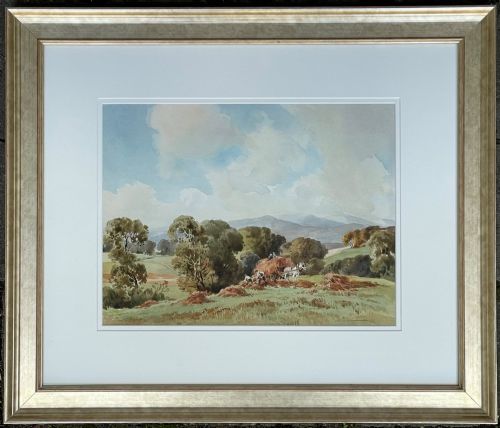
Quality rests upon the artist's handling of light and atmosphere, distinguishing freely executed impressionist watercolours from more rigid topographical illustrations.
The strength of the composition and the clarity of the pigment preservation over the decades further separate standard works from the finest examples.
Thomas Rowden·Percy Lancaster·A Marie Parsons·John McDougal·EJ Letheren·Robert A Nottingham·Th Thibault·George Oyston·Frederick James Kerr·Charles Henry Slater·Herman S Melville·Charles Edward Wilson·Frederick Hines·Edgar Woollatt·Oswald Garside·Henry Charles Fox·Fred Lawson·Cuthbert Crossley·James William Booth·William Hoggatt·Ernest Pile Bucknall·James Orrock·James Hardy Junior·John Atkinson·Colin H Greenwood
The Rural Watercolour Art Glossary
- Watercolour pigment
- The finely ground colour particles suspended in a water-soluble binder used by artists on paper.
- Gilt wood
- Wood framing treated with a thin layer of gold leaf or metallic gilding to ornament the perimeter.
- Pastoral landscape
- An artistic genre depicting rural countryside, farms, shepherds, and agricultural labour in a romanticised manner.
- British Impressionism
- A painting style focusing on light, loose brushwork, and everyday subjects developed by British artists.
Rural Watercolour Art: Frequently Asked Questions
What periods do these watercolours span?
The selections span from the Victorian era through the Edwardian period and into the early twentieth century, capturing decades of rural change.
Most dated examples originate between the late nineteenth century and the nineteen thirties.
How should I frame and display them?
These works on paper require protection behind glass to prevent atmospheric damage and fading of the watercolour pigments.
Keep them away from direct sunlight and damp environments to preserve the integrity of the paper and any gilt wood framing.
What subjects are most common?
Common subjects include agricultural scenes such as haymaking, cattle herding, ploughing horses, and traditional farmyard settings.
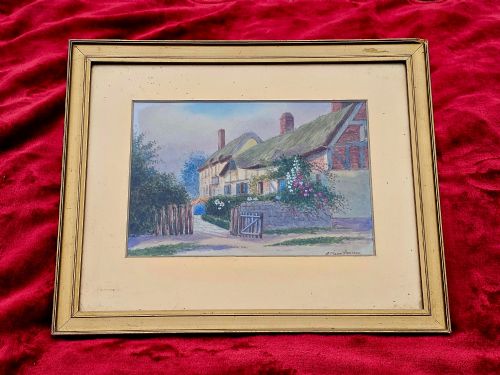
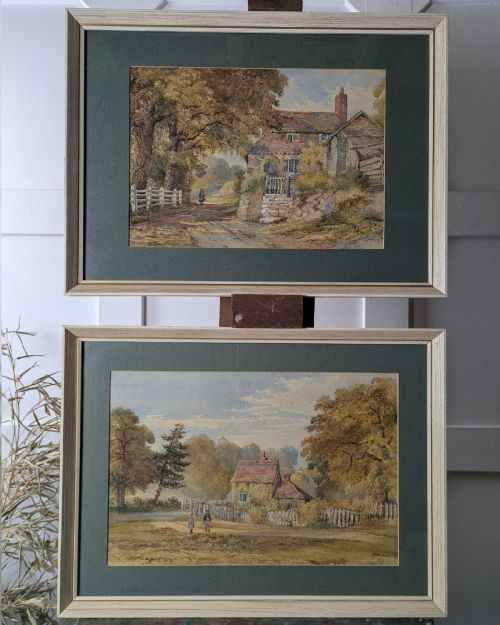
Depictions of English village lanes, rivers, and regional countryside views also appear frequently across the selection.
How do I identify signature styles?
Styles range from traditional British realism to looser Edwardian pastoral and impressionist approaches.
Examining the brushwork and the handling of light helps differentiate between straightforward topographical records and more expressive artistic interpretations.