



Rural Village Oil Painting
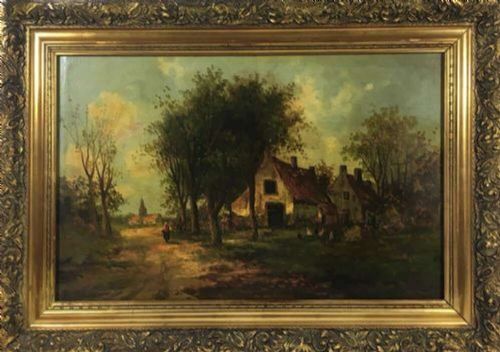
A rural village oil painting captures the quiet rhythms of countryside life through layered brushwork and natural light.
Rural Village Oil Painting
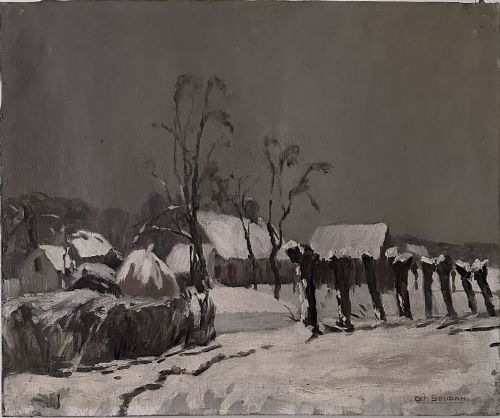
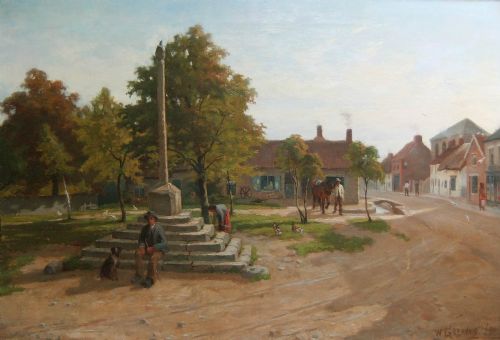
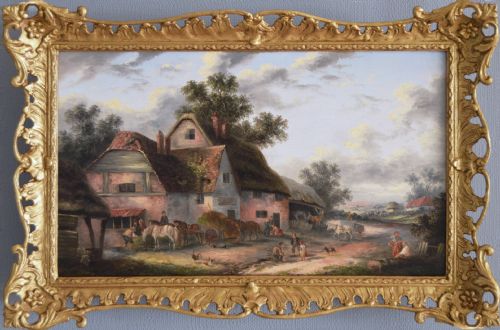
A rural village oil painting depicts pastoral settlements, cottage lanes, and agricultural life, capturing the quiet character of the countryside through oil pigment. When searching for a rural village oil painting, buyers encounter works ranging from nineteenth-century British realism to mid-century post-impressionism.
The subjects span French farmyards, Irish village life, Yorkshire settlements, and Sussex lanes, recorded across periods from eighteen-sixty to nineteen-sixty. These canvases often preserve historic rural architecture, village taverns, and farming scenes now altered or lost.
Framed examples frequently retain period giltwood or gesso surrounds that complement the canvas work. The visual language shifts from traditional realism and the Barbizon school to looser impressionist interpretations as the decades progress.
Materials and construction
These works rely on oil paint applied to stretched canvas or wooden supports, utilising oil mediums to build texture, depth, and luminosity across the rural scenes. Artists deployed varied brushwork, from tight realist detail to expressive post-impressionist strokes, capturing changing light on village streets and fields.
Rural Village Oil Painting Retail Price Guide 2026
Typical asking prices for rural village oil painting among the pieces listed under this phrase on Sellingantiques today, from the lower quarter to the upper quarter. They describe what is for sale here now, not the wider market.
Recorded origins span British, French, and Irish rural scenes created between eighteen-sixty and nineteen-sixty.
Evaluating quality and handling
Quality rests in the fidelity of atmospheric perspective, the handling of natural light, and the sureness of draughtsmanship in figures, horses, and architecture. Superior canvases demonstrate a confident command of colour harmony and spatial depth rather than mere technical neatness.
The integration between the painting and its period frame also influences the overall integrity of the piece, as original giltwood surrounds preserve the complete historic object. Hand-mixed oil pigments retain their vibrancy and depth better over time when properly balanced by the artist.
William Greaves·Charles Vickers·Robert McGregor·B W Leader·Kershaw Schofield·Henry Charles Bryant·Jeffrey Pratt·Georgina Lara·Eugene Battaille·Joseph Thors·Stephanie Cooper·John Holland Snr
The Rural Village Oil Painting Glossary
- Barbizon School
- A nineteenth-century French movement focused on plein-air landscape painting and rural realism. These artists emphasised atmospheric honesty and direct observation of nature.
- Giltwood
- Timber carved and coated with gold leaf or metallic powder, commonly used for nineteenth-century picture frames. It provides a warm reflective border to oil canvases.
- Gesso
- A plaster-like mixture applied to wooden frames as a smooth base for gilding or painting. It creates crisp moulded decorative details on period surrounds.
- Post-Impressionism
- An art movement extending roughly from the eighteen-eighties that rejected naturalistic depiction in favour of expressive colours and symbolic forms. These works use bolder brushwork to convey rural scenes.
Rural Village Oil Painting: Frequently Asked Questions
What periods do these paintings cover?
The available selection spans the nineteenth and twentieth centuries, incorporating Victorian realism, impressionist developments, and mid-century modern interpretations.
Dates range from eighteen-sixty through to nineteen-sixty, reflecting evolving artistic approaches to rural subject matter.
How should I hang an oil painting?
Position the canvas away from direct sunlight and damp walls to protect both the oil pigments and the underlying support material.
Ensure secure wall fixings that match the weight of the framed canvas, particularly for substantial giltwood pieces.
Are these paintings signed by the artists?
Several works feature artist signatures or attributions documented in the titles, such as pieces by William Greaves and Joseph Thors.
Unsigned works also appear, attributed through stylistic analysis and period characteristics.
What subjects feature in these scenes?
Common subjects include farming landscapes, village streets, winter scenes, equine transport, and country taverns across Britain, France, and Ireland.
Artists recorded everyday rural activities like hay wagon transport, market scenes, and quiet lane walks.