



Rural Cottage Watercolour
Rural cottage watercolour paintings capture quiet countryside scenes through delicate washes on paper, offering a nostalgic window into historic pastoral life.
Rural Cottage Watercolour
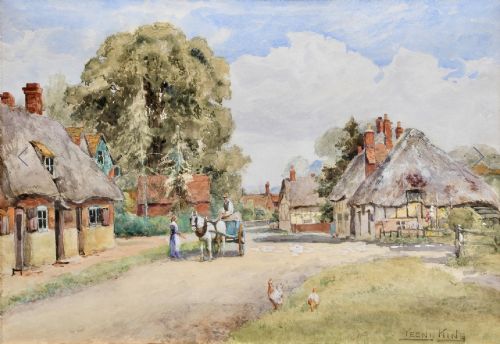
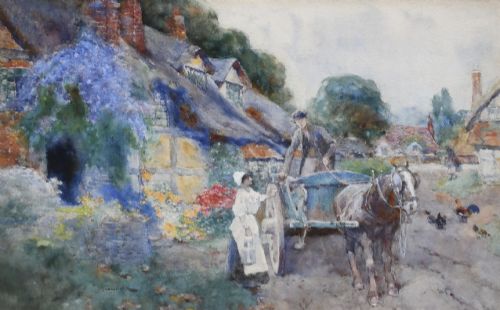
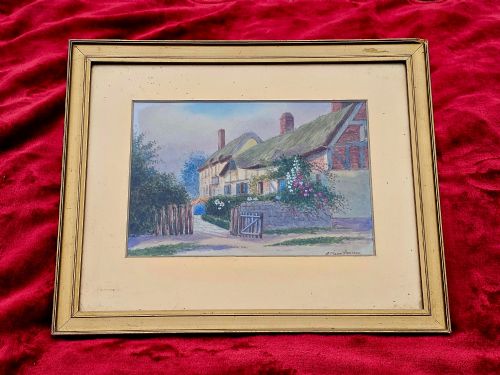
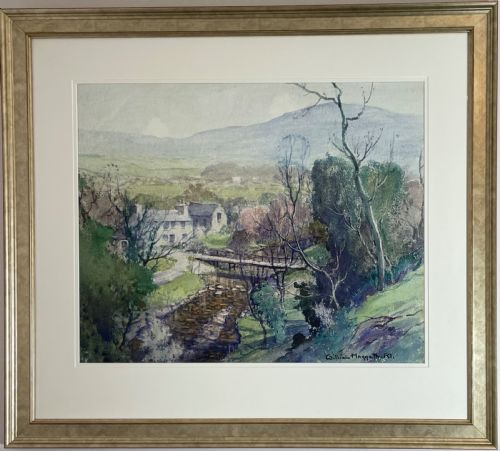
A rural cottage watercolour typically depicts a modest countryside dwelling surrounded by gardens, streams, or agricultural fields. These works frequently date from the nineteenth century through the mid-twentieth century, spanning Victorian, Edwardian, and British Impressionist movements.
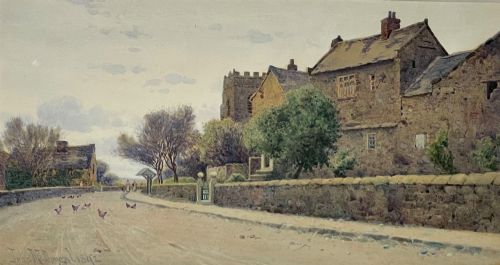
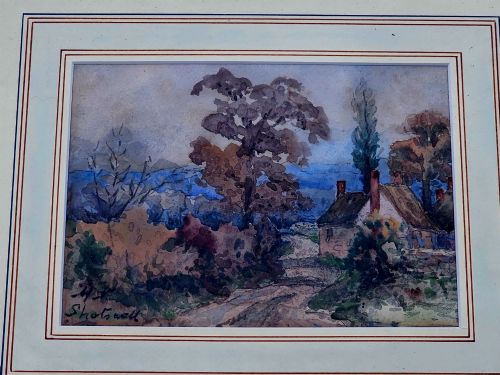
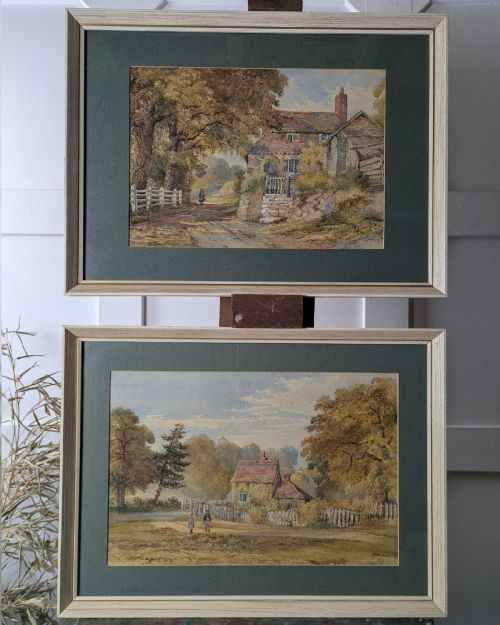
The subjects on this page range from intimate portrayals of thatched homesteads to broader pastoral landscapes populated by figures, farm animals, and horse-drawn carts. Most examples arrive framed behind glass in wood or gilt wood surrounds, preserving the delicate pigment on paper beneath.
Buyers will encounter single compositions as well as matched pairs executed by regional British artists and watercolour specialists of the period. These paintings document specific villages, counties, and rural traditions across England, Scotland, and Wales.
Materials and Techniques
Artists painted these scenes using watercolour pigment suspended in water, applied in translucent washes onto heavy paper sheets. This technique allowed painters to build subtle atmospheric effects of light, shadow, and weather across the landscape.
Finished works were mounted and protected beneath glass, then housed within wooden frames, sometimes finished with gilt accents. The combination of water-soluble pigment and paper meant preservation relied entirely on proper framing to shield the artwork from moisture and direct sunlight.
Rural Cottage Watercolour Retail Price Guide 2026
Typical asking prices for rural cottage watercolour among the pieces listed under this phrase on Sellingantiques today, from the lower quarter to the upper quarter. They describe what is for sale here now, not the wider market.
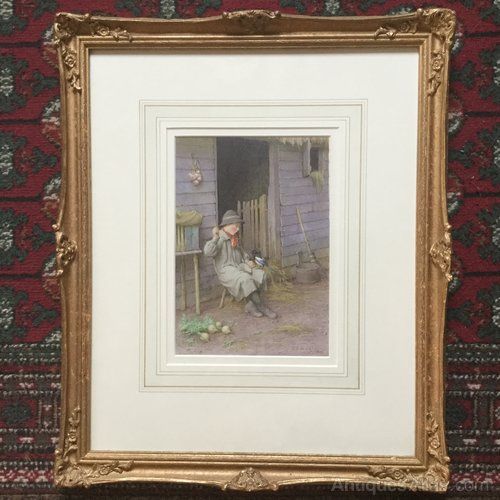
Countless Victorian chickens and ducks immortalised in watercolour continue to feed forever outside painted cottage doors.
Assessing Quality and Execution
Quality in a rural cottage watercolour rests upon the artist's handling of light, atmospheric depth, and the natural transparency of the pigment. Stronger works demonstrate confident brushwork and precise tonal control, avoiding muddy colour blending in shaded areas.
Compositional balance and the vitality of domestic or agricultural details distinguish accomplished paintings from standard topographical records. The best examples capture a convincing sense of place and daily movement rather than a stiff architectural rendering.
A. Marie Parsons·John McDougal·Robert A. Nottingham·Charles Edward Wilson·Fred Lawson·William Hoggatt·James Hardy Junior·Linnie Watt·Harry Sylvester Stannard·Henry Charles Fox·Will Anderson·Robert Hollands Walker·Thomas James Lloyd·B. Kaufmann·Joseph Kirkpatrick·Arthur Claude Strachan·John Abernethy Lynas-Gray·Thomas Nicholson Tyndale·Benjamin D. Sigmund·David Heward·Yeend King·Thomas Pritchard·Alfred George Stevens·Joseph Hughes Clayton·Charles James Adams
The Rural Cottage Watercolour Glossary
- Watercolour pigment
- The finely ground colour particles suspended in a water-soluble binder used to create these paintings. It relies on the white of the paper to shine through translucent washes.
- Gilt wood
- Wood framing finished with a thin layer of gold leaf or metallic paint. This traditional finish complements the warm tones found in many nineteenth-century landscapes.
- Victorian Pastoral
- A nineteenth-century artistic style celebrating rural life, agriculture, and untroubled countryside scenes. These works often idealise the simplicity of cottage living.
- British Impressionism
- A movement focusing on natural light, outdoor settings, and spontaneous brushwork. Painters working in this manner sought to capture the fleeting effects of weather and time of day.
Rural Cottage Watercolour: Frequently Asked Questions
What periods do these watercolours usually come from?
The majority of these works date from the nineteenth century through the early decades of the twentieth century, including Victorian and Edwardian eras. Artists during this period frequently recorded traditional rural architecture before rapid modernisation altered the countryside.
Later pieces extend into the mid-twentieth century, showing how British landscape painting evolved while retaining a fascination with remote cottages and farming communities.
How were rural cottage watercolours traditionally framed?
Most period watercolours were set behind glass within timber frames to protect the sensitive paper surface from dust, humidity, and direct handling. Many utilised simple wooden mouldings or gilt frames designed to enhance the natural tones of the pigment.
Original framing often includes historic backing boards and old paper tapes, which provide valuable clues to the age and history of the artwork.
How can I tell different artistic periods apart?
Victorian watercolours often feature highly detailed narratives with figures and livestock engaged in daily chores, rendered in rich, deep tones. Edwardian and later twentieth-century works frequently adopt looser brushwork influenced by impressionism, prioritising light and atmosphere over minute detail.
Examining the paper type, framing materials, and artist signatures can also help narrow down the decade of execution.
Where should I hang a watercolour in my home?
Watercolours require careful placement away from direct sunlight, as prolonged exposure to UV rays will fade the pigments on the paper. Choose an interior wall with stable temperature and humidity conditions to prevent paper warping or foxing.
Pairing a cottage watercolour with traditional wooden furniture or placing it in a cosy study helps accentuate its historic pastoral charm.