



Rural Cattle Landscape
A rural cattle landscape brings the quiet of the pasture and the presence of livestock directly into a room through canvas or paper.
Rural Cattle Landscape
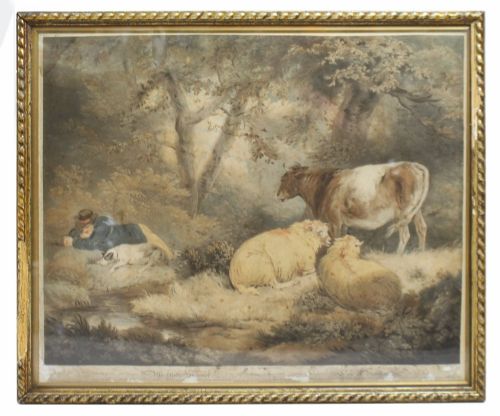
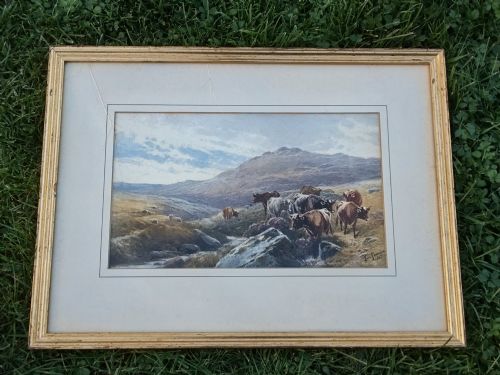
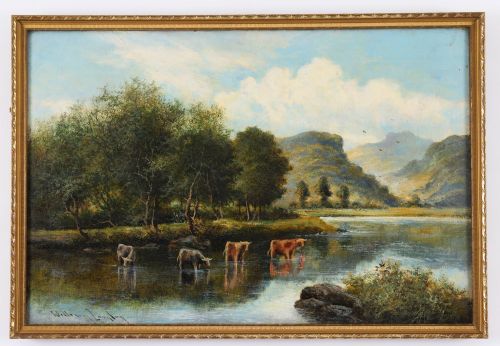
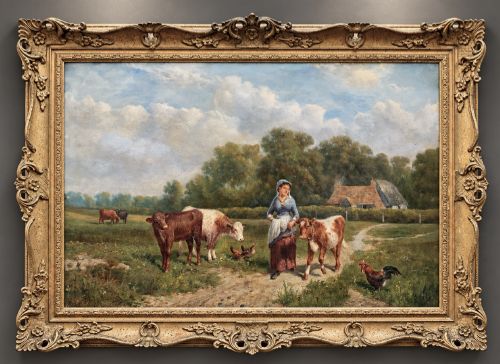
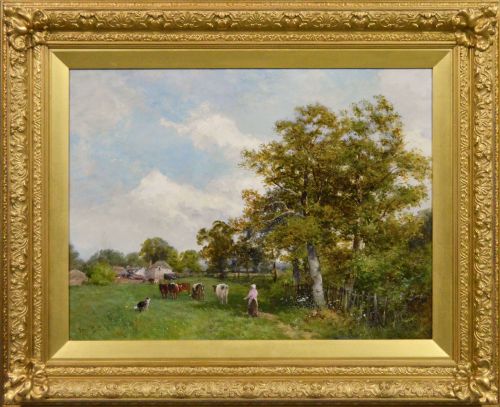
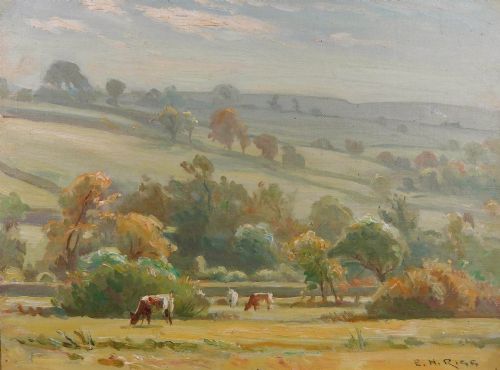
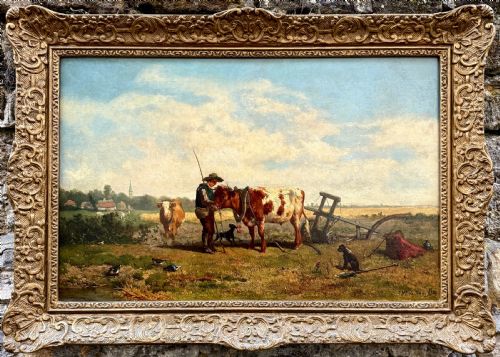
When you search for a rural cattle landscape, you find works that capture agrarian life, pastures, and herds across British and European countryside settings. These pieces span from the Georgian and Victorian eras into the early twentieth century, showing cows, bulls, and farmyards in oils and watercolours.
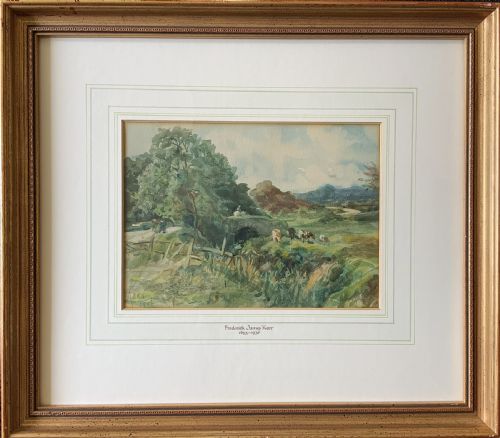
The versions most likely to meet you on this page are framed nineteenth-century oil paintings and watercolours on paper. They range from intimate watercolours of cattle by streams to large oil paintings of herds working in fields or resting in pastoral valleys.
How they were made
These works rely primarily on oil paint applied to canvas or wood panels, alongside watercolours worked on paper. Artists layered pigments to capture the light on pastureland and the texture of cattle hides, often enclosing the finished pieces in carved giltwood or wooden frames.
Techniques varied between the fluid transparency of watercolours and the rich, buildable opacity of oils. Painters utilised brushes to render fine details in the landscape, from the grassy banks of rivers to distant hills under open skies.
Rural Cattle Landscape Retail Price Guide 2026
Typical asking prices for rural cattle landscape among the pieces listed under this phrase on Sellingantiques today, from the lower quarter to the upper quarter. They describe what is for sale here now, not the wider market.
Listings feature works across the nineteenth and early twentieth centuries, spanning the Victorian and Edwardian periods in oil and watercolour.
What varies in quality
The distinction between a standard work and a finer example lies in the handling of light, atmosphere, and anatomical accuracy of the animals. Superior pieces display a confident command of brushwork that brings movement and depth to the pasture.
Another measure of quality is the relationship between the cattle and their environment, where the landscape feels integrated rather than acting as a simple backdrop. Original framing, particularly period giltwood, also elevates the integrity of the piece.
George Morland·William Langley·Thomas Rowden·David Bates·Ernest Higgins Rigg·Thomas Sidney Cooper·Heinrich Harder·John Frederick Herring Jnr·Henry Brittan Willis·Owen Bowen
The Rural Cattle Landscape Glossary
- Mezzotint
- A printmaking process of the print family where the plate is roughened to allow deep tones and subtle gradations of light. William Barnard utilised this technique for early nineteenth-century reproductions.
- Giltwood
- Wood carved and coated with gold leaf, frequently used for traditional picture frames. It provides a reflective border that complements oil paintings from the nineteenth century.
- Pastoral
- A genre of art concerning the rural life of shepherds, farmers, and cattle in open countryside. These scenes emphasise a peaceful harmony between animals and nature.
- Watercolour
- A paint consisting of pigment suspended in a water-soluble vehicle, typically applied to paper. It creates luminous, translucent washes well suited to atmospheric landscape views.
- Realism
- An artistic movement focused on the truthful, unidealised depiction of everyday subjects and contemporary life. Nineteenth-century works often applied this approach to farmyards and agricultural labour.
Rural Cattle Landscape: Frequently Asked Questions
How do I care for an antique oil painting?
Keep paintings away from direct sunlight and steady humidity changes to protect the canvas and paint layers. Dust the surface gently with a soft, dry brush without using liquid cleaners.
Ensure the painting hangs securely away from direct heat sources like radiators. Professional conservators should handle any deeper cleaning or canvas repairs.
What is the difference between an oil and a watercolour?
Oils use pigment mixed with drying oils on canvas, wood, or panel, allowing for thick textures and rich, reworkable layers of colour. Watercolours use water-soluble pigments on paper, producing lighter, translucent effects.
Watercolours require glass framing to protect the paper from moisture and dust. Oils remain open to the air, though traditional works benefit from protective varnish layers.
How can I tell a nineteenth-century painting from a later copy?
Examine the materials of the stretcher, canvas, and framing methods, as older pieces use hand-planed woods and square-cut nails. Pigment analysis and the ageing of the oil paint or paper provide further clues to the period.
Signatures, artist stamps, and exhibition labels on the reverse often help establish provenance. Stylistic markers specific to Victorian or Edwardian art also guide attribution.
Where should I hang a rural cattle landscape?
These pieces suit living rooms, studies, or dining spaces where traditional furnishings complement their pastoral subject matter. Pair them with neutral walls to let the natural tones of the landscape stand out.
Consider eye-level placement where the lighting highlights the brushwork of the oil or the delicate washes of the watercolour. Avoid damp spaces like unheated rooms or kitchens.