



Ruby Glass Shade
A ruby glass shade brings a rich, warm glow to a room, catching the light whether fitted to an oil lamp or a ceiling pendant.
Ruby Glass Shade
When you search for ruby glass shade, you encounter blown and moulded glass components designed to fit lighting fixtures from the nineteenth and early twentieth centuries. These shades transform harsh illumination into a deep, crimson wash, serving both functional and decorative roles in period interiors.
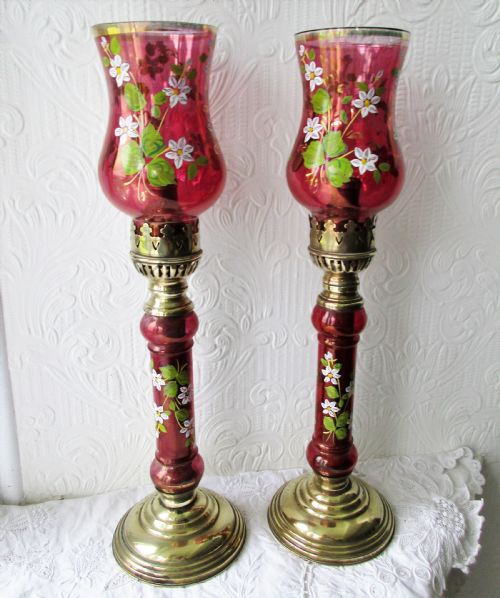
The pieces appearing on this page span the Victorian and Edwardian eras, taking the form of oil lamp chimneys, ceiling pendant shades, and chandelier bowls. Many arrive paired with brass fittings, metal work, or candle lamps, reflecting the domestic lighting technology of their time.
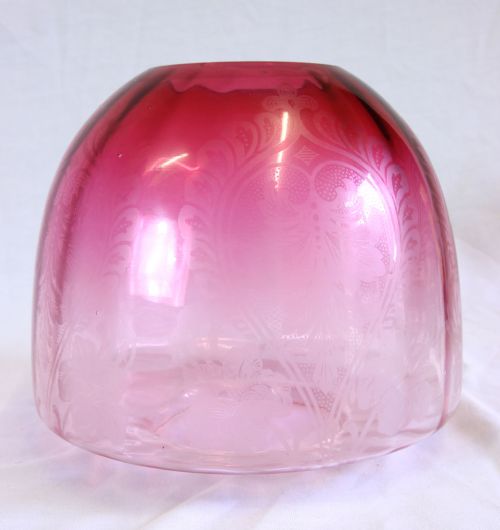
Originating largely from English and Bohemian workshops, these items range from simple dimpled red glass to elaborately etched and gilded examples. The selection includes both matching pairs and individual large shades suited for suspension from period ceiling fixtures.
How they were made
Glassmakers achieved the distinctive deep red colour by introducing gold or copper oxide into the molten batch during production. Artisans then shaped the vessels through free-blowing or mould-blowing techniques, sometimes adding applied elements or decorative finishes while the material remained pliable.
Decoration on these shades often involved surface manipulation, such as wheel-etching intricate patterns through the outer layer of ruby glass to reveal clear or frosted material beneath. Workshops also applied gold leaf detailing and enamel accents by hand before firing the pieces to fix the ornamentation.
Ruby Glass Shade Retail Price Guide 2026
Typical asking prices for ruby glass shade among the pieces listed under this phrase on Sellingantiques today, from the lower quarter to the upper quarter. They describe what is for sale here now, not the wider market.
Listings feature items spanning the 1880s through the Edwardian period, constructed from ruby glass, cranberry glass, brass, and gilded metal.
What varies in quality
The depth and consistency of the red saturation distinguish finer examples from standard production, as superior glass mixes yield a richer, more luminous hue when illuminated. The precision of the surface decoration, particularly hand-applied gilding and crisp wheel-etching, marks the difference between basic utility items and high-end decorative commissions.
The structural integrity of the fitter rim and the overall weight of the metal components associated with the shades indicate the original tier of manufacture. Heavier brass fittings and robust glass walls signify sturdier construction designed to withstand the heat of period burners.
The Ruby Glass Shade Glossary
- Ruby Glass
- A deep red coloured glass produced by adding gold or copper compounds to the molten batch. This material was widely utilised for nineteenth-century decorative tableware and lighting components.
- Cranberry Glass
- A transparent pinkish-red glass variant coloured with gold chloride. It appears frequently in Victorian lighting and tableware.
- Etched Glass
- Glass decorated by applying an acidic compound or using a rotating wheel to cut patterns into the surface. This technique created frosted designs contrasting with polished red sections.
- Oil Peg Lamp
- A small oil lamp featuring a protruding base designed to drop directly into a receiver on a separate candlestick or lamp body. These units frequently incorporated matching coloured shades.
- Chandelier Bowl
- A large, concave glass vessel suspended centrally to diffuse light from multiple burners or candles. Bohemian makers produced notable examples featuring frosted and gilded finishes.
Ruby Glass Shade: Frequently Asked Questions
How do I fit an antique shade?
Antique shades secure via the fitter rim at the base, which slides into a metal collar or gallery on the lamp. You must measure the outer diameter of this opening precisely to ensure compatibility with your existing brass or metal mount.
Older mounts often utilise thumbscrews to secure the glass in place. Tightening these requires gentle pressure against the lip to prevent cracking the historic material.
Can I use modern bulbs with them?
Modern low-heat LED bulbs function safely inside antique glass shades without risking thermal damage to the tinted material. They emit minimal warmth compared to nineteenth-century oil flames or early incandescent lamps.
Keep wattage low to preserve the gentle atmosphere intended by the original makers. High-intensity lighting washes out the deep tones characteristic of Victorian red glass.
How do I clean ruby glass?
Wash the glass gently in lukewarm water using a mild, unscented detergent and a soft cloth. Avoid abrasive sponges or harsh chemicals that might degrade surface gilding or delicate enamel decorations.
Dry the pieces thoroughly with a lint-free towel immediately after washing. Take extra care around etched patterns where dust and residue tend to accumulate.
Are Victorian and Edwardian shades different?
Victorian shades tend to display heavier ornamentation, including rich gilding, hunting themes, and deep cranberry or ruby saturation. They frequently accompany ornate brass oil lamps and heavy ceiling fixtures.
Edwardian examples often shift towards lighter suspension designs, simpler dimpled forms, and more restrained use of colour. They reflect changing interior tastes at the turn of the twentieth century.