



Round Wooden Timepiece
A round wooden timepiece is a dependable wall clock built to tell the hours in public rooms and domestic halls.
Round Wooden Timepiece
A round wooden timepiece is a wall-mounted instrument designed to keep accurate hours in schools, stations, and homes. The pieces appearing here span the Victorian era, the Edwardian period, and into the mid-twentieth century.
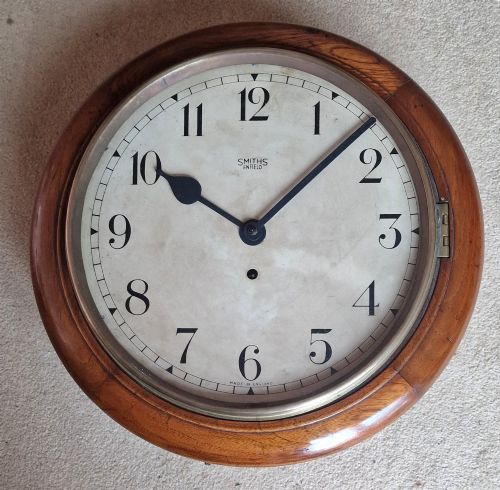
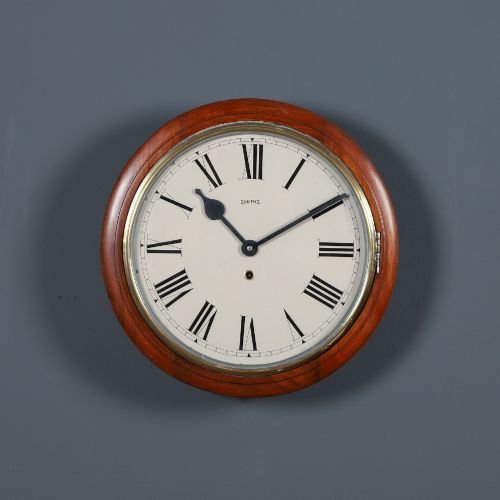
Most examples take the form of circular wall clocks framed in rich timber. They include robust railway station models alongside domestic designs with fusee movements and carved wooden surrounds.
How they were made
Clockmakers constructed these circular cases primarily from solid mahogany, oak, and walnut, often shaping the timber with carved details or smooth bezels. Glass protects the dial face, while brass and iron components drive the internal mechanisms.
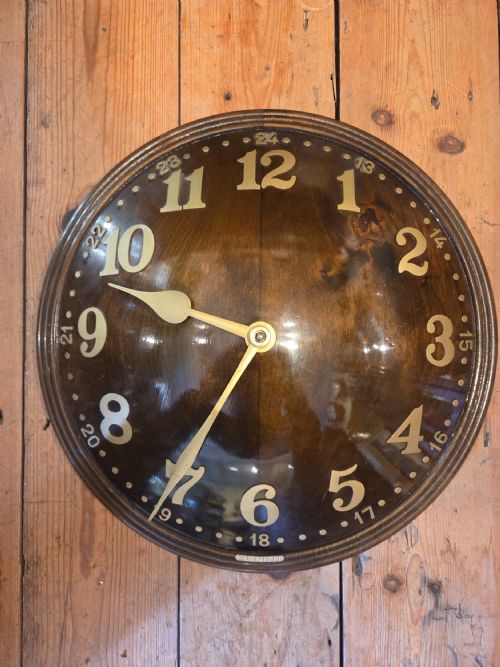
Dial faces incorporate painted metal with clear numerical markers, and specialised versions feature twenty-four-hour tracks or convex glass surfaces. The movements rely on traditional fusee systems to maintain even tension and accurate timekeeping.
Round Wooden Timepiece Retail Price Guide 2026
Typical asking prices for round wooden timepiece among the pieces listed under this phrase on Sellingantiques today, from the lower quarter to the upper quarter. They describe what is for sale here now, not the wider market.
What varies in quality
Quality rests upon the crispness of the timber framing, from plain surrounds to deeply carved mahogany cases. The fidelity of the dial layout and the presence of specialist maker signatures or twenty-four-hour markers separate standard pieces from finer examples.
The sophistication of the internal movement dictates the tier of the piece. Fusee mechanisms and clean brass gear trains represent a higher standard of clockmaking than simpler commercial alternatives.
Zenith·Smiths·John Walker·Anglo Swiss Watch Co·Balbiani Brookley·Payne of Tunbridge Wells·Palmer and Co
The Round Wooden Timepiece Glossary
- Fusee
- A conical pulley used in older clocks to maintain even force on the movement as the mainspring unwinds. This mechanism ensures consistent timekeeping throughout the running cycle.
- Convex dial
- A dial face that curves outward toward the viewer. This shape reduces glare from surrounding light sources.
- Dial clock
- A wall-mounted clock featuring a prominent circular face. These were standard fixtures in offices, stations, and schools.
- Twenty-four-hour dial
- A clock face marked with twenty-four hour divisions rather than the standard twelve. Such layouts are typical of specialised railway or military timepieces.
Round Wooden Timepiece: Frequently Asked Questions
Where were these clocks originally hung?
These round wooden timepieces hung primarily in railway stations, schools, and public offices where clear visibility was essential.
Domestic hallways and large reception rooms also accommodated them for daily timekeeping.
How do fusee movements work?
A fusee movement uses a conical drum to equalize the declining power of the mainspring.
This clever mechanical device ensures the clock maintains steady accuracy as it runs down.
What woods are most common?
Mahogany, oak, and walnut appear frequently in the framing of these circular clocks.
Cabinetmakers chose these timbers for their durability and handsome grain patterns.
How do I date a dial clock?
Dating relies on examining the timber case, the style of the numerals on the dial, and the maker's signature.
Victorian models often feature fusee movements, while mid-century examples show simpler industrial styling.