

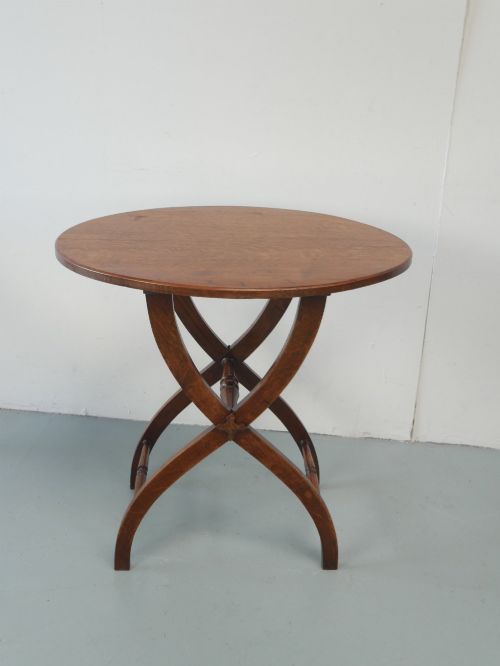
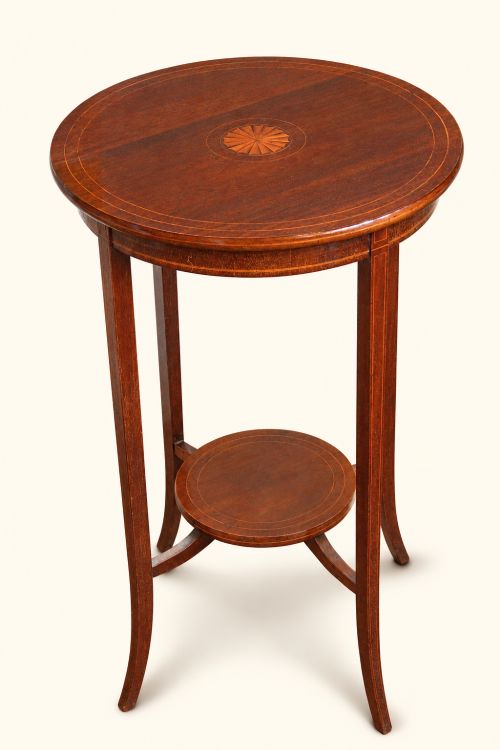
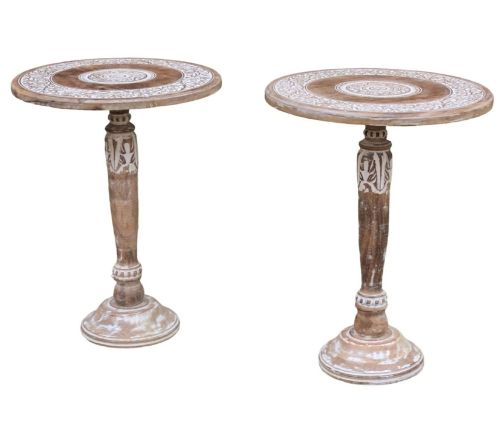
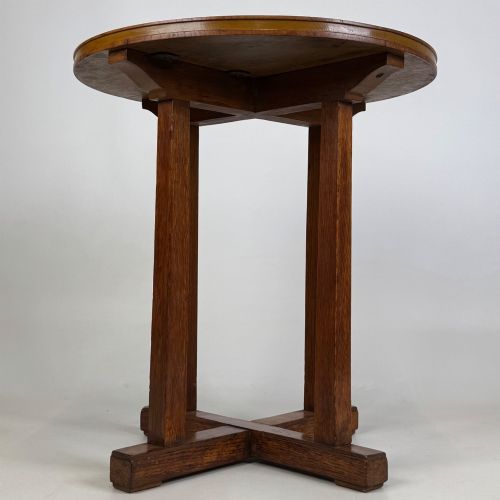


Round Plant Pedestal
These round plant pedestal pieces bring height and structure to a room, offering a sturdy stage for greenery and decorative objects.
Round Plant Pedestal
A round plant pedestal serves as a raised platform for foliage, urns, and decorative objects, lifting them to eye level within a room. When you search for a round plant pedestal, you encounter items designated across listings as plant stands, pedestals and plinths, vase stands, and sculpture stands.
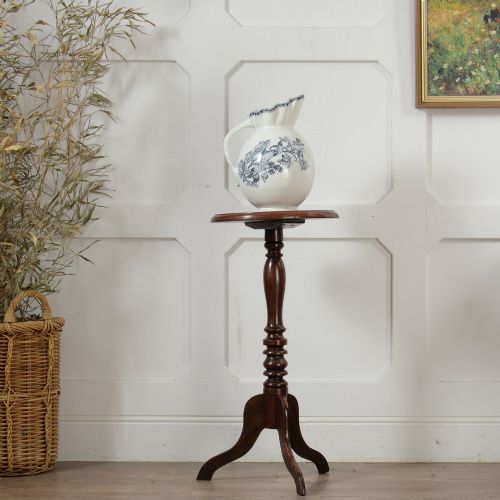
The pieces appearing on this page stretch from the Victorian and Edwardian eras into the early twentieth century, spanning styles such as French Empire, Louis XVI Revival, and Arts and Crafts. You meet tripod tables, column supports, and cylindrical stands built to hold heavy pots or display pieces securely.
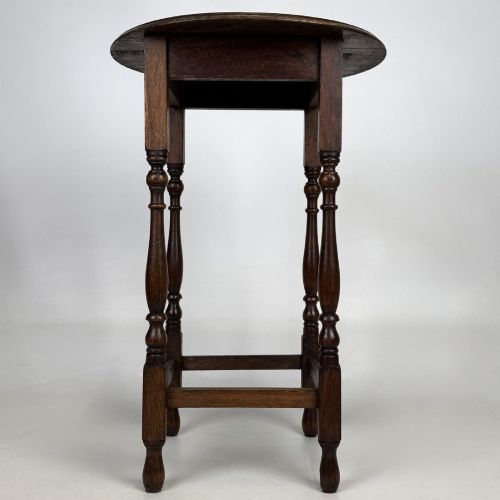
Mahogany, oak, and walnut form the backbone of the timber selection, alongside exotic woods like rosewood and teak, paired with stone surfaces. These varied forms function equally well as occasional tables, wine tables, and lamp tables, demonstrating how fluid historical domestic furniture uses remain today.
How they were made
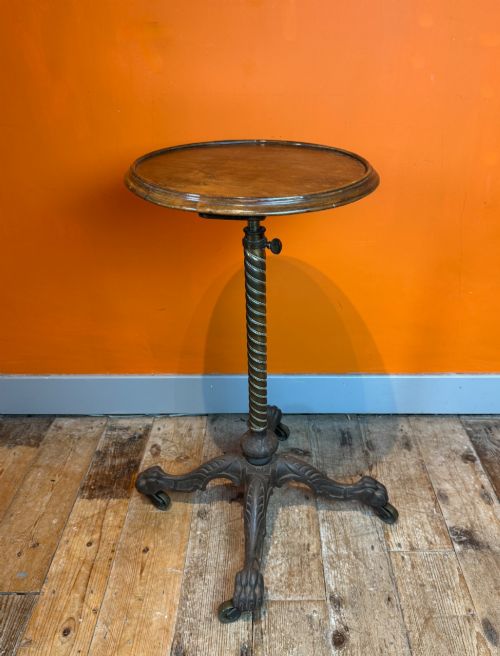
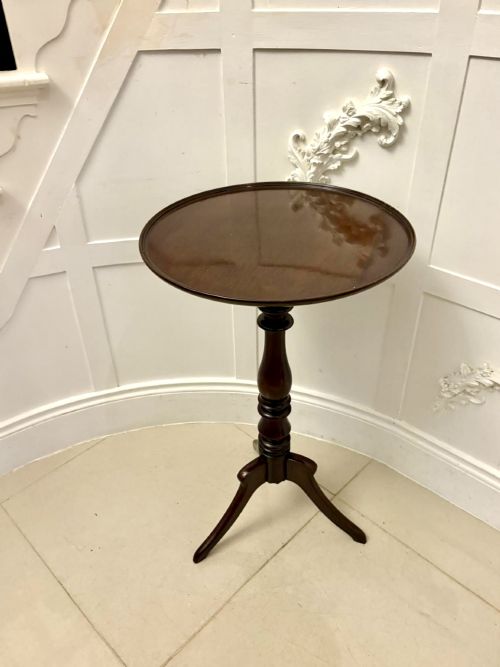
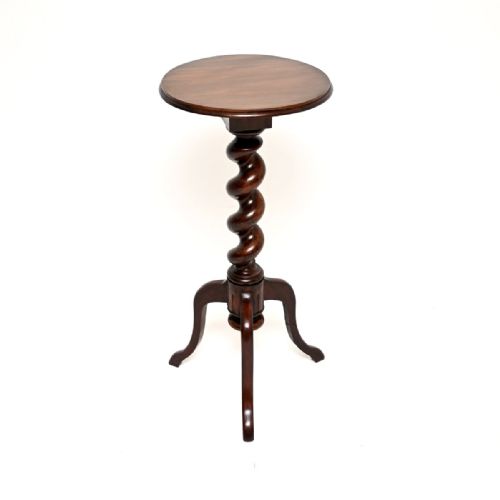
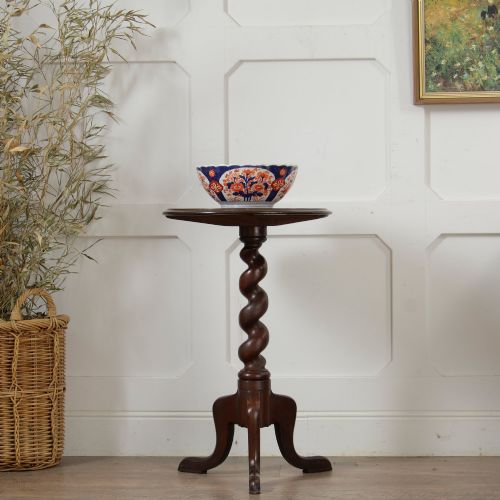
Cabinet makers utilised dense hardwoods such as mahogany, walnut, and oak, turning structural columns on lathes and carving intricate barley twist stems by hand. Tripod bases provide balance through three outward-curving legs joined to a central shaft.
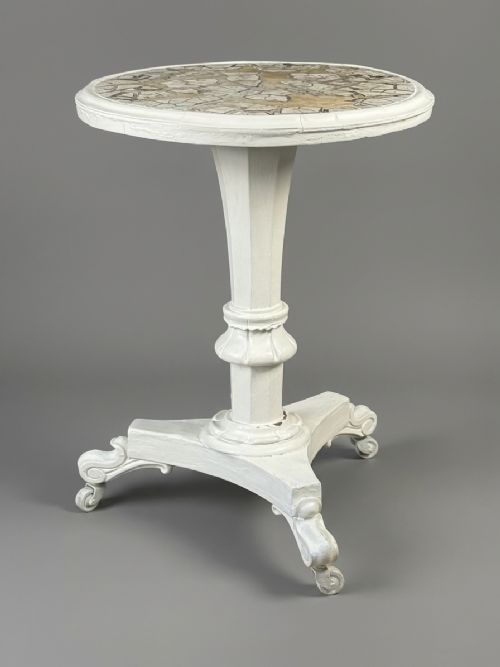
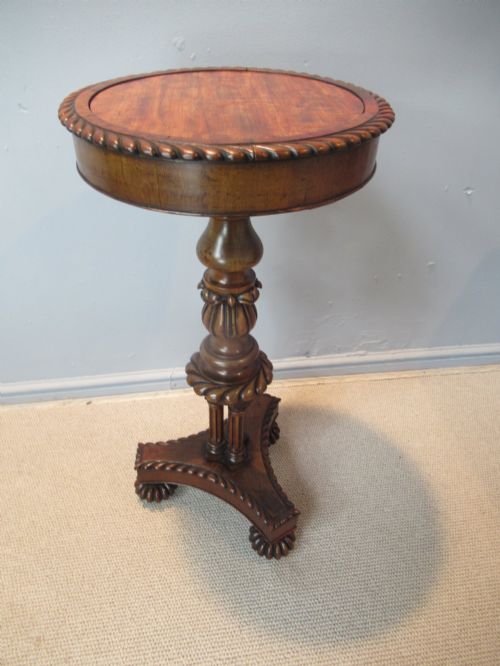
Surface ornamentation involved decorative flower mouldings, inlaid details, and carved woodwork, alongside brass elements and ormolu mounts fixed to French Empire pieces. Marble and onyx inserts provide cool, heavy tops resistant to moisture from watering plants.
Gilt wood and giltwood finishes introduce reflective metallic sheen to circular frames, while painted wood and canework offer contrasting textures. Joinery relies on traditional methods suited to supporting downward weight without sagging.
Round Plant Pedestal Retail Price Guide 2026
Typical asking prices for round plant pedestal among the pieces listed under this phrase on Sellingantiques today, from the lower quarter to the upper quarter. They describe what is for sale here now, not the wider market.
A nineteenth-century dragon side table shares space with delicate barley twist stems and cold marble plant disks.
What varies in quality
The refinement of the carving dictates much of the distinction between standard items and superior examples, particularly visible in turned barley twist columns and floral mouldings. Crisp edges on carved wood and well-fitted ormolu mounts signal careful workshop execution.
Material selection plays a decisive role, separating simple painted or stained softwoods from figured mahogany, burr elm, and solid marble or onyx tops. The weight and stability of the tripod base relative to the top platform determine structural integrity.
The Round Plant Pedestal Glossary
- Tripod base
- A support structure comprising three legs radiating from a central column, offering stability on uneven floors. This configuration appears frequently on nineteenth-century wine and occasional tables.
- Barley twist
- A spiral turning resembling the shape of a barley stalk, carved into table stems and furniture legs. This technique gained popularity during the Victorian period.
- Ormolu
- Gilt bronze mounts applied to the surface of furniture, particularly pieces influenced by French Empire and neoclassical styles. These decorative elements highlight corners, aprons, and column capitals.
- Gueridon
- A small French circular table, often designed for holding candles, plants, or decorative objects. These tables frequently feature marble tops and columnar supports.
- Inlay
- The technique of inserting pieces of contrasting timber or other materials into a recess to form decorative patterns on a wooden surface. This method appears on oak and mahogany occasional tables.
Round Plant Pedestal: Frequently Asked Questions
What is a round plant pedestal used for?
These pieces elevate potted plants, vases, and sculptures, allowing greenery to catch the light and sit at a comfortable height above floor level.
Beyond botanical display, many of these circular stands function as lamp tables, side tables, or wine tables in reception rooms.
How do I identify Victorian pieces?
Victorian items frequently feature dense mahogany or walnut timbers, often incorporating turned barley twist columns and tripod bases.
Dates cluster around the mid to late nineteenth century, showing robust construction designed to bear the weight of heavy ceramic planters.
Are marble top tables waterproof?
Stone inserts of marble or onyx provide a durable, cool surface that withstands moisture from watering plants without staining the wooden frame.
These stone slabs sit flush within the circular wooden rim, combining heavy mineral weight with timber joinery.
What distinguishes French Empire style?
French Empire pieces incorporate decorative elements such as gilt bronze ormolu mounts, column supports, and refined circular geometries.
These stands reflect neoclassical design principles, utilising dark woods paired with reflective metallic accents.