




Round Cafe Table
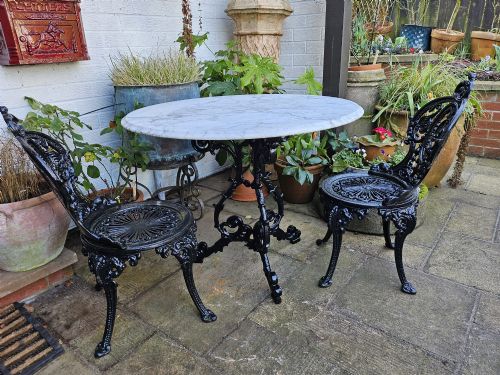
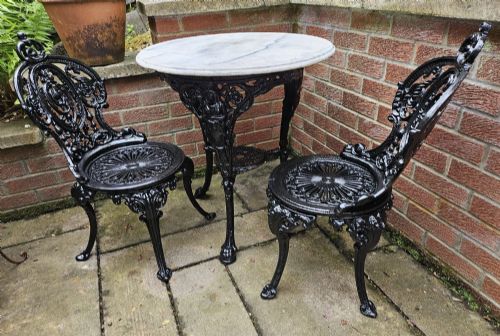
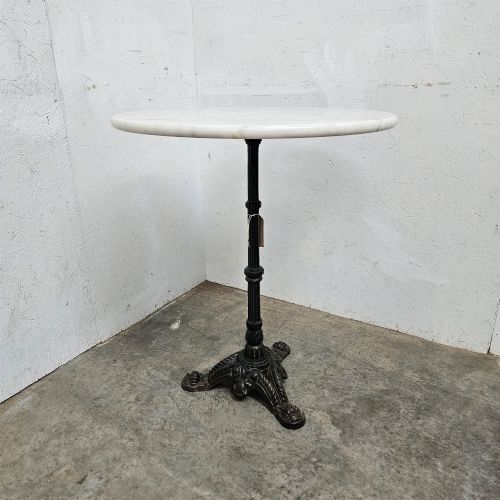
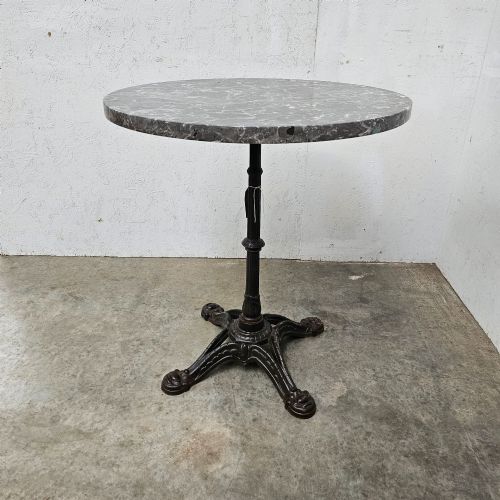
A round cafe table brings French bistro charm to a room, offering a sturdy surface supported by cast iron and topped with cool marble.
Round Cafe Table
When you search for a round cafe table, you encounter compact dining and garden furniture rooted in French bistro and industrial traditions. These tables serve daily utility in kitchens, conservatories, and breakfast nooks while taking up minimal floor space.
The most common examples on this page date from the Victorian era through the 1930s, reflecting a strong French aesthetic. You will frequently find pieces combining heavy metal bases with smooth stone tops designed for hospitality or domestic garden use.
Forms span simple bistro tables and larger garden tables, occasionally accompanied by matching sets. Origins lean heavily toward 19th-century and early 20th-century French workshops, balancing practical engineering with ornamental ironwork.
Materials and construction methods
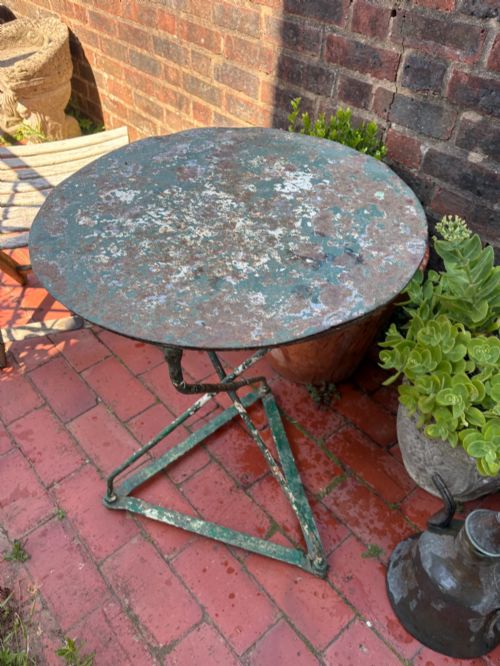
Construction relies heavily on durable metals like cast iron and wrought iron for the bases, often shaped into ornate pedestals or three-legged frames. These foundations provide the necessary weight to keep the small footprint steady during daily use.
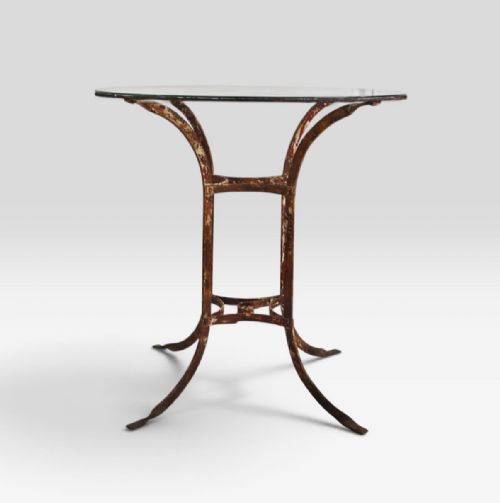
Tops are predominantly formed from white or green marble, fitted precisely to the metal frames, though occasional examples incorporate brass, copper, sheet metal, or glass. Painted finishes in shades like green are also applied to protect the ironwork from the elements.
Techniques combine foundry work for the intricate metal bases with stone-masonry for the round marble surfaces. This pairing creates a resilient piece capable of transitioning between indoor living spaces and outdoor garden settings.
Round Cafe Table Retail Price Guide 2026
Typical asking prices for round cafe table among the pieces listed under this phrase on Sellingantiques today, from the lower quarter to the upper quarter. They describe what is for sale here now, not the wider market.
Listings feature pieces spanning from the Victorian era through the 1930s, utilising cast iron, marble, brass, and wrought iron.
Evaluating quality and proportion
Quality rests in the crispness of the iron casting and the thickness and figuring of the marble top. Superior examples display sharply defined patterns in the metal pedestal and a heavy, well-fitted stone surface without excessive patching.
Proportion and stability dictate the standing of a piece within the range. Better proportioned tables maintain a balanced relationship between the height of the iron base and the diameter of the round top, ensuring both visual harmony and physical steadiness.
The Round Cafe Table Glossary
- Bistro table
- A small dining table traditionally used in cafes and bistros. These pieces are designed to seat two to four people comfortably in tight spaces.
- Gueridon
- A small circular table supported by one or more central columns. The form originated in France during the 17th century and remained popular for domestic use.
- Cast iron
- An iron-carbon alloy poured into a mould to create complex shapes. It provides heavy, rigid support for table bases.
- White marble
- A classic metamorphic rock valued for its cool touch and smooth surface. It serves as the primary hardwearing top for French cafe tables.
- French industrial
- A design style emerging from 19th-century workshops and factories. It combines utilitarian metal construction with functional domestic forms.
Round Cafe Table: Frequently Asked Questions
Where do round cafe tables work best?
These pieces fit naturally into small kitchens, breakfast nooks, and bright conservatories where floor space is limited. Their compact round tops allow easy movement around the seating.
They also transition well onto sheltered patios and balconies when weather permits. The combination of stone and metal handles domestic routines with ease.
How do I identify a French bistro table?
Look for heavy cast iron bases paired with smooth marble tops, a combination typical of continental cafe culture. French examples often feature ornate tripod or pedestal ironwork.
Dates generally span the late 19th century through the 1930s. The presence of painted green ironwork or white marble further points toward traditional French workshop origins.
Can I use these tables outside?
Many of these pieces originated as garden or bistro tables designed to withstand outdoor conditions. The heavy cast iron bases resist tipping in the wind.
Marble tops require some care if left exposed to harsh frost or acidic liquids. Bringing them under a sheltered porch or indoors during winter preserves the finish.
What chairs pair with these tables?
Bistro sets typically include matching iron or metal-framed seating designed to tuck neatly beneath the round top. The small scale calls for chairs with compact footprints.
Mixing a marble-topped metal table with wooden or vintage garden chairs creates an eclectic look. Keep the seat heights proportional to the table base for comfortable dining.