





Round Art Deco Mirror
A round art deco mirror brings geometric symmetry and striking period character to any wall.
Round Art Deco Mirror
A round art deco mirror combines circular geometry with the distinctive ornamentation of the early twentieth century. These pieces appear primarily as wall mirrors, though related forms include dressing tables, side tables, and clocks incorporating circular glass.
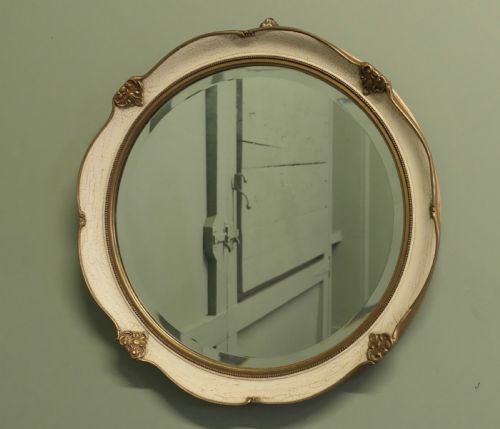
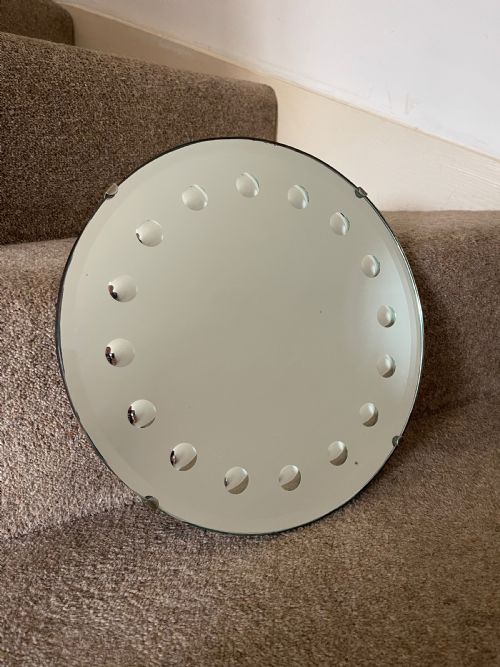
The objects stem predominantly from the 1920s and 1930s, representing both standard British production and French art deco output. Buyers encounter circular frames in wood, chrome, brass, and gilt, alongside frameless variants with bevelled edges.
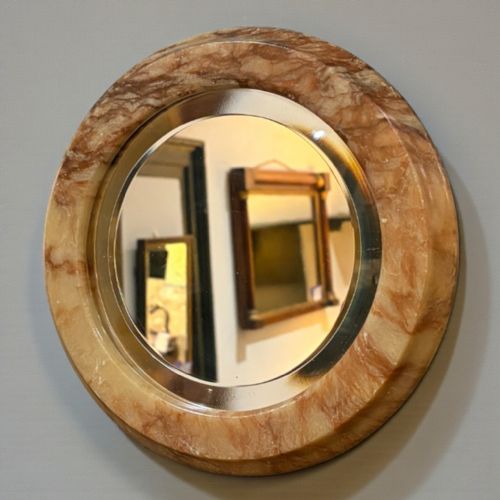
Variations range from plain circular glass to examples featuring etched decoration, rose tinting, or alabaster surrounds. Some pieces integrate the mirror plate directly into furniture such as pedestal dressing tables or fireplace surrounds.
How they were made
Makers utilised traditional cabinetmaking alongside modern industrial materials, combining mirror glass with chrome, brass, and metal frames. Wood components frequently employ burr walnut, oak, and mahogany to provide rich grain patterns around the circular plate.
Surface decoration relied on skilled hand-etching upon the glass and applied finishes including gilt, cream paint, and silvering. Frames were constructed to hold heavy circular plates securely, utilising wooden backing structures or robust metal mountings.
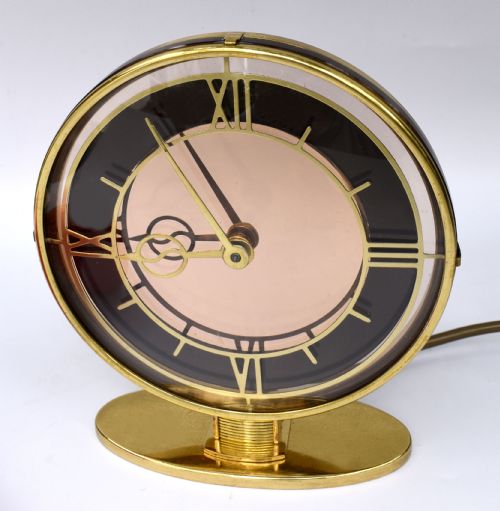
Some clocks disguise themselves as mirrors, ticking quietly behind the glass while you check your hair.
What varies in quality
Quality rests in the treatment of the glass itself, distinguishing plain mirror plates from those featuring intricate hand-etching or specialist rose tinting. The choice of framing materials also dictates standard, moving from basic painted timber to substantial burr walnut, alabaster, or polished chrome.
Execution shows in the integration of secondary elements, such as matching brass clock mechanisms, gilt and cream painted accents, or structural dressing table surrounds. Superior examples maintain crisp geometric lines and intact original silvering across the entire circular plate.
The Round Art Deco Mirror Glossary
- Silvered glass
- Glass coated on the rear surface with a reflective metallic compound to create a mirror. This technique underlies all standard wall mirrors.
- Etched mirror
- Glass decorated by acid or abrasive means to cut a design into the surface. Such ornamentation appears frequently on French and British period pieces.
- Bevelled edge
- An angled slope cut around the perimeter of the mirror plate. This finish catches the light and adds depth to circular wall mirrors.
- Alabaster
- A fine-grained mineral used for carved architectural surrounds and mirror frames. It offers a smooth, pale stone texture.
- Sorcerer type mirror
- A convex mirror form that creates a wide-angle, curved reflection of the interior space. These pieces provide a distinct visual distortion characteristic of the era.
Round Art Deco Mirror: Frequently Asked Questions
How do I hang a heavy round mirror?
Heavy round mirrors require secure wall fixings suited to the weight of the glass and wooden or metal frame. Utilising appropriate wall plugs and screws distributes the load evenly across the mounting points.
Ensure the hanging wire or integrated brackets on the reverse align with solid masonry or wall studs. Professional installation is advisable for large or alabaster-framed pieces.
What rooms suit a round art deco mirror?
Circular mirrors soften angular architectural lines in hallways, living rooms, and bedrooms. Their geometric focus works well above mantelpieces, side tables, or dressing units.
Smaller wall mirrors fit narrow spaces, while large circular or rose-tinted variants function as primary focal points in a room.
How should I clean antique mirror glass?
Cleaning requires a soft microfiber cloth and a mild glass cleaner applied sparingly. Avoid spraying liquid directly onto the glass edges where moisture might seep behind the silvering.
Gentle wiping prevents damage to original etched designs, rose-tinted surfaces, or aged silvered glass coatings.
Are these mirrors original 1920s pieces?
The selection includes items produced during the active art deco periods of the 1920s and 1930s. Materials like chrome, burr walnut, and specific etching styles point directly to these decades of manufacture.
Construction methods and material ageing help distinguish period pieces from later reproductions.
Can I use a dressing table mirror on the wall?
Dressing table mirrors are originally built to attach to specific furniture bases or stand independently on surfaces. Altering them for wall hanging requires custom brackets and structural assessment of the frame.
Most buyers keep dressing table mirrors with their matching tables or place them securely on stable surfaces.