


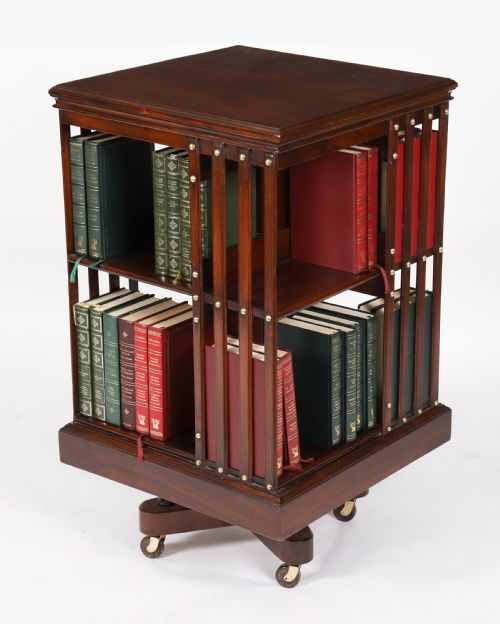


Rotating Bookstand Table
A rotating bookstand table brings everyday reference volumes within reach, turning a heavy stack of books into an accessible centrepiece.
Rotating Bookstand Table
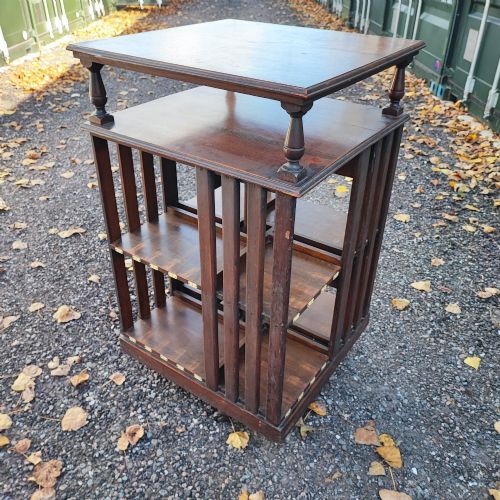
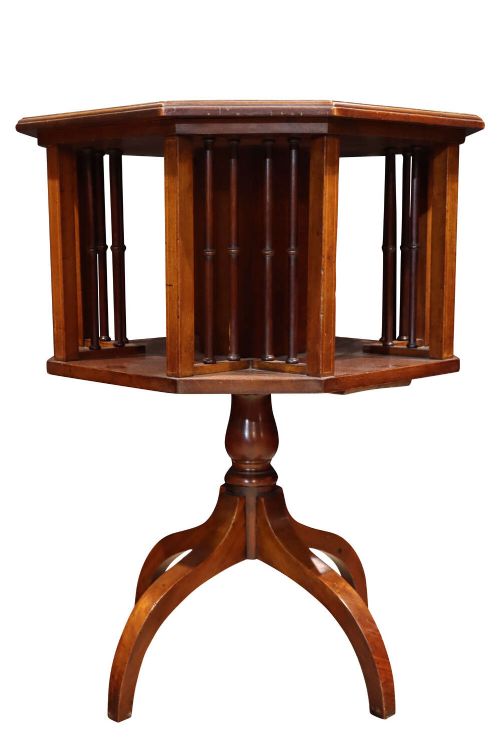
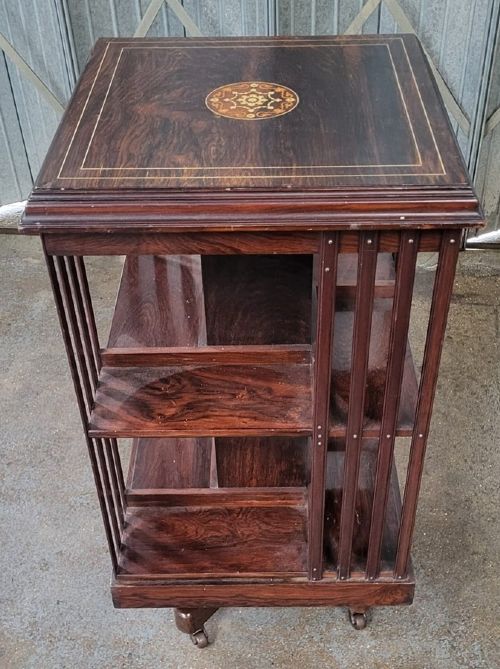
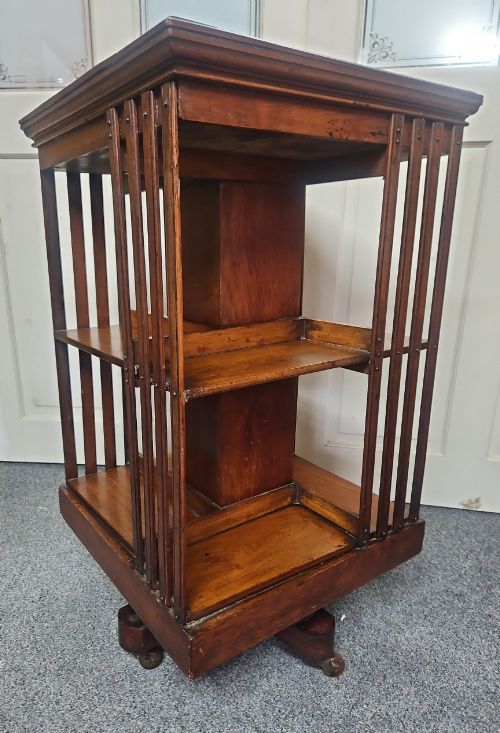
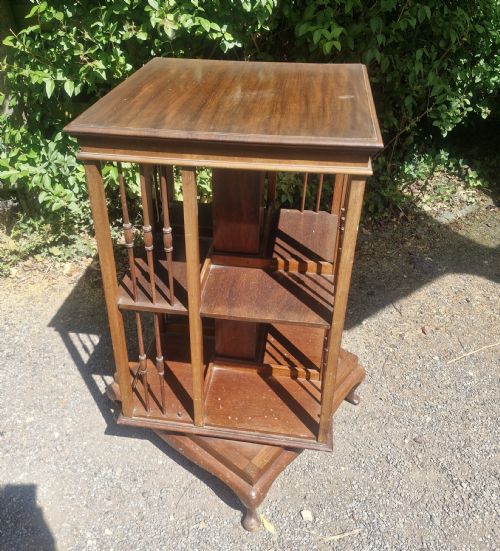
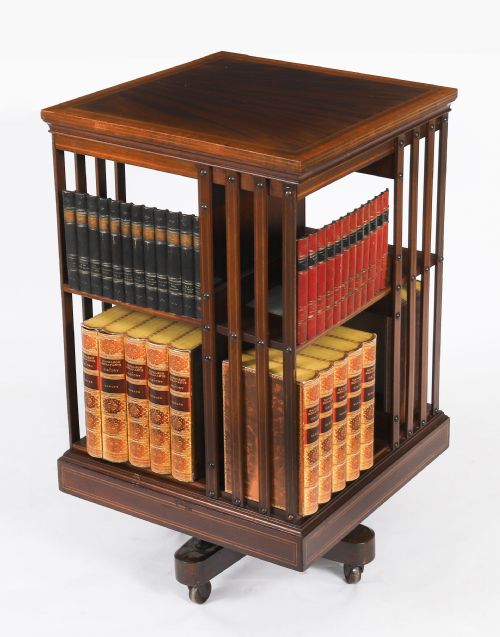
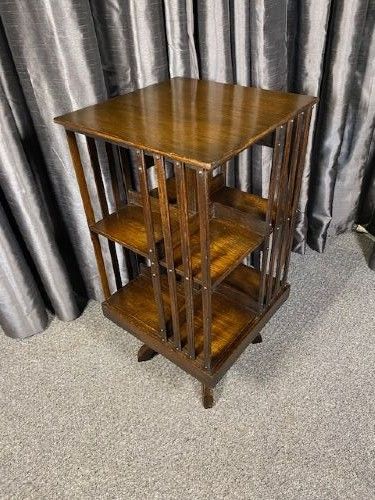
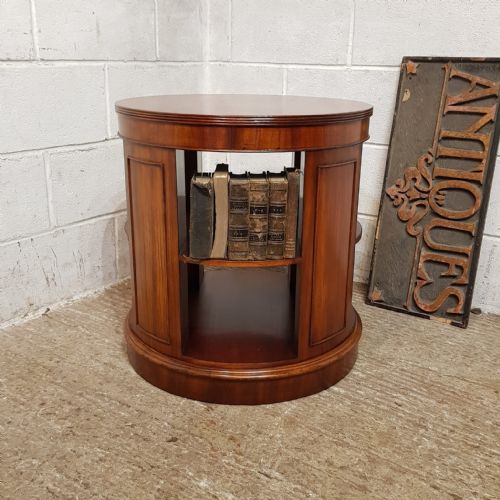
When you search for a rotating bookstand table, you encounter compact furniture designed to hold multiple books upright while allowing the entire structure to spin smoothly on a central pivot. The pieces seen here span the Victorian, Edwardian, and early twentieth-century periods, taking the form of low table-top models as well as taller floor-standing units.
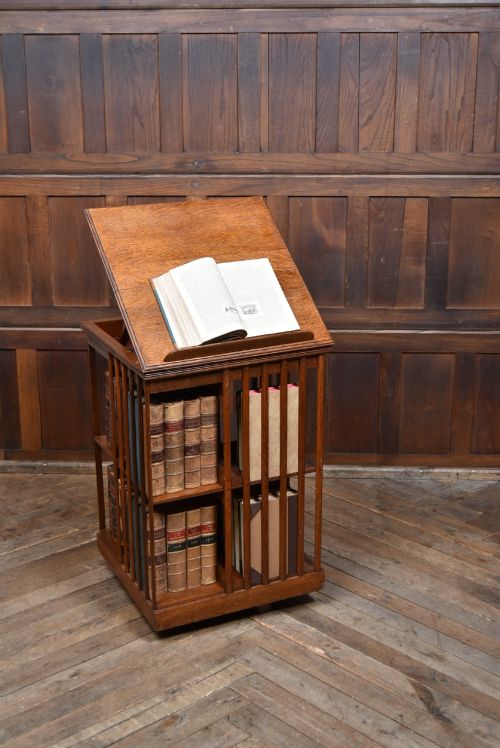
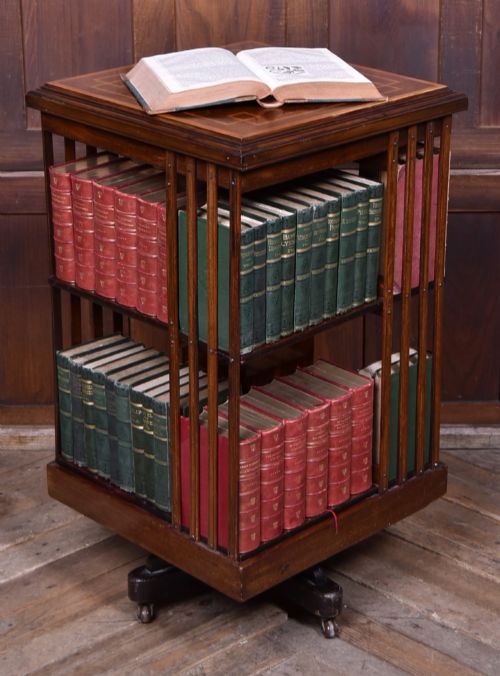
Mahogany and oak dominate the selection, appearing alongside rosewood, satinwood, and kingwood. Makers often fitted these revolving bookcases with circular or octagonal tops, sometimes incorporating a dedicated reading stand on the upper surface for resting an open volume.
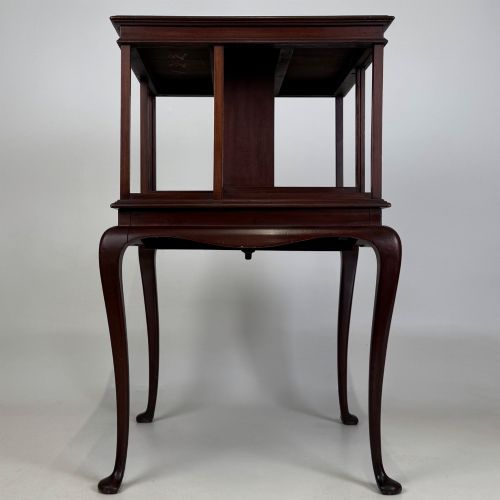
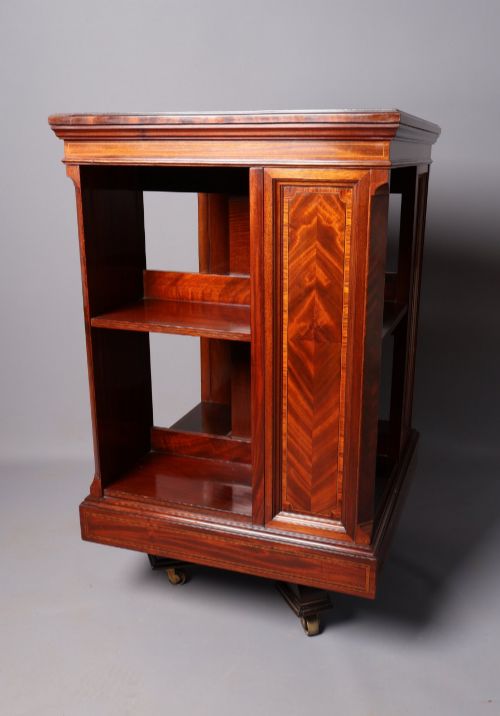
Stylistic variety ranges from plain Arts and Crafts oak versions to pieces decorated with boxwood inlay, Sheraton-style details, or French Louis XV style ormolu mounts. The most common form on this page is the Edwardian mahogany revolving bookcase, usually standing on short legs with a slatted or panelled structure enclosing the compartments.
How they were made
Cabinetmakers constructed the main body of these pieces using solid timbers and carefully selected veneers, primarily mahogany and oak, often curving the wooden slats to form the upright dividers. Boxwood and satinwood were utilised for fine inlaid stringing and floral motifs on the superior examples.
The pivotal action relies on a concealed mechanical bearing or metal spider mechanism beneath the shelf platform, which allows the weight of heavy volumes to turn with minimal friction. Brass fittings, cast iron components, and ormolu mounts appear as structural supports and decorative accents on the table-top and floor-standing variants.
Rotating Bookstand Table Retail Price Guide 2026
Typical asking prices for rotating bookstand table among the pieces listed under this phrase on Sellingantiques today, from the lower quarter to the upper quarter. They describe what is for sale here now, not the wider market.
Some Edwardian models include little brass handles, suggesting books were so heavy people needed help turning the case.
What varies in quality
The distinction between ordinary production and finer work lies in the choice of timber and the precision of the turning mechanism. Pieces featuring flame mahogany veneers, intricate boxwood inlay, or substantial brass mounts represent the more ambitious end of the maker's output.
Stability and smooth rotation also separate the tiers of quality, as a well-balanced frame distributes the weight evenly without listing to one side. The integrity of the internal pivot mechanism determines whether the unit continues to spin quietly and evenly after decades of use.
Maple & Co
The Rotating Bookstand Table Glossary
- Revolving bookcase
- A freestanding or table-top piece of furniture with vertical compartments designed to spin on a central base. This allows a seated reader to access numerous volumes without leaving the chair.
- Inlay
- A decorative technique where contrasting woods such as satinwood or boxwood are inserted into recesses carved into the primary surface. It creates flat patterns and geometric borders.
- Ormolu
- Gilded bronze mounts applied to furniture for decorative effect. They are typically found on pieces influenced by French styles.
- Flame mahogany
- A veneer showing a distinctive flickering flame pattern derived from the branch junctions of the tree. Cabinetmakers reserved this timber for the most prominent visual surfaces.
- Cabriole leg
- A furniture leg that curves outward and then tapers inward toward a foot. It draws inspiration from traditional animal forms.
Rotating Bookstand Table: Frequently Asked Questions
Where should I place a rotating bookstand table?
These pieces suit positions beside an armchair, desk, or sofa where reference books need to be close at hand. Their ability to turn means they fit comfortably into corners or tight spaces without restricting access to the volumes stored within.
Because they are accessible from all sides, placing one near the centre of a room or beside a reading seat allows you to browse an entire collection with a gentle spin.
How do I care for the timber surface?
Regular dusting with a dry, soft cloth prevents the accumulation of grit in the carved details and inlaid sections. Periodic application of a suitable beeswax preserves the natural lustre of the mahogany or oak.
Avoid placing these items in direct sunlight or near heat sources to prevent the veneers from drying out and the timber from splitting over time.
Can these tables hold heavy volumes?
Most models are constructed from sturdy hardwoods like oak and mahogany, designed to support standard rows of books. The internal metal pivot mechanism distributes the load evenly across the base.
Even so, distributing heavier encyclopaedias and reference ledgers evenly across the opposing compartments ensures the rotation remains balanced and smooth.
How do I identify an Edwardian example?
Edwardian pieces often feature lighter timbers such as mahogany enhanced with satinwood or boxwood stringing, reflecting a preference for refined decoration. They frequently incorporate slatted sides and compact proportions suitable for smaller drawing rooms.
Makers working around this period also combined traditional forms with subtle Arts and Crafts influences, producing functional units with minimal ornament alongside more elaborate inlaid designs.