

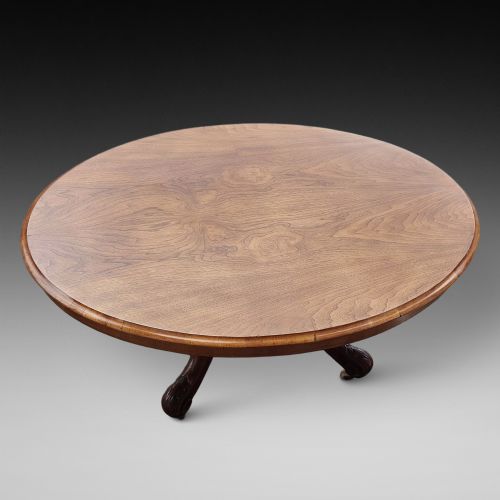
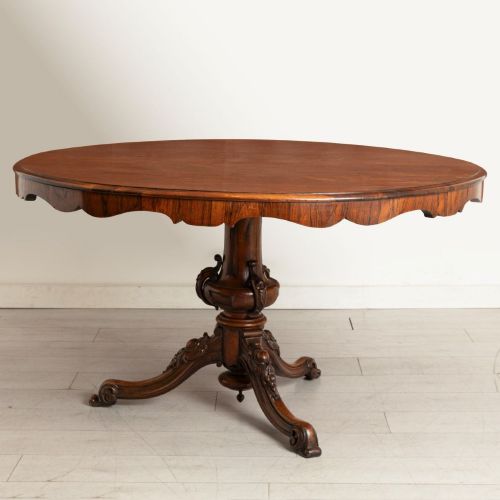
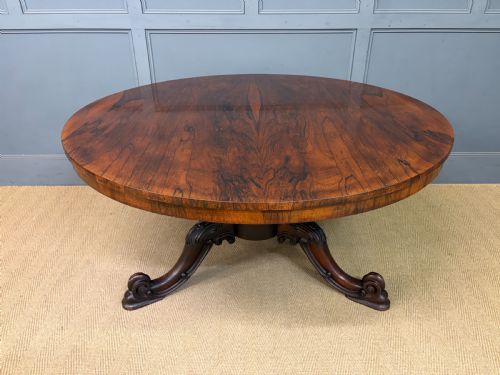


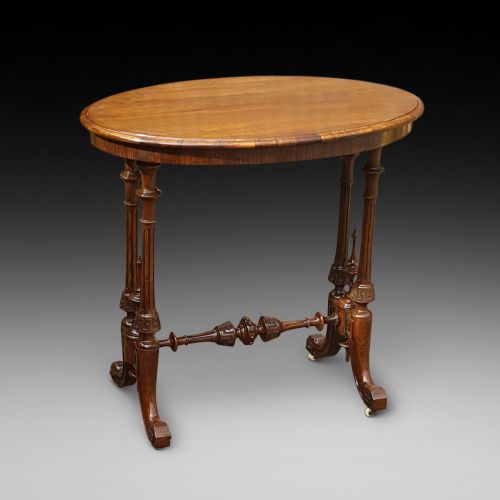


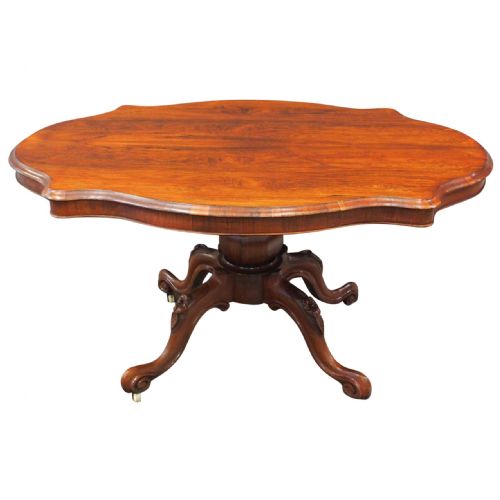


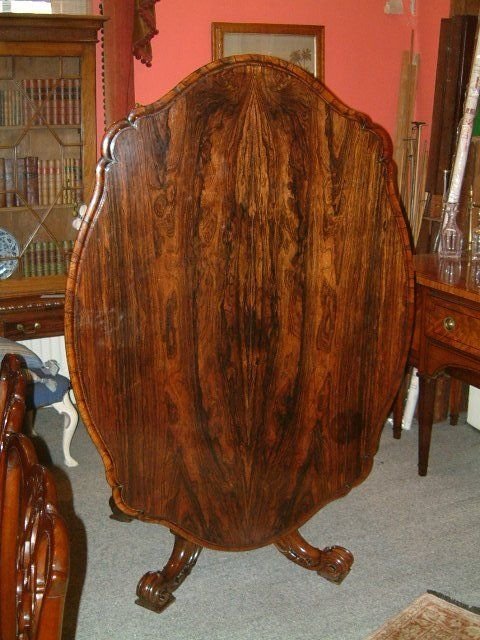

Rosewood Oval Centre Table
A rosewood oval centre table brings rich timber grain and sculptural pedestals to a room, offering both practical surface space and distinct period character.
Rosewood Oval Centre Table
When you search for a rosewood oval centre table, you encounter substantial 19th-century pedestal furniture designed to stand free in the middle of a room. Most examples on this page date from the Victorian and William IV eras, spanning the mid-to-late nineteenth century.
The form encompasses dedicated centre tables alongside versatile loo, breakfast, and library tables that share the same distinctive oval silhouette. These pieces frequently feature tilt-top mechanisms supported by turned and carved timber columns atop robust plinth bases with castors.
What Varies in Quality
The distinction between standard production and exceptional examples lies in the ambition of the carving and the selection of the timber veneer. Finer tables display deeply chiselled foliage on the pedestal base and mirror-matched grain patterns across the expanse of the oval top.
Makership and structural weight dictate the overall calibre, where documented workshops or substantial architectural proportions elevate a piece far above simple utilitarian alternatives.
Rosewood Oval Centre Table Retail Price Guide 2026
Typical asking prices for rosewood oval centre table among the pieces listed under this phrase on Sellingantiques today, from the lower quarter to the upper quarter. They describe what is for sale here now, not the wider market.
The archive shows frequent variations including library tables, occasional side pieces, and tilting breakfast formats.
Gillows·Johnstone & Jeanes
The Rosewood Oval Centre Table Glossary
- Loo table
- A large round or oval Victorian table designed for the popular nineteenth-century card game of loo. These tops almost invariably tilt on a central pillar for compact storage.
- Tilt-top
- A table construction where the surface pivots from a horizontal display position to a vertical locked stance. This clever feature allowed large furniture to be pushed against a wall when floor space was required.
- Centre table
- A freestanding piece finished on all sides to sit in the middle of a room rather than against a wall. They served multiple domestic duties for lamps, books, and flowers.
- Albuera wood
- A dense exotic timber recorded in cabinet making during the early nineteenth century. It shares warm reddish-brown tones with related furniture hardwoods.
Rosewood Oval Centre Table: Frequently Asked Questions
Can I use an antique oval table for dining?
Many large nineteenth-century examples functioned historically as breakfast or dining tables, offering ample knee clearance and sturdy pedestal frames.
Verify the height and dimensions of your specific piece to ensure comfortable seating for daily meals.
How do I care for rosewood surfaces?
Protect the polished timber from direct sunlight and excessive heat fluctuations to prevent the natural veneer from drying or cracking.
Dust regularly with a dry cloth and apply occasional high-grade wax polish appropriate for antique furniture.
What is a tilt-top mechanism used for?
The pivoting mechanism allows the heavy oval top to lock into a vertical position against the central pedestal.
This historical function enabled servants to clear floor space quickly when entertaining guests.
Where should I place a centre table?
Position the piece freestanding in the middle of a room or grand hallway so the decorative timber grain can be appreciated from all angles.
Ensure there is sufficient clearance around the perimeter for walking and seating.