





Rosewood Open Shelf Unit
A rosewood open shelf unit brings rich, dark timber and versatile display space to a room, offering both practicality and period elegance.
Rosewood Open Shelf Unit
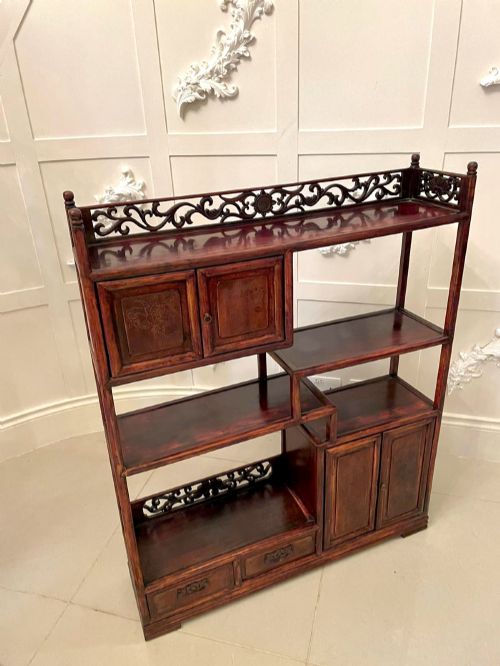
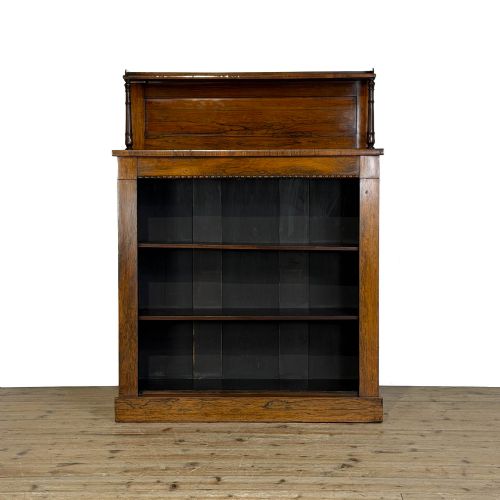
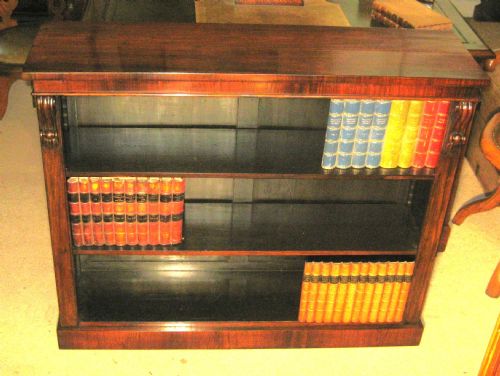
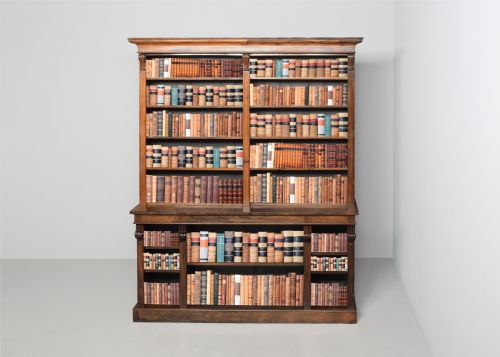
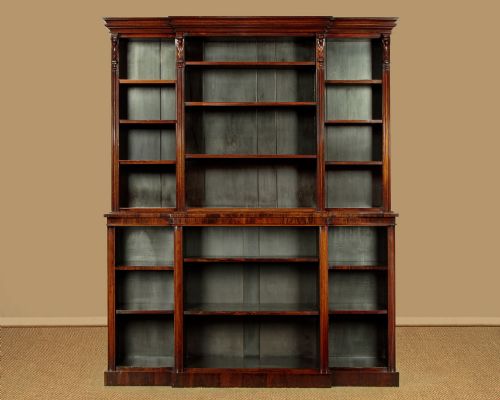
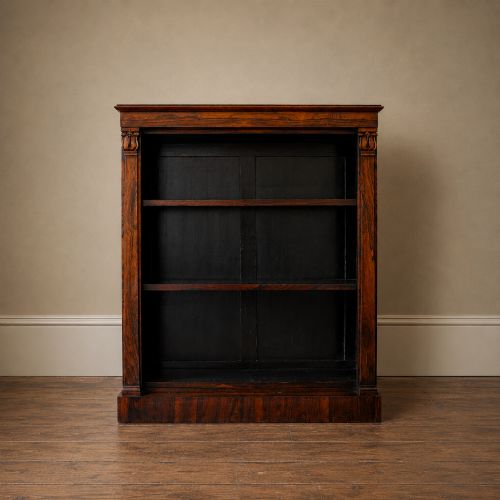
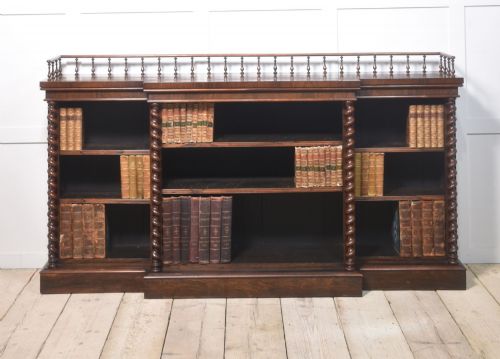
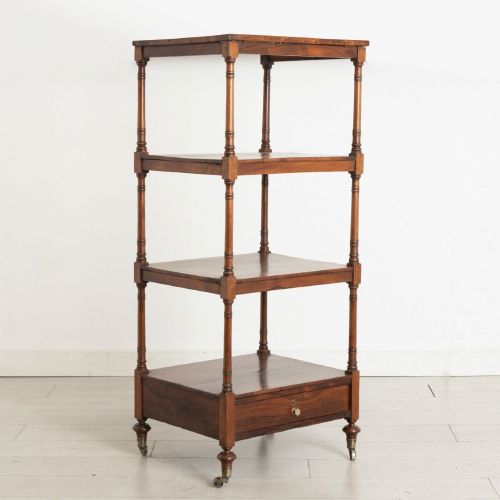
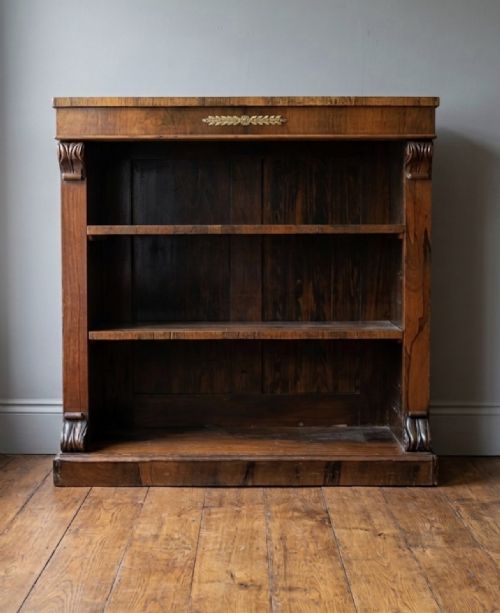
A rosewood open shelf unit primarily takes the form of a low bookcase, étagère, or multi-tiered whatnot designed for open display and storage. Buyers encountering this selection will find pieces predominantly spanning the Regency, William IV, and Victorian eras, alongside 19th-century interpretations.
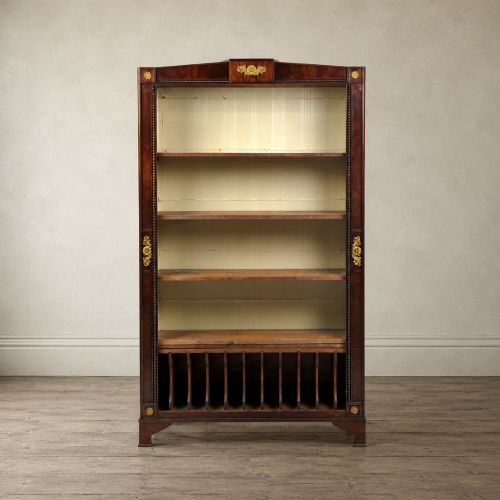
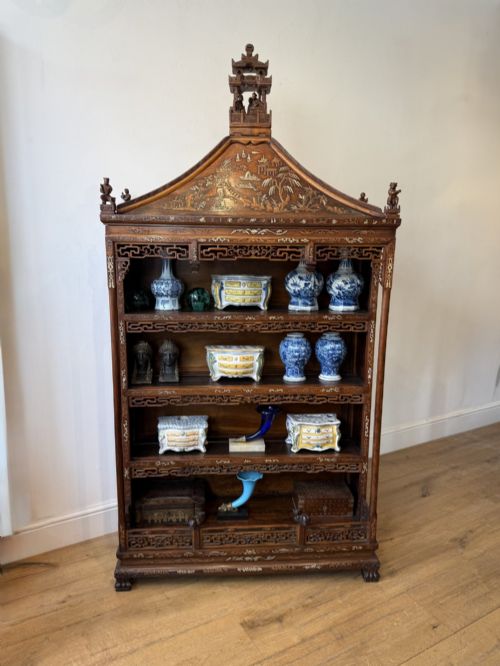
These items serve varied domestic purposes, functioning as bookcases with adjustable shelves, breakfront low bookcases, and tiered stands for displaying objects. Styles range from plain English vernacular cabinetry to French Empire, Chinese Qing, and Chinoiserie interpretations.
Materials and Construction
Cabinet makers utilised solid rosewood and rosewood veneer over secondary timbers such as pine and softwood, often enhancing the rich grain with polished finishes. Structural stability and decorative contrast were frequently achieved by incorporating brass inlay, marble tops, and glass elements.
Tiered étagères and whatnots relied on slender turned supports or carved uprights to divide multiple levels of shelving. Breakfront and open bookcases employed adjustable wooden shelving systems supported by pegged or tracked interior walls.
Some multi-tiered Victorian stands grew as high as six levels, requiring careful balance for the porcelain and curios placed on top.
Craftsmanship and Proportion
The standard of a rosewood open shelf unit is defined by the selection of timber veneers and the crispness of any brass or carved detailing. Pieces exhibiting harmonious proportions, substantial breakfront profiles, and well-figured grain demonstrate superior cabinet making.
Joinery execution, such as the precision of shelving adjustments and the stability of multi-tiered uprights, separates standard production from finer workshop output. The integration of secondary materials like patinated marble tops further distinguishes the grade of a piece.
Gillows
The Rosewood Open Shelf Unit Glossary
- Etagere
- A piece of furniture consisting of a set of open shelves for displaying small objects or ornaments. These tiered stands gained popularity during the 19th century.
- Whatnot
- An open shelving unit with multiple tiers supported by slender pillars, used to hold books, ornaments, or bric-a-brac. They range from three-tier to six-tier variations.
- Breakfront
- A large cabinet or bookcase whose central section projects forward from the flanking sides. This architectural arrangement creates depth and visual interest in formal rooms.
- Regency
- A British design period spanning the early 19th century, characterised by classical restraint, influence from Greco-Roman antiquity, and rich timbers. Pieces often feature clean architectural lines.
- Veneer
- A thin layer of superior wood glued to a base of cheaper timber to provide a decorative surface. Rosewood veneer is common on 19th-century carcases.
Rosewood Open Shelf Unit: Frequently Asked Questions
How do I use a whatnot in a modern room?
A whatnot provides vertical display space without heavy doors, making it suitable for books, plants, and ceramics in compact areas.
Place smaller multi-tiered versions in corners or beside seating to utilise height while keeping floor footprints minimal.
Are the shelves usually adjustable?
Many open bookcases from the Regency and Victorian periods feature adjustable wooden shelving supported by pegged systems or early rack mechanisms.
Fixed tiers are more commonly found on multi-tiered étagères and specific whatnot stands built for decorative display rather than book storage.
How do I distinguish Regency from Victorian pieces?
Regency items generally display cleaner classical lines, restraint in ornamentation, and occasionally crisp brass inlay work.
Victorian pieces often present heavier proportions, deeper rosewood tones, and more elaborate turning on upright supports.
Did these units always have marble tops?
Marble tops appear selectively on specific 19th-century cabinets and whatnots, providing a durable and decorative surface.
Most open bookcases and shelving units retain all-wood construction, utilising rosewood solids and veneers throughout.