



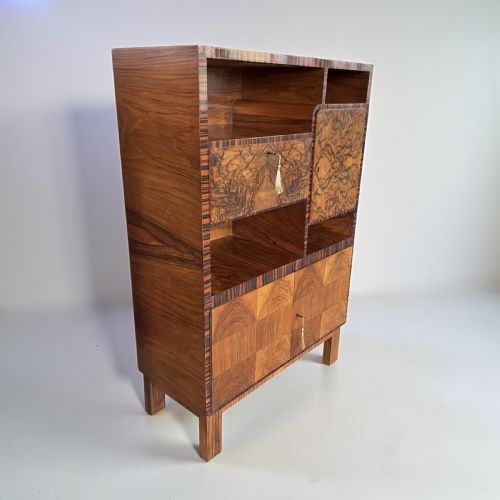


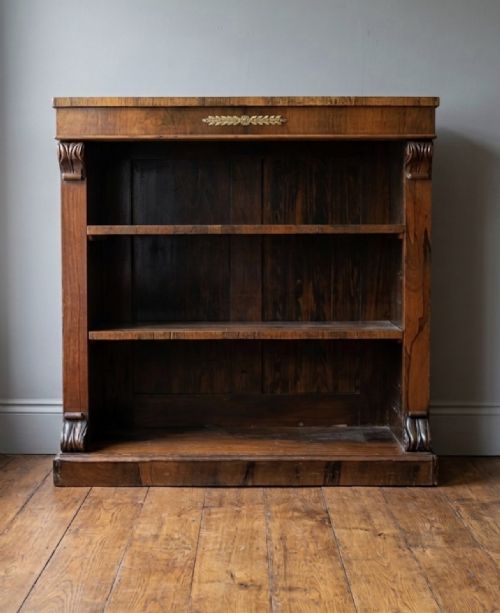


Rosewood Display Unit
A rosewood display unit brings warmth and architectural precision to a room, holding books and collections on tiered timber shelves.
Rosewood Display Unit
A rosewood display unit encompasses open bookcases, multi-tiered whatnots, etageres, and corner cabinets designed to exhibit prized objects. These pieces originate primarily from the nineteenth century, spanning Regency, Victorian, and Edwardian periods.
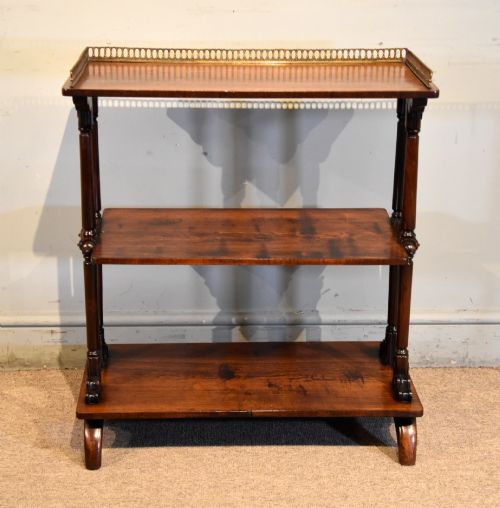
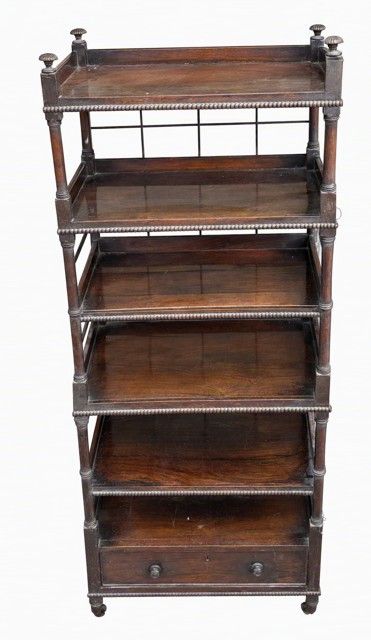
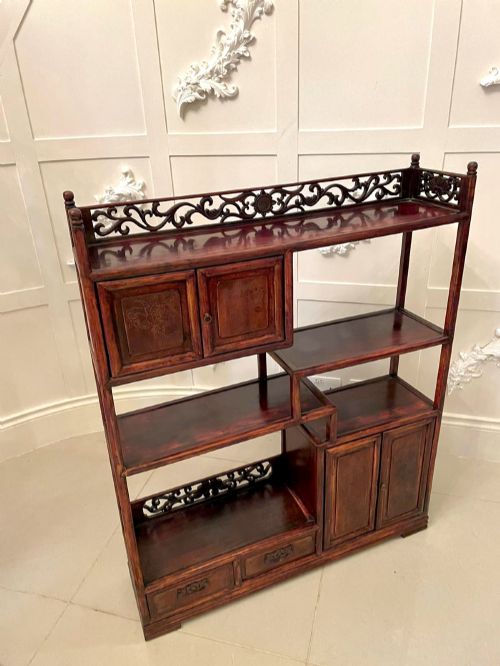
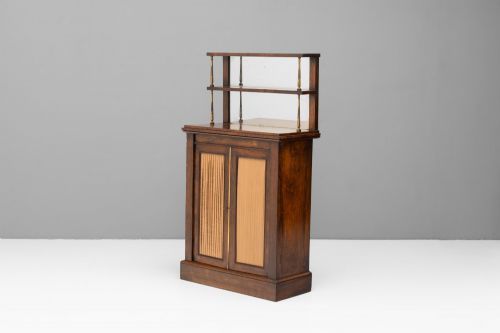
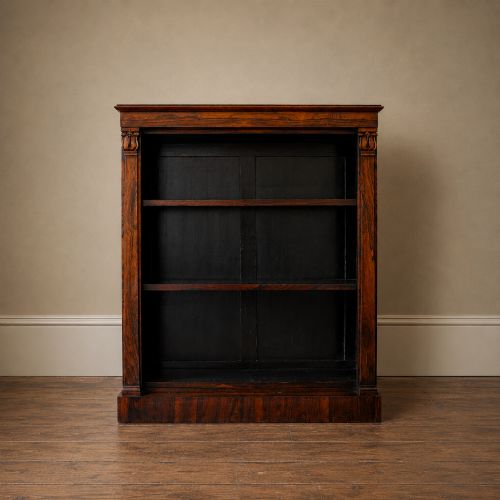
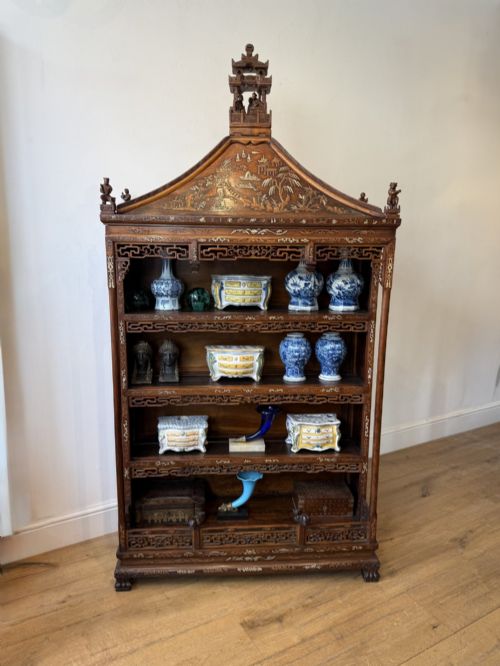
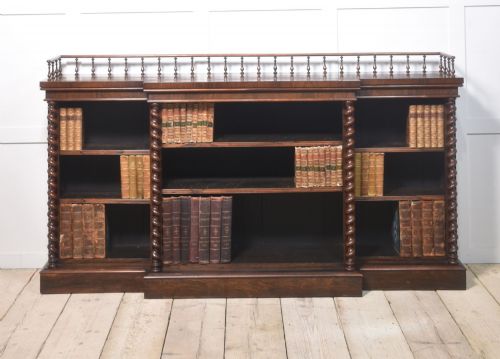
The most common formats found here are tiered whatnots and open bookcases featuring adjustable shelving. Examples range from compact three-tier stands to large breakfront bookcases and Chinese hardwood display cabinets.
Makers utilised dense tropical timbers alongside native hardwoods, integrating glass panels, mirrored backs, and brass galleries to enhance the presentation of books and small ornaments.
Materials and Construction
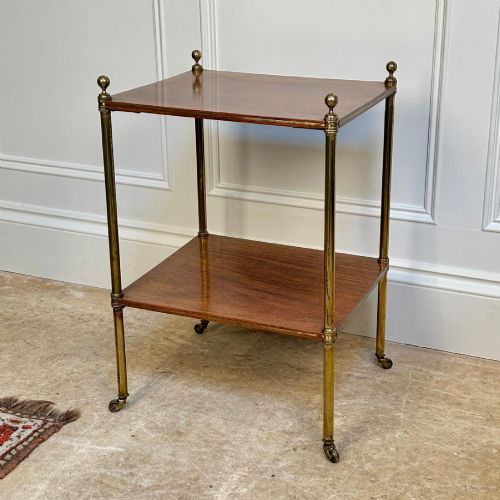
Cabinet makers built these pieces using solid rosewood and rosewood veneer laid over secondary timbers, often pairing the dark wood with contrasting brass inlay, ormolu mounts, and patinated marble tops.
Tiered whatnots and etageres rely on slender turned uprights supporting graduated horizontal shelves, whilst larger bookcases integrate adjustable wooden shelves and low enclosed cupboards beneath open bays.
Multi-functional Victorian cabinets allowed homeowners to display small porcelain collections whilst hiding away miscellaneous paperwork on bottom shelves.
Assessing Craftsmanship and Quality
Quality rests in the selection of the rosewood grain, the precision of brass joinery, and the stability of multi-tiered structures. Superior pieces display refined turning on upright supports and crisp, uninterrupted veneer work.
Plain utility bookcases contrast with elaborate Regency and Victorian examples featuring integrated brass galleries, mirrored backs, and delicate inlaid detailing that demand higher levels of joinery skill.
Gillows
The Rosewood Display Unit Glossary
- Whatnot
- A piece of furniture consisting of several open shelves for displaying small objects. These tiered stands emerged in the Regency period and remained popular through the Victorian era.
- Etagere
- A French term for a piece of furniture with a series of open shelves for displaying ornaments. They share similarities with whatnots but often emphasise decorative lightness.
- Rosewood
- A dense, heavy timber prized for its dark, richly figured grain and purplish-brown hue. It takes a high polish and forms the primary material for these display pieces.
- Brass Gallery
- A low decorative railing of pierced or turned brass fitted around the top shelf of a cabinet or whatnot. It prevents items from sliding off the edge.
- Breakfront
- A piece of furniture whose facade projects forward in the centre section. This architectural layout creates depth and shadow in larger bookcases and cabinets.
Rosewood Display Unit: Frequently Asked Questions
How do I style a rosewood display unit?
Balance heavier books on lower shelves and reserve upper tiers for ceramics, glass, or small bronzes. The dark timber grain provides a strong background that flatters bright porcelain and polished metal.
Keep arrangements uncluttered to let the timber and brass details remain visible. Allow negative space around individual objects to maintain the architectural balance of the piece.
Where should I place a whatnot?
Whatnots work effectively in corners or against panelled walls where their multi-tiered structure adds vertical interest without blocking light. Avoid placing them in direct sunlight to protect the rosewood polish from fading.
Ensure the floor is level so that slender upright supports bear weight evenly across every shelf. Freestanding tiers require stable placement away from heavy foot traffic.
What is the difference between an etagere and a bookcase?
An etagere is primarily designed for display, featuring slender open tiers intended for ornaments and decorative objects. Bookcases prioritise structural depth and shelf strength to support rows of heavy volumes.
Many nineteenth-century examples blur these categories by combining open display shelves with lower enclosed cupboards or adjustable book storage.
How do I care for rosewood furniture?
Dust the timber regularly with a soft, dry cloth to prevent particulate accumulation in the carved details and grain. Maintain stable indoor humidity to keep the veneer from lifting off the core timber.
Apply high-quality beeswax sparingly when the wood appears dry, buffing it gently to restore the natural lustre. Avoid chemical cleaners or silicone polishes that degrade historic finishes.