




Rosewood Dial Clock
A rosewood dial clock is a precise timekeeper set in a rich timber housing, prized for its architectural presence on the wall.
Rosewood Dial Clock
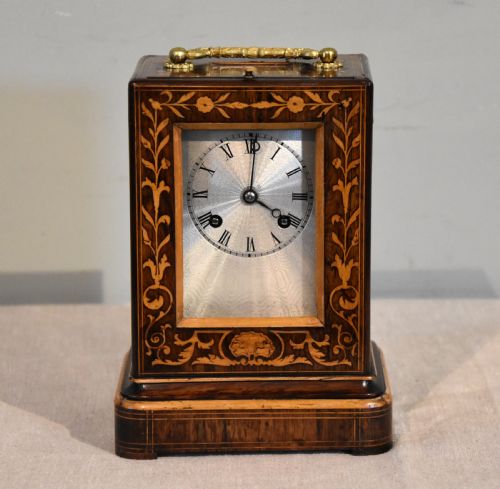
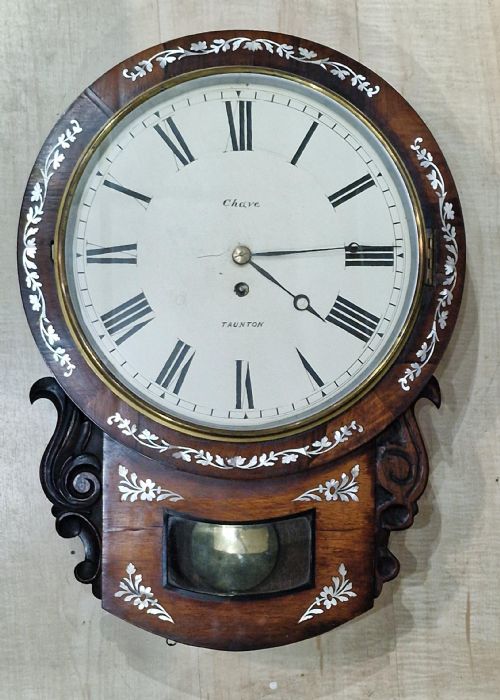
A rosewood dial clock brings together refined cabinet-making and dependable mechanical movement, most frequently appearing in drop-dial wall formats from the nineteenth century. These pieces span Victorian, Regency, and Georgian periods, showcasing round or octagonal faces framed by dark, grained timber cases.
While wall clocks dominate the selection, the category extends to mantel clocks, table clocks, and marine chronometers housed in rosewood. Wall-mounted variants often feature pendulum boxes below the dial, sometimes inlaid with brass or mother of pearl to catch the light.
Origins range across English workshops and French makers, with many pieces bearing the signatures of provincial and London clockmakers on the dial face. The visual weight of rosewood gives each timepiece a commanding presence in domestic or institutional spaces.
Materials and construction
Makers utilised solid rosewood and applied veneers over supportive carcase timbers, exploiting the rich, dark grain for visual impact. Cases incorporate glazed bezel doors in brass or iron frames to protect the painted or silvered metal dials.
Intricate decoration relies on marquetry inlay, brass stringing, and mother-of-pearl accents embedded directly into the wood. Movements demand precision engineering, employing fusee mechanisms or striking gear to maintain accurate time through sustained spring tension.
Rosewood Dial Clock Retail Price Guide 2026
Typical asking prices for rosewood dial clock among the pieces listed under this phrase on Sellingantiques today, from the lower quarter to the upper quarter. They describe what is for sale here now, not the wider market.
Listings feature 19th Century, Victorian, Regency, and Georgian periods, utilising rosewood, brass, glass, mother of pearl, and iron.
Assessing quality
Excellence in a rosewood dial clock rests on the crispness of the timber carving and the subtlety of any brass or mother-of-pearl inlay. Finer examples retain untouched maker signatures on the dial and movement plates, marking professional workshop provenance.
The mechanical sophistication separates standard timepieces from superior bracket and marine chronometer movements. Proportion, timber selection, and the original condition of the silvered metal dial dictate the standing of an individual piece.
Samuel Chave Taunton·Halliday & Rich Bridgwater·L. Morris Islington·Litherland Davies Of Liverpool·Arnold and Frodsham·Ganthony of London·Kleyser of London·L.Donne Birchin Lane·James Bell Bath
The Rosewood Dial Clock Glossary
- Fusee
- A conical pulley used in clock movements to equalise the diminishing power of the mainspring as it unwinds. This mechanism helps the clock maintain steady accuracy throughout its running period.
- Drop-dial
- A wall clock design where the circular dial sits above an extended wooden case, often housing the pendulum. The drop shape accommodates the swing while adding vertical balance to the wall-hung piece.
- Silvered metal
- A brass or copper dial surface treated with a silver compound to produce a matte, reflective finish. Numerals and maker details are typically engraved and darkened for legibility.
- Marquetry
- The art of applying decorative pieces of veneer to a structure to form ornamental patterns. In these pieces, lighter woods or shell materials contrast against the dark rosewood background.
Rosewood Dial Clock: Frequently Asked Questions
How do fusee movements work?
A fusee movement uses a conical pulley connected to the mainspring by a cord or chain. As the spring unwinds, the leverage shifts across the cone to sustain uniform force on the gear train.
This clever mechanical design ensures the clock runs at a consistent rate from the moment it is fully wound until it needs attention again.
Where should a wall clock hang?
Wall clocks require a sturdy, stable surface away from dampness, direct sunlight, and heavy vibrations. Plaster walls need appropriate fixings to support the considerable weight of hardwood and glass cases.
Positioning the clock at a comfortable eye level ensures easy reading of the dial and straightforward access for weekly winding.
How do I wind my clock?
Winding involves inserting a matching key into the winding hole on the dial face and turning it gently until resistance stops the key. Care must be taken not to overwind the mainspring.
Most fusee movements require attention at regular intervals, typically once a week, to maintain accurate timekeeping without straining the internal components.