



Rosewood Chaise Lounge
A rosewood chaise lounge brings structural grace and rich timber grain to a room, offering a long seat designed for reclining in comfort.
Rosewood Chaise Lounge
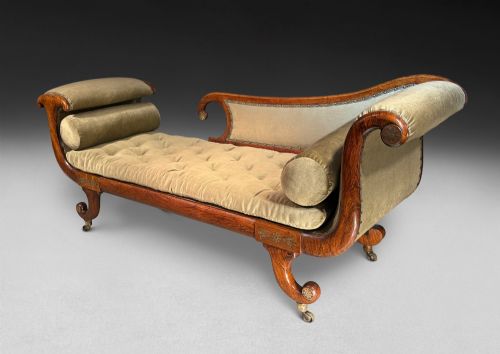
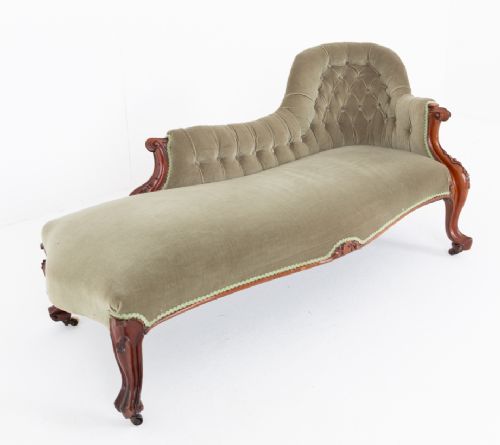
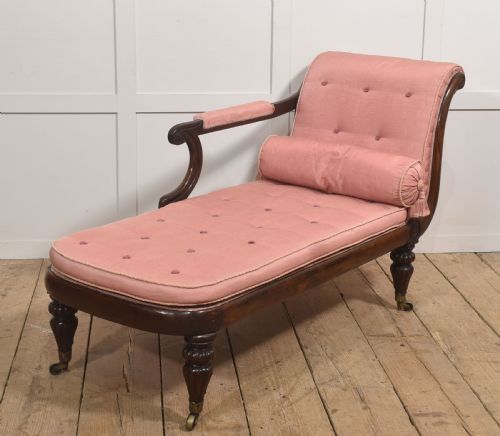
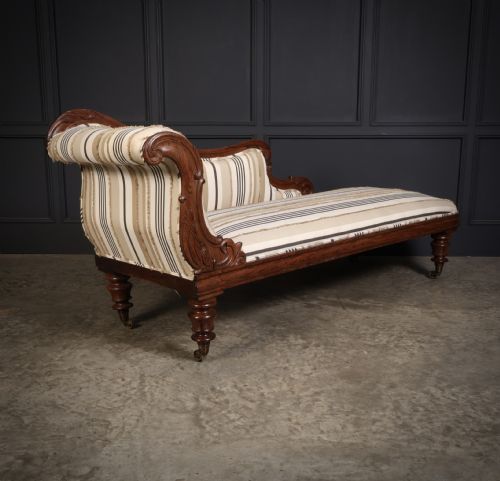
When you search for a rosewood chaise lounge, you encounter nineteenth-century daybeds and recumbents originating from the Regency, William IV, and Victorian periods. These pieces combine timber frames with upholstered surfaces, intended originally for lounging in domestic interiors.
The versions you are most likely to meet on this page span the 1850s and 1860s, alongside earlier Regency examples, taking the form of singular upholstered daybeds with scrolled ends and carved wooden rails.
Makers such as H. Goodall & Sons of Newcastle contributed to this tradition, producing seating forms that include solid Rio rosewood constructions alongside simulated rosewood finishes.
How they were made
Construction relies heavily on solid rosewood and simulated rosewood frameworks, frequently paired with carved wooden details and structural cane seating.
Decoration incorporates brass inlay set directly into the timber, alongside elaborate hand-carved frames that define the scrolled ends and backrests.
Upholstery relies on traditional textiles, specifically velvet and general fabric coverings, fitted to padded surfaces designed for reclining.
Rosewood Chaise Lounge Retail Price Guide 2026
Typical asking prices for rosewood chaise lounge among the pieces listed under this phrase on Sellingantiques today, from the lower quarter to the upper quarter. They describe what is for sale here now, not the wider market.
Some nineteenth-century makers built daybeds with only one scrolled arm, specifically engineered so ladies could recline without crushing their elaborate dresses.
What varies in quality
The distinction between a standard piece and a superior example rests on the choice of timber, ranging from simulated finishes and standard rosewood up to dense solid Rio rosewood.
Carving depth and the precision of brass inlay work dictate the refinement of the frame, alongside the integrity of original cane seating and structural joinery.
H. Goodall & Sons of Newcastle
The Rosewood Chaise Lounge Glossary
- Regency
- An English design period spanning the early nineteenth century, characterised by classical revival motifs and sophisticated brass inlay. Pieces from this era often utilise simulated rosewood.
- Rio Rosewood
- A dense, heavily figured timber native to Brazil, prized for its dark grain patterns. It forms the solid structure of high-end nineteenth-century seating.
- William IV
- A transitional decorative style from the 1830s featuring robust proportions and bold carved elements. It bridges the Regency and early Victorian aesthetics.
- Simulated Rosewood
- A painted or stained finish applied to a secondary timber to imitate the distinctive grain of genuine rosewood. This technique was common in Regency cabinet making.
Rosewood Chaise Lounge: Frequently Asked Questions
What is a rosewood chaise lounge?
A rosewood chaise lounge is a nineteenth-century reclining seat built with a timber frame and upholstered cushions. These pieces were designed for parlours and drawing rooms to allow semi-recumbent resting.
They appear across several historical periods, including the Regency, William IV, and Victorian eras, showcasing varying levels of carved decoration and inlay.
How do I date a chaise lounge?
Dating relies on observing the stylistic details of the wooden frame and the silhouette of the scrolled ends. Regency pieces often feature brass inlay and simulated finishes, while Victorian examples lean towards heavier carved rosewood.
Reference points include documented construction traits from the 1840s to the 1860s, which help distinguish early Victorian forms from earlier Regency designs.
Where were these pieces used?
These daybeds and recumbents were placed in principal entertaining rooms, large bedrooms, and private libraries of nineteenth-century homes. They served as daytime seating for reading or resting without retiring to a bed.
Their finished backs allowed them to sit away from the walls, positioned to display the carved timber grain and upholstery to visitors.
What timber was used?
Frames are constructed from genuine rosewood, dense Rio rosewood, or secondary timbers finished with simulated rosewood grain. The choice of material reflects the date and the intended cost of the furniture.
Inlay work frequently incorporates brass elements set flush into the wooden surfaces, adding decorative contrast to the dark timber.