

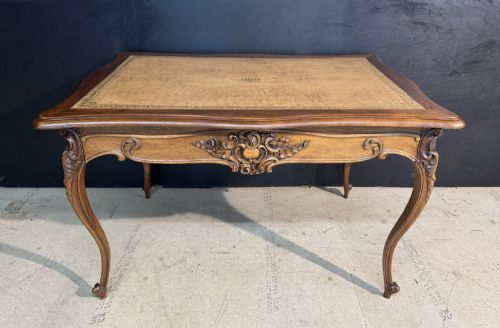


Rococo Oak Side Table
These rococo oak side table pieces bring together fluid carved ornament and sturdy native timber, offering a handsome focal point for any room.
Rococo Oak Side Table
When searching for a rococo oak side table, you encounter a range of forms spanning console tables, centre tables, and writing desks. These pieces showcase the dramatic curves and asymmetrical scrolls characteristic of the style, executed in solid timber rather than the lighter fruitwoods more common in continental workshops.
The selection on this page draws primarily from nineteenth-century revivals alongside eighteenth-century originals and early twentieth-century examples. Forms vary from sturdy stretcher tables and hall consoles to bleached bedside versions and writing desks, reflecting diverse regional interpretations.
The typical piece balances robust joinery with ornate carving upon the apron and legs. Whether you select a French provincial model or an eighteenth-century carved oak console, these tables combine practical surface space with sculptural presence.
Construction and materials
Makers built these tables using solid oak, burr oak, and occasionally walnut or mahogany, shaping the timber to support deep relief carving. Artisans carved the ornamental shells, scrolls, and foliage directly into the dense grain of the wood rather than applying separate composition mouldings.
Structural elements frequently incorporate pegged mortise and tenon joints, particularly on stretcher tables and console bases. Surfaces range from natural waxed finishes to bleached treatments that lighten the tone of the oak while accentuating the carved details.
Rococo Oak Side Table Retail Price Guide 2026
Typical asking prices for rococo oak side table among the pieces listed under this phrase on Sellingantiques today, from the lower quarter to the upper quarter. They describe what is for sale here now, not the wider market.
Judging quality and character
Quality in these tables rests upon the crispness of the hand carving and the harmony of the proportions. Superior examples display deep, undercut relief work where the decorative foliage stands clear of the structural rails, whereas lesser pieces rely on shallow surface incisions.
The integrity of the timber and the retention of original structural framing also dictate value. Tables featuring figured burr oak veneers or well-matched solid boards demonstrate a higher grade of material selection by the original cabinetmaker.
The Rococo Oak Side Table Glossary
- Console table
- A table designed to stand against a wall, frequently supported by two front legs and secured to the wall at the rear.
- Centre table
- A freestanding table finished on all four sides so it can occupy the middle of a room.
- Stretcher
- A horizontal wooden bar connecting the legs of a table to provide additional structural rigidity.
- Bleached oak
- Timber treated with chemical agents to lighten its natural colour, a finish found on several twentieth-century examples.
- Rococo
- An ornate design style originating in France characterised by C-scrolls, asymmetry, and naturalistic shell motifs.
Rococo Oak Side Table: Frequently Asked Questions
Where should I place a console table?
Console tables suit entrance halls, living rooms, and dining areas where surface space is needed without a large footprint. Their flat backs allow them to sit flush against a wall.
Because many feature elaborate carving on the apron and legs, they work best where the front remains unobstructed and visible.
How do I care for antique oak?
Maintain antique oak surfaces by dusting with a dry cloth and applying traditional beeswax periodically. Avoid modern silicone polishes that build up and attract dirt.
Keep tables away from direct heat sources and strong sunlight to prevent the timber from splitting or the finish from fading.
Are these tables sturdy enough for daily use?
Most of these tables were built for domestic service using durable hardwoods like oak and walnut. Their solid construction handles normal everyday placement of lamps and decorative objects.
Heavier writing desks and centre tables offer robust platforms, though care should be taken with delicate protruding carved elements.
What is the difference between an 18th-century and 19th-century table?
Eighteenth-century pieces carry the original tool marks and patination of the period, reflecting contemporary workshop practices. Nineteenth-century examples often revive these earlier styles with heavier proportions and machine-assisted preparation.
Examining the construction joints and the wear on the undersides helps differentiate between original period pieces and later revival work.