





Riveted Metal Scuttle
A riveted metal scuttle brings honest industrial character and practical warmth to a fireside, constructed to hold fuel with lasting structural strength.
Riveted Metal Scuttle
When you search for a riveted metal scuttle, you are looking at robust vessels created to hold solid fuel by the hearth. The forms span coal buckets, log bins, and jardiniere planters, appearing in shapes that combine utilitarian purpose with domestic presence.
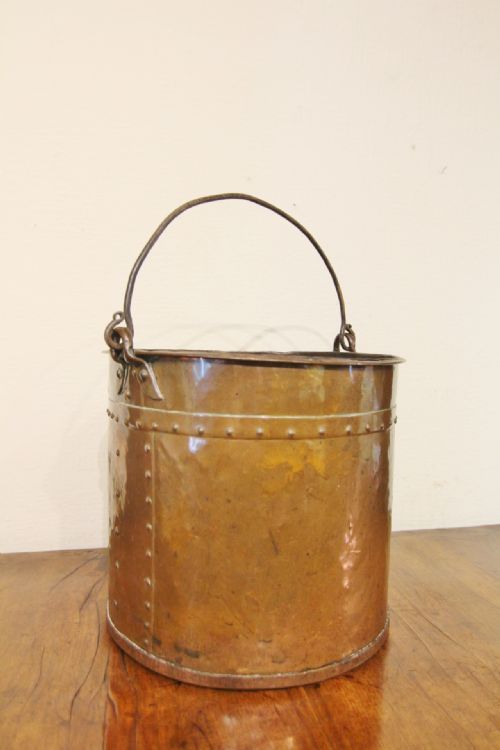
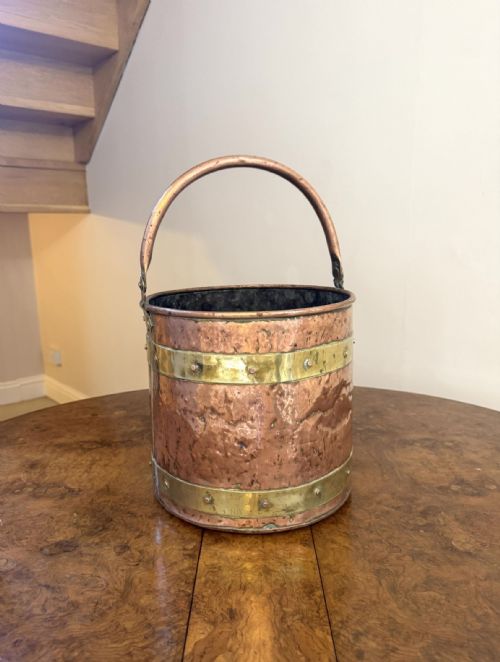
You are most likely to meet Victorian examples fashioned from heavy copper with visible brass bands and iron handles. These pieces emerge from nineteenth century workshops where metalworking prioritised durability alongside honest construction.
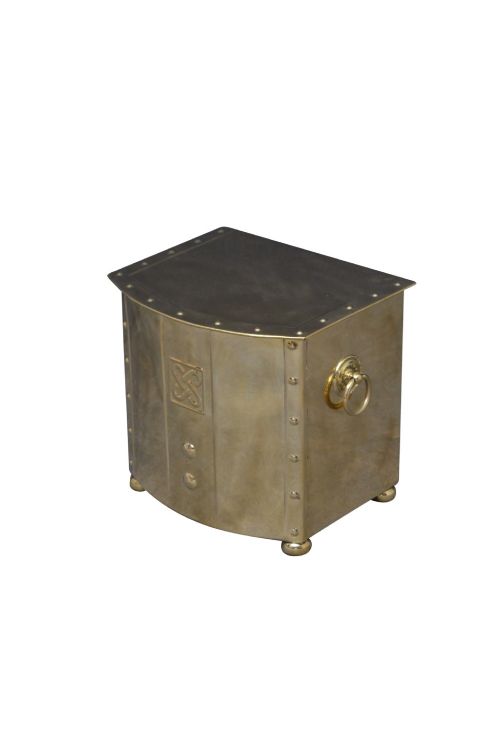
The selection extends from plain nineteenth century utilitarian buckets to Arts and Crafts designs with an industrial Brutalist look. Later twentieth century pieces also appear as metal log bins or planters, keeping the characteristic metal construction alive.
How they were made
Makers fashioned these vessels using sheets of copper, brass, iron, and galvanised steel joined securely with visible metal rivets. This method of fastening plates together provided the rigid strength necessary for carrying heavy loads of coal and logs.
Wrought iron handles and brass bands were integrated to reinforce the body and offer a secure grip for daily hearth use. The combination of contrasting metals like copper and brass gave these utilitarian items a distinct visual weight.
Riveted Metal Scuttle Retail Price Guide 2026
Typical asking prices for riveted metal scuttle among the pieces listed under this phrase on Sellingantiques today, from the lower quarter to the upper quarter. They describe what is for sale here now, not the wider market.
Listings feature items spanning the nineteenth century through to the 1930s, using copper, brass, iron, and galvanised steel.
What varies in quality
The distinction between a standard vessel and a superior piece lies in the heft of the metal sheet and the neatness of the riveting. Heavier gauges of copper or iron indicate a commitment to long service rather than light domestic ornamentation.
Finishing touches such as well-formed brass bands and hand-forged wrought iron handles elevate the construction. The integration of structural elements demonstrates the maker's care for both utility and appearance.
The Riveted Metal Scuttle Glossary
- Riveted
- Joined together using metal pins that are hammered flat at the ends. This technique secures heavy plates of copper or iron for structural strength.
- Scuttle
- A metal bucket or container used specifically for holding coal or logs by a fireplace. These vessels combine domestic utility with robust materials.
- Arts and Crafts
- A design movement valuing handcraftsmanship and simple forms over mass production. Pieces from this style often display honest construction methods.
- Jardiniere
- An ornamental pot or stand for holding plants or flowers. Several robust metal containers originally built for fuel found secondary life in this role.
Riveted Metal Scuttle: Frequently Asked Questions
What is a riveted metal scuttle?
A riveted metal scuttle is a sturdy container made from sheets of copper, iron, or steel fastened with metal rivets. These vessels were designed to hold coal or logs beside a fireplace.
Over time, many of these durable containers transitioned into decorative roles as log bins or planters while retaining their original heavy construction.
How were they used?
These vessels served as practical carriers and holders for hearth fuel, transporting coal or logs from storage areas to the fireplace. Their robust metal construction handled the daily friction of heavy fuel.
Handles made of wrought iron allowed for easy lifting and tipping into the grate when tending the fire.
How do I live with one?
You can place a metal scuttle directly beside a hearth as a functional log holder or use it to store kindling. The warm tones of copper and brass complement traditional and modern firesides alike.
They also adapt well as freestanding planters or decorative floor pieces in living spaces.
How do I tell periods apart?
Nineteenth century examples typically feature heavy copper construction with visible hand-hammered rivets and wrought iron handles. Victorian pieces often incorporate decorative brass banding.
Later pieces from the twentieth century lean towards simpler industrial steel forms or Arts and Crafts designs with a more austere look.