




Riveted Metal Planter
A riveted metal planter is a robust vessel built to hold plants, logs, or coal, bringing industrial character and warmth to a room or garden.
Riveted Metal Planter
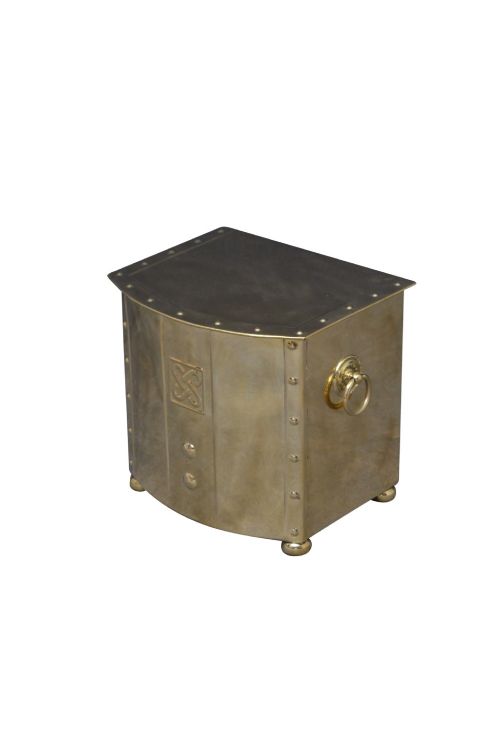
A riveted metal planter is typically found in copper, brass, or iron, spanning periods from the Georgian era through to the Arts and Crafts movement and the twentieth century. These objects began life as utilitarian vessels such as boilers, grain measures, cooking pots, and coal buckets before finding a second life holding plants and logs.
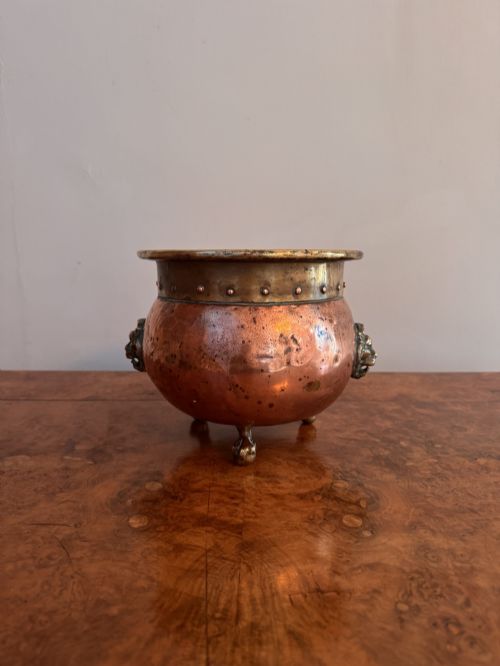
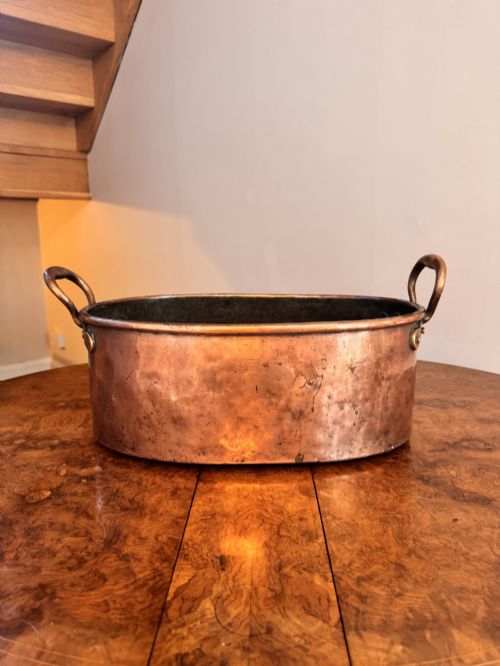
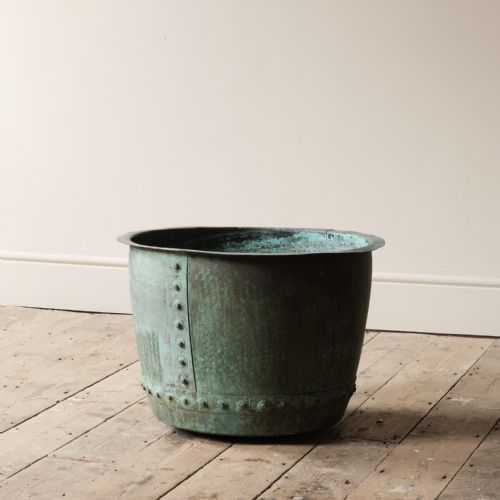
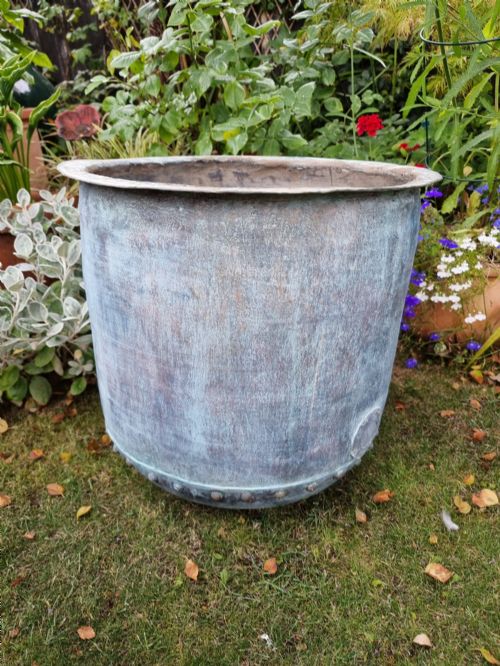
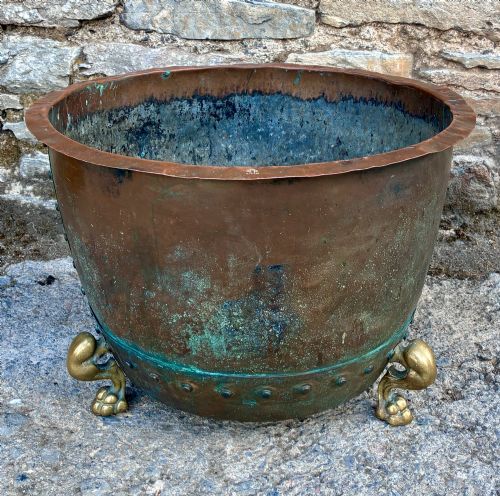
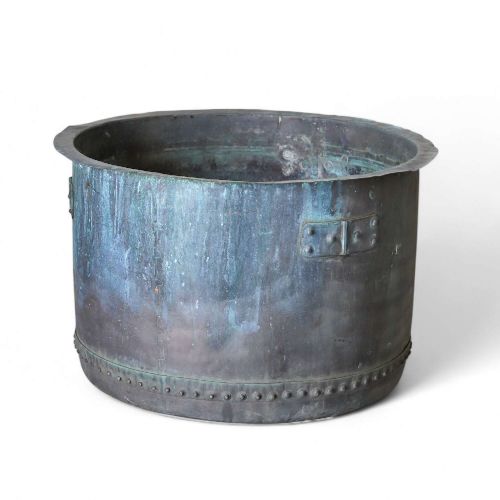
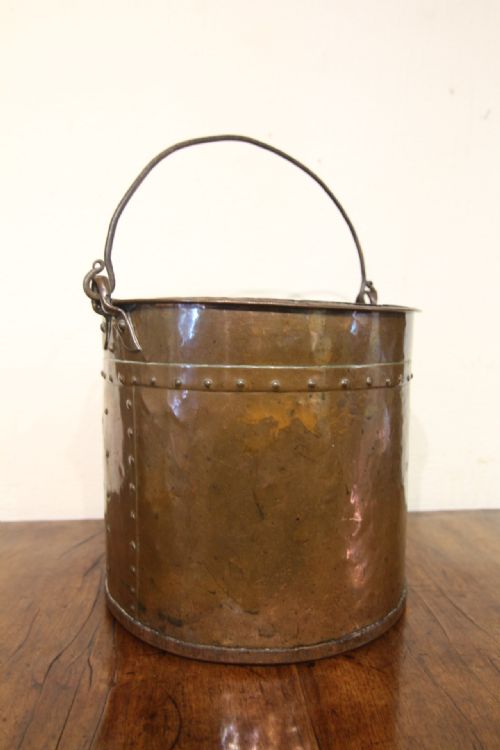
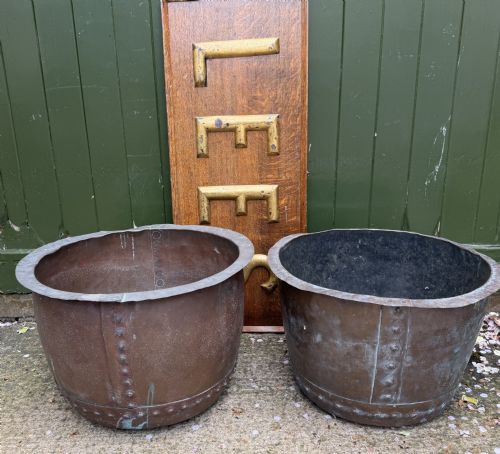
The version most commonly met on this page is the nineteenth century copper planter or log bin, often displaying a hand-riveted construction and a weathered verdigris surface. Pieces range from large French garden display pots to compact Victorian coal buckets with swing handles and wrought iron details.
How they were made
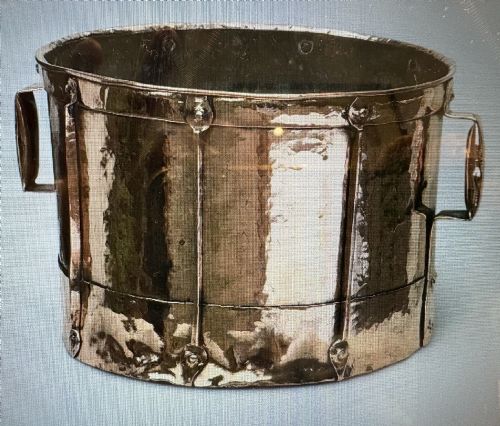
Makers shaped heavy sheets of copper, brass, and iron by hand, joining seams with visible metal rivets to ensure structural strength under heavy loads of fuel or earth. Wrought iron handles and brass mounts were attached securely to withstand daily lifting and carrying.
Surfaces developed natural patinas over decades of exposure and use, showing tonal variations in the metal alongside verdigris oxidation caused by moisture and age.
Riveted Metal Planter Retail Price Guide 2026
Typical asking prices for riveted metal planter among the pieces listed under this phrase on Sellingantiques today, from the lower quarter to the upper quarter. They describe what is for sale here now, not the wider market.
Some old grain measures spent a lifetime holding oats before retiring to a quiet corner as a fern pot.
What varies in quality
Quality rests in the weight of the metal and the regularity of the hand-riveting along the seams, which distinguishes a heavy bespoke vessel from lighter utilitarian work. The integrity of the base and the survival of original wrought iron handles or brass fittings preserve the historical character of the piece.
An honest, undisturbed patina with deep tonal richness elevates an example, whereas excessive modern polishing strips the surface character accumulated over centuries.
The Riveted Metal Planter Glossary
- Riveted
- Joined with metal pins hammered flat at the ends. This technique secured thick sheets of copper and iron before modern welding.
- Ferrat
- A traditional French agricultural measure or vessel. These deep copper containers frequently feature sturdy riveted sides.
- Verdigris
- A green patina formed naturally on copper and brass through atmospheric oxidation. This surface layer indicates considerable age and exposure.
- Jardiniere
- An ornamental pot or stand designed to hold growing plants indoors. They appear frequently in Arts and Crafts designs with decorative metalwork.
- Patina
- The surface texture and colour developed by metal over many years of handling and use. A rich patina shows depth and signs of genuine age.
Riveted Metal Planter: Frequently Asked Questions
What were riveted metal planters originally used for?
Many of these vessels started as industrial boilers, French grain measures, or domestic coal buckets before people repurposed them for plants and logs.
Their robust construction made them ideal for heavy daily service in kitchens, hearths, and farmhouses.
How do I clean a copper planter safely?
Wash the surface gently with warm water and mild soap to remove dust while preserving the aged metal skin.
Avoid harsh chemical metal polishes that strip away the authentic dark patina and green verdigris.
Can I use these metal planters outdoors?
Copper and iron vessels tolerate outdoor garden displays well, especially when planted with hardy shrubs or flowers.
Exposing them to the elements will continue to develop the natural verdigris oxidation on the metal surface.
How do I identify a nineteenth century piece?
Look for hand-beaten metal sheets joined with irregular hand-hammered rivets rather than uniform modern machine welding.
Georgian and Victorian examples also display specific handle attachments and weight characteristics typical of earlier metalworking traditions.