

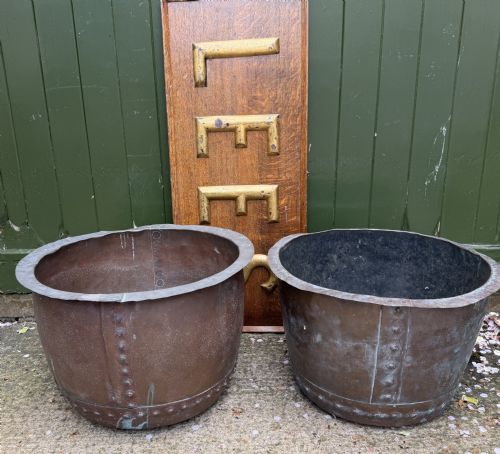


Riveted Copper Log Vessel
A riveted copper log vessel is a heavy, metal container built to hold firewood beside a hearth, bringing warmth and utilitarian honesty to a room.
Riveted Copper Log Vessel
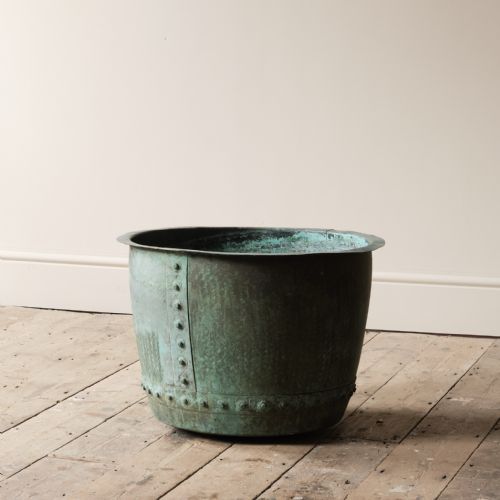
A riveted copper log vessel is a sturdy container originating primarily in the nineteenth century, built to serve practical household or agricultural needs by hearths and on country properties. When you search for this phrase, you will encounter heavy industrial boilers, utilitarian grain measures, and large domestic buckets repurposed to hold firewood.
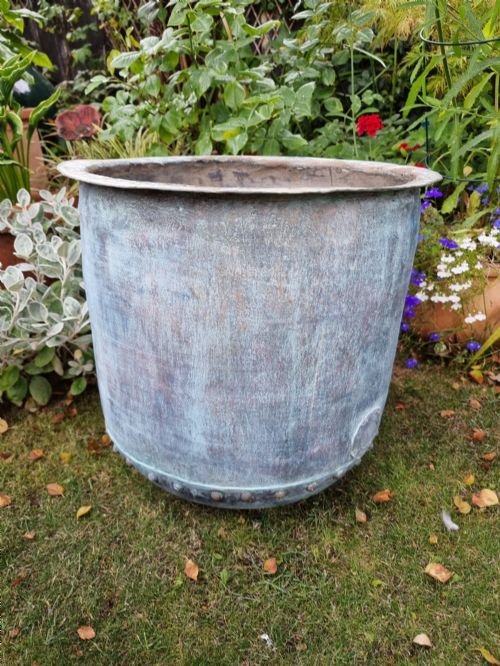
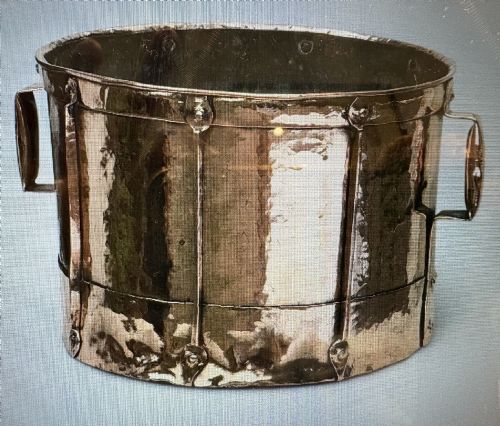
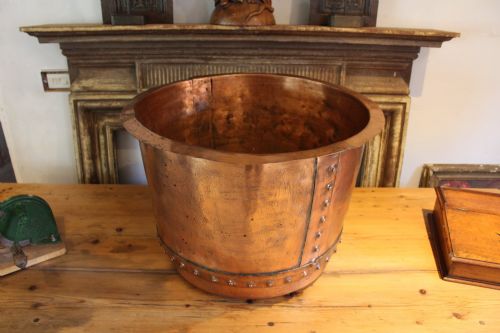
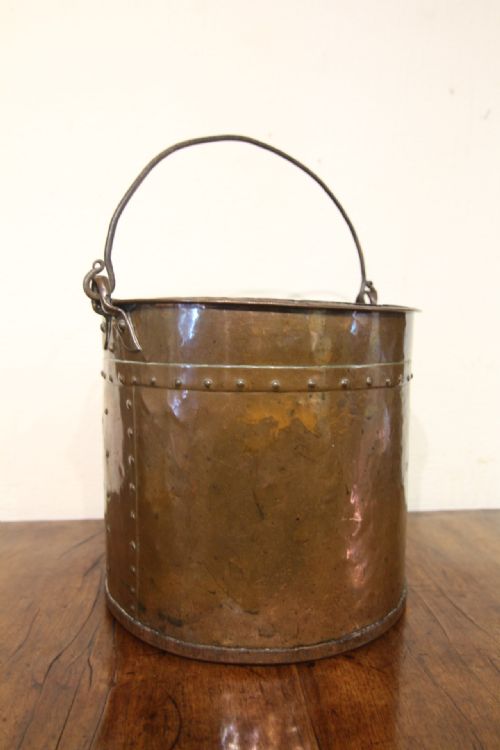
The pieces appearing on this page span the Victorian and Georgian eras, taking forms such as large garden display pots, coal buckets, and French ferrats. Most examples display the robust proportions of nineteenth-century utility, combining generous capacities with the substantial weight required for daily fuel storage.
Makers fashioned these objects in styles ranging from rustic farmhouse and French country to Victorian industrial and Georgian utilitarian. The version you are most likely to meet on this page is a nineteenth-century copper log bin or bucket, often fitted with wrought iron handles for lifting heavy loads of wood.
What varies in quality
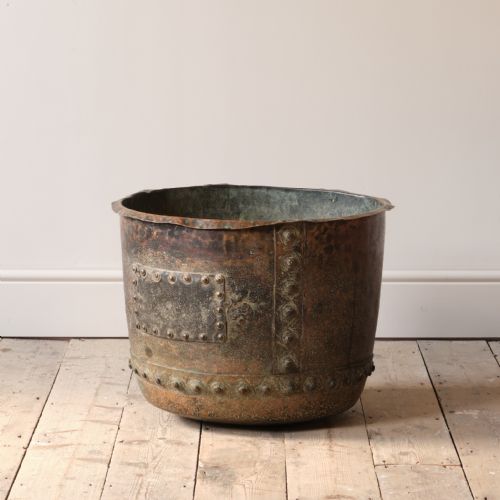
The quality of a riveted copper log vessel rests upon the gauge of the metal and the precision of its assembly. Heavier copper sheeting and evenly spaced, tight hand-riveting signal a higher grade of original utility ware intended for demanding domestic or industrial service.
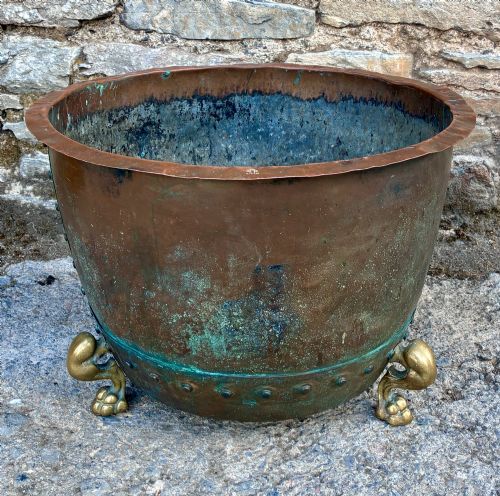
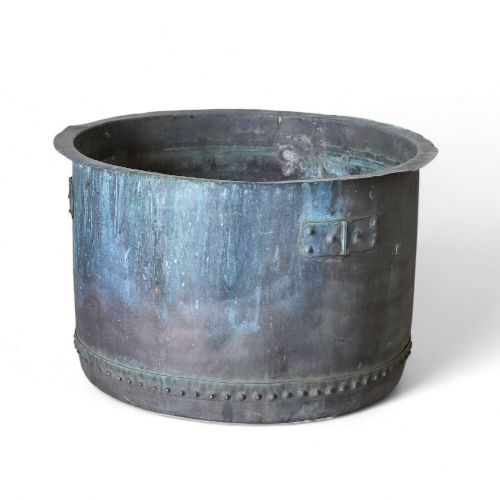
Surface character also distinguishes the better examples, where natural patination, verdigris, and weathering develop uniformly across the copper body. Vessels that retain their original wrought iron handles and structural proportions without excessive distortion represent the finer survivors of this utilitarian tradition.
Grain measures served out feed on French farms before retiring to British hearths as luxury log bins.
The Riveted Copper Log Vessel Glossary
- Ferrat
- A traditional French agricultural measure or vessel, often fashioned from copper with riveted construction and utilised for grain or general storage. These pieces frequently double as decorative log bins in contemporary interiors.
- Patina
- The surface sheen and colour acquired by copper over decades of exposure to air and handling. Natural patination includes varying tones of brown and green verdigris that indicate age.
- Riveted
- A method of joining sheet metal where metal pins are inserted through overlapping plates and hammered flat on the inside. This technique provides visible structural strength along the seams of nineteenth-century vessels.
- Verdigris
- The green oxidation film that forms naturally on copper surfaces over long periods. This surface layer is prized by collectors for its visual depth and proof of age.
Riveted Copper Log Vessel: Frequently Asked Questions
What were riveted copper log vessels used for originally?
Many of these vessels started life as agricultural grain measures, industrial boilers, or large cooking pots before finding a second life by the hearth. Their robust construction made them ideal for hauling heavy loads of coal and wood in nineteenth-century homes.
Over time, as central heating replaced open fires, these durable metal containers transitioned naturally into dedicated log bins and decorative interior planters.
How do I clean a copper log vessel?
Most collectors prefer to leave the natural dark patina and verdigris undisturbed, as these surface characteristics show the true age of the metal. Washing gently with warm soapy water removes dust without stripping the historic character.
Avoid harsh chemical metal polishes that remove the accumulated weathering which defines nineteenth-century copper ware.
Are these vessels safe to use for real fires?
Solid copper containers withstand the dry weight of logs perfectly well and sit stably beside a hearth on sturdy iron or brass bases. Their metal construction handles the daily friction of firewood without splitting.
Check that the riveted base and seams remain solid enough to contain loose bark and wood debris before loading them with heavy logs.
How can I tell a Georgian vessel from a Victorian one?
Georgian examples, dating from around the early nineteenth century or slightly before, often exhibit simpler, heavier hand-beaten forms with subtle variations in the copper sheeting. Victorian pieces from the mid-to-late nineteenth century frequently show more standardised industrial manufacturing techniques and heavier iron fittings.
Examining the style of the hand-riveting and the specific shape of the wrought iron handle often points toward the correct period of manufacture.