

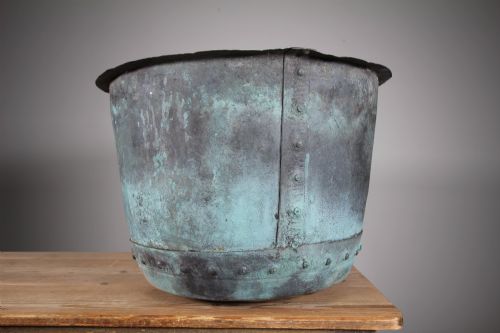
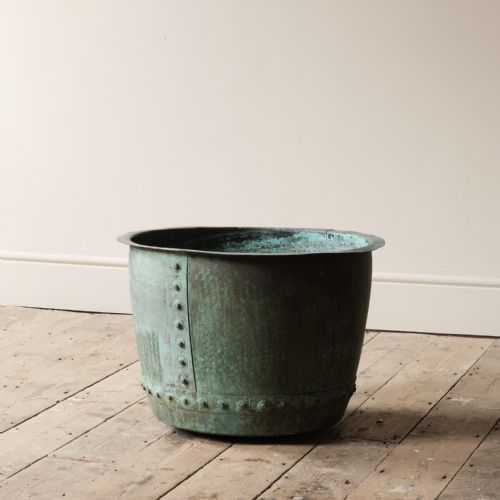


Riveted Copper Log Store
These riveted copper log store pieces bring utilitarian metalwork into the hearth space, offering a robust way to hold firewood.
Riveted Copper Log Store
A riveted copper log store search reveals heavy metal vessels originally formed for domestic or agricultural service by the hearth and around the home. Buyers encounter forms ranging from 19th-century grain measures and large cooking boilers to dedicated coal buckets and log bins.
The material identity centres on copper, often reinforced with brass bands, iron handles, and visible rivets. These utilitarian containers bridge the gap between industrial utility and fireside storage, drawing on Victorian and Georgian traditions.
Most examples originate from the 19th century, carrying the patination of prolonged domestic or workshop use. Pieces span styles from rustic farmhouse to Victorian industrial and Arts and Crafts.
How they were made
Craftsmen built these vessels using heavy sheet copper joined by structural metal rivets along the seams. Handles and rims frequently incorporate brass or iron components to strengthen the structure for carrying heavy loads of wood or coal.
Surfaces bear the hand-hammered marks of manual fabrication rather than automated pressing. Makers shaped the sheet metal over forms, securing joints tightly to contain dry logs and loose fuel safely.
Riveted Copper Log Store Retail Price Guide 2026
Typical asking prices for riveted copper log store among the pieces listed under this phrase on Sellingantiques today, from the lower quarter to the upper quarter. They describe what is for sale here now, not the wider market.
Listings span the 18th, 19th, and 20th centuries, uniting copper, brass, iron, and oak in utilitarian forms.
What varies in quality
Thickness of the sheet copper and the density of the riveting determine the structural integrity of the vessel. Heavier gauges resist denting and support the weight of logs without bowing at the base.
The integration of secondary metals, such as brass bands and cast iron drop handles, separates standard utility vessels from more finished decorative pieces. Surface patination and the preservation of original hand-formed rivets dictate the visual appeal of each container.
The Riveted Copper Log Store Glossary
- Riveted
- Joined with metal pins that are hammered flat at the ends to secure overlapping sheets of copper. This technique provides both structural strength and a distinct industrial aesthetic.
- Patina
- The surface sheen and colour acquired by copper over decades of exposure to air and handling. It reflects the age and history of the metal.
- Grain measure
- A cylindrical agricultural vessel originally calibrated for dry goods before finding a second life as a fireside log container. These pieces display robust proportions and heavy base construction.
- Coal bucket
- A domestic container designed for solid fuel storage by the fireplace, frequently constructed from copper with swing handles. They share utilitarian roots with log bins.
- Utilitarian
- Designed primarily for practical use rather than pure ornamentation. These items derive their character from workshop and domestic toil.
Riveted Copper Log Store: Frequently Asked Questions
What were riveted copper log stores originally used for?
These pieces often began life as industrial vessels, agricultural grain measures, or heavy-duty cooking boilers rather than dedicated log holders. Domestic households later repurposed them to store solid fuel and firewood beside the hearth.
Over generations, their robust metal construction and generous capacities made them natural choices for containing logs. The shift from utility to fireside decoration reflects changing interior tastes.
How do I clean a copper log store?
Maintenance depends entirely on whether you prefer a bright polished finish or an undisturbed dark patina. Most collectors choose to leave the accumulated age and oxidation untouched.
If cleaning is necessary, use a soft cloth and mild soap to remove dust and debris without stripping the surface character. Avoid harsh chemical polishes that erase the history written in the metal.
How can I tell the period of a copper vessel?
Dating relies on observing construction methods, handle attachments, and the style of the metal joints. Earlier Georgian and 18th-century pieces often feature distinct brass banding and hand-forged iron elements.
Nineteenth-century examples tend toward heavier sheet copper with prominent hand-formed rivets. Comparing the heft and fastener types against known period forms helps establish the approximate age.
Can I use these containers for actual firewood?
These vessels are structurally robust enough to hold logs and heavy fuel safely in a modern living space. Their original metal construction was engineered to withstand dense contents and rough daily handling.
Ensure the interior is free of loose debris before loading wood. Placing felt pads underneath protects wooden floors from the heavy metal base.